 뒤로
뒤로Active Membrane Transport and Cell Signaling: Study Notes for Anatomy & Physiology
스터디 가이드 - 스마트 노트
 자료에 맞춘 맞춤형 노트, 핵심 정의, 예시, 맥락을 확장해 제공합니다.
Cells: The Living Units – Membrane Transport and Cell Signaling
Membrane Transport: Active Processes
Active membrane transport is essential for maintaining cellular homeostasis by moving substances across the plasma membrane, often against their concentration gradients. These processes require energy, typically in the form of ATP.
Active Transport: Movement of solutes against their concentration gradient using carrier proteins (solute pumps) and energy from ATP.
Vesicular Transport: Movement of large particles, macromolecules, and fluids via membranous sacs called vesicles, also requiring ATP.
Types of Active Transport
Primary Active Transport: Direct use of ATP to transport substances. Example: Sodium-potassium (Na+-K+) pump.
Secondary Active Transport: Indirect use of ATP; relies on ionic gradients established by primary active transport. Example: Na+-glucose symport.
Primary Active Transport: The Sodium-Potassium Pump
The Na+-K+ ATPase pump is a vital membrane protein found in all animal cells. It maintains high intracellular K+ and high extracellular Na+ concentrations, which are crucial for nerve impulse transmission and muscle contraction.
Mechanism: For each ATP molecule hydrolyzed, 3 Na+ ions are pumped out and 2 K+ ions are pumped into the cell.
Importance: Maintains electrochemical gradients, cell volume, and is essential for secondary active transport.
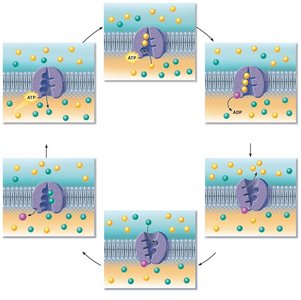
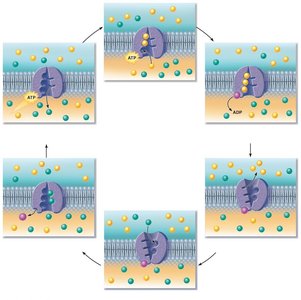
Stepwise Mechanism of the Na+-K+ Pump
Three cytoplasmic Na+ ions bind to the pump protein.
ATP is hydrolyzed, phosphorylating the pump and causing a conformational change.
Na+ ions are expelled to the extracellular space.
Two extracellular K+ ions bind to the pump.
Phosphate is released, restoring the pump's original shape.
K+ ions are released into the cytoplasm, and the cycle repeats.
Secondary Active Transport
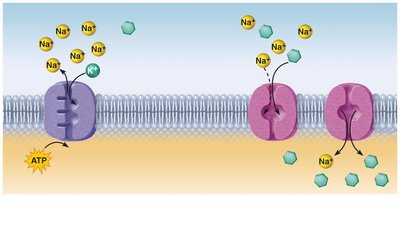
Secondary active transport uses the energy stored in ionic gradients created by primary active transport. It always involves the cotransport of two substances:
Symport System: Both substances move in the same direction.
Antiport System: Substances move in opposite directions.
Example: The Na+-glucose symporter uses the Na+ gradient to drive glucose uptake into cells.
Vesicular Transport
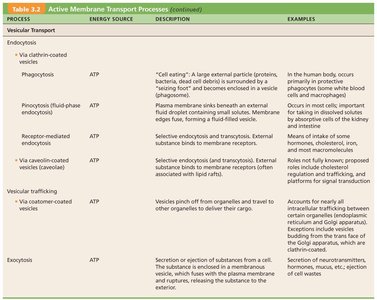
Vesicular transport moves large particles and macromolecules across membranes in vesicles. It includes:
Exocytosis: Transport out of the cell.
Endocytosis: Transport into the cell (phagocytosis, pinocytosis, receptor-mediated endocytosis).
Transcytosis: Transport into, across, and out of the cell.
Vesicular Trafficking: Movement of substances within the cell.
Types of Endocytosis
Phagocytosis: "Cell eating"; the cell engulfs large particles using pseudopods, forming a phagosome.
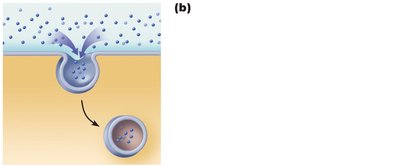
Pinocytosis: "Cell drinking"; the cell engulfs extracellular fluid and solutes in small vesicles.
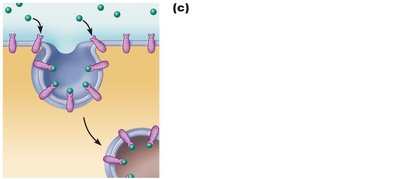
Receptor-Mediated Endocytosis: Specific uptake of substances via receptor-ligand binding and clathrin-coated pits.
Exocytosis
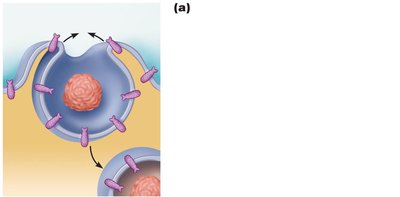
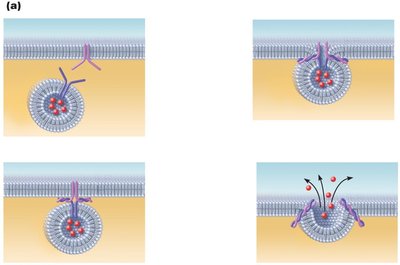
Exocytosis is the process by which cells expel materials in vesicles. It is essential for hormone secretion, neurotransmitter release, and waste removal.
Vesicle migrates to the plasma membrane.
v-SNARE proteins on the vesicle bind to t-SNARE proteins on the membrane.
Membranes fuse, forming a pore.
Contents are released to the cell exterior.
Summary Table: Active Membrane Transport Processes
Process | Energy Source | Description | Examples |
|---|---|---|---|
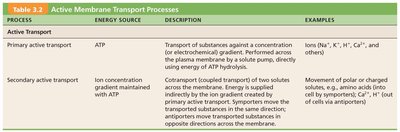
Primary active transport | ATP | Transport of substances against a concentration (or electrochemical) gradient by solute pumps, directly using energy of ATP hydrolysis. | Ions (Na+, K+, H+, Ca2+, etc.) |
Secondary active transport | Ion gradient maintained with ATP | Cotransport (coupled transport) of two solutes across the membrane. Energy supplied indirectly by the ion gradient created by primary active transport. | Movement of polar or charged solutes (e.g., amino acids, sugars, ions) |
Phagocytosis | ATP | Cell engulfs large particles by forming pseudopods and enclosing them in a phagosome. | Macrophages, neutrophils |
Pinocytosis | ATP | Cell "gulps" extracellular fluid into vesicles; nonspecific process. | Most cells |
Receptor-mediated endocytosis | ATP | Selective endocytosis and transcytosis via receptor-ligand binding and clathrin-coated pits. | Uptake of enzymes, hormones, LDL, etc. |
Exocytosis | ATP | Secretion of substances from the cell via vesicle fusion with the plasma membrane. | Neurotransmitter, hormone, mucus secretion |
Generation of a Resting Membrane Potential (RMP)
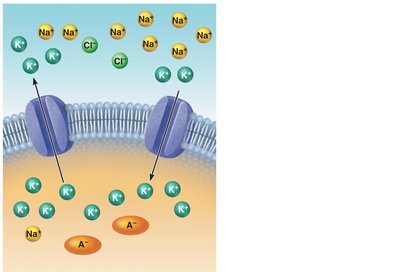
The resting membrane potential is the voltage difference across the plasma membrane in resting cells, typically ranging from –50 to –100 mV (inside negative). It is established by the unequal distribution of ions, mainly K+ and Na+, across the membrane.
K+ Diffusion: K+ leaks out of the cell, making the inside more negative until the electrical and chemical gradients are balanced (about –90 mV).
Na+ Influence: Na+ entry slightly offsets the RMP to about –70 mV in many cells.
Cl–: Does not significantly affect RMP as its gradients are balanced.
Active Transport and RMP
The Na+-K+ pump maintains the gradients by continuously ejecting 3 Na+ and importing 2 K+ per ATP hydrolyzed.
Neurons and muscle cells can alter their RMP by opening gated ion channels, essential for action potentials.
Cell-Environment Interactions
Cells interact with their environment through the glycocalyx, cell adhesion molecules (CAMs), and plasma membrane receptors.
CAMs: Anchor cells, assist in movement, attract immune cells, and transmit signals for migration and specialization.
Plasma Membrane Receptors: Mediate contact and chemical signaling, allowing cells to respond to hormones, neurotransmitters, and other ligands.
Chemical Signaling and G Protein–Coupled Receptors
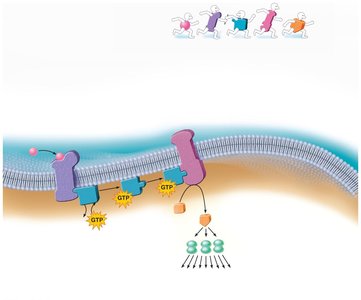
Chemical signaling involves ligands binding to receptors, triggering intracellular responses. G protein–coupled receptors (GPCRs) are a major class of receptors that relay signals via G proteins to effector enzymes or ion channels, often amplifying the signal through second messengers like cyclic AMP (cAMP) or Ca2+.
Ligand binds to receptor, activating it.
Activated receptor activates a G protein by exchanging GDP for GTP.
G protein activates (or inactivates) an effector protein (e.g., enzyme).
Effector protein generates second messengers inside the cell.
Second messengers activate protein kinases, leading to cellular responses.
Key Terms and Concepts
Electrochemical Gradient: Combined difference in concentration and charge across a membrane.
Symport/Antiport: Types of cotransport; symport moves substances in the same direction, antiport in opposite directions.
Phagosome: Vesicle formed around a particle engulfed by phagocytosis.
SNARE Proteins: Mediate vesicle fusion during exocytosis.
Second Messenger: Intracellular signaling molecule released by the cell in response to exposure to extracellular signaling molecules.
Relevant Equations
Nernst Equation (for equilibrium potential of an ion):
Goldman-Hodgkin-Katz Equation (for membrane potential):
Additional info: These equations are fundamental for understanding how ion gradients and membrane permeability determine the resting membrane potential.
