 뒤로
뒤로Anatomy & Physiology Chapter 1 Study Guidance
스터디 가이드 - 스마트 노트
 자료에 맞춘 맞춤형 노트, 핵심 정의, 예시, 맥락을 확장해 제공합니다.
Q1. Define anatomy and physiology and describe their subdivisions.
Background
Topic: Introduction to Anatomy & Physiology
This question tests your understanding of the basic definitions and scope of anatomy (structure) and physiology (function), as well as their subdivisions.
Key Terms:
Anatomy: Study of the structure of body parts.
Physiology: Study of the function of body parts.
Gross Anatomy: Study of large, visible structures.
Microscopic Anatomy: Study of structures too small to be seen with the naked eye.
Step-by-Step Guidance
Start by defining anatomy and physiology in your own words, focusing on structure versus function.
List the subdivisions of gross anatomy (such as regional, systemic, and surface anatomy).
List the subdivisions of microscopic anatomy (such as cytology and histology).
Think about examples for each subdivision to reinforce your understanding.
Try solving on your own before revealing the answer!
Final Answer:
Anatomy studies the structure of body parts, while physiology studies their function. Subdivisions of gross anatomy include regional, systemic, and surface anatomy. Subdivisions of microscopic anatomy include cytology and histology.
Q2. Which topic of anatomy specifically studies body tissues?
Background
Topic: Subdivisions of Anatomy
This question tests your knowledge of the specific branch of anatomy that focuses on tissues.
Key Terms:
Histology: The study of tissues.
Step-by-Step Guidance
Recall the subdivisions of microscopic anatomy.
Identify which subdivision is concerned with tissues rather than cells.
Try solving on your own before revealing the answer!
Final Answer:
Histology is the branch of anatomy that specifically studies body tissues.
Q3. Renal physiology considers the operation of which specific organ system?
Background
Topic: Physiology Subdivisions
This question tests your ability to connect physiological studies to specific organ systems.
Key Terms:
Renal Physiology: Study of kidney function.
Urinary System: Organ system responsible for waste elimination and regulation of water/electrolytes.
Step-by-Step Guidance
Recall what 'renal' refers to in medical terminology.
Identify the organ system that includes the kidneys and is responsible for urine production and waste elimination.
Try solving on your own before revealing the answer!
Final Answer:
Renal physiology considers the operation of the urinary system.
Q4. Explain the principle of complementarity of structure and function.
Background
Topic: Structure-Function Relationship
This question tests your understanding of how anatomical structure determines physiological function.
Key Terms:
Complementarity: The concept that structure and function are interrelated.
Step-by-Step Guidance
Think about how the shape or composition of a body part enables its function.
Consider examples, such as how the structure of the heart allows it to pump blood.
Formulate a statement that connects structure and function in your own words.
Try solving on your own before revealing the answer!
Final Answer:
The principle of complementarity states that the function of a body part depends on its structure; structure and function are inseparable.
Q5. Name the different levels of structural organization that make up the human body and explain their relationships.
Background
Topic: Levels of Organization
This question tests your knowledge of the hierarchy from atoms to the whole organism.
Key Terms:
Chemical Level: Atoms and molecules.
Cellular Level: Cells.
Tissue Level: Groups of similar cells.
Organ Level: Two or more tissues working together.
Organ System Level: Groups of organs working together.
Organismal Level: The whole body.
Step-by-Step Guidance
List the levels from smallest to largest: chemical, cellular, tissue, organ, organ system, organismal.
Describe how each level builds upon the previous one (e.g., tissues are made of cells).
Think about examples for each level to reinforce your understanding.
Try solving on your own before revealing the answer!
Final Answer:
The correct sequence is: chemical, cellular, tissue, organ, organ system, organismal. Each level is composed of the previous level's components, forming a hierarchy.
Q6. List the 11 organ systems of the body, identify their components, and briefly explain the major function(s) of each system.
Background
Topic: Organ Systems
This question tests your ability to recall the organ systems, their key organs, and their primary functions.
Key Terms:
Organ System: A group of organs working together to perform major functions.
Step-by-Step Guidance
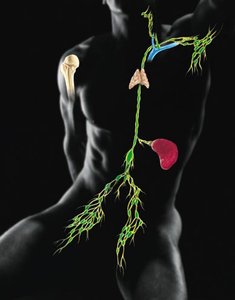
List each organ system (e.g., integumentary, skeletal, muscular, nervous, endocrine, cardiovascular, lymphatic, respiratory, digestive, urinary, reproductive).
Identify key organs for each system (e.g., heart for cardiovascular, lungs for respiratory).
Briefly describe the main function of each system (e.g., protection, movement, control, regulation, transport, immunity, gas exchange, digestion, waste elimination, reproduction).
Try solving on your own before revealing the answer!
Final Answer:
The 11 organ systems are: integumentary, skeletal, muscular, nervous, endocrine, cardiovascular, lymphatic, respiratory, digestive, urinary, and reproductive. Each system has specific organs and functions, such as the heart and blood vessels for cardiovascular (transport), and the lymphatic system for immunity.
Q7. Briefly explain the function of each part of a homeostatic control system.
Background
Topic: Homeostasis
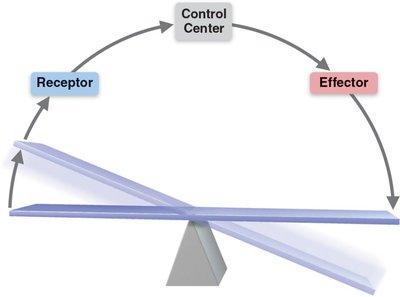
This question tests your understanding of the three main components of homeostatic regulation: receptor, control center, and effector.
Key Terms:
Receptor: Detects changes (stimuli).
Control Center: Processes information and determines response.
Effector: Carries out the response.
Step-by-Step Guidance
Identify the role of the receptor in detecting changes in the environment.
Describe how the control center receives input and decides on a response.
Explain how the effector acts to restore balance or respond to the stimulus.
Try solving on your own before revealing the answer!
Final Answer:
The receptor detects stimuli, the control center processes information and determines the set point, and the effector carries out the response to restore homeostasis.
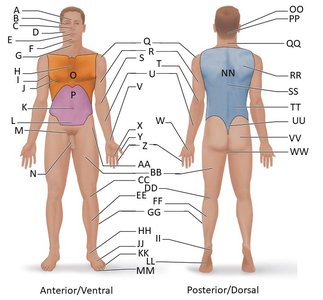
Q8. Assign the letters (A-W) to the corresponding regional terms used to designate specific body areas.
Background
Topic: Anatomical Regions
This question tests your ability to identify and label anatomical regions using standard terminology.
Key Terms:
Regional Terms: Specific names for body areas (e.g., gluteal, umbilical).
Step-by-Step Guidance
Refer to a diagram of the human body showing anterior and posterior views.
Match each letter to the correct regional term based on its location.
Use your textbook or provided figure to check your answers.
Try solving on your own before revealing the answer!
Final Answer:
The letters correspond to specific regional terms as shown in the diagram. For example, NN = Back (dorsum), O = Thorax, P = Abdomen, etc.
