 뒤로
뒤로Anatomy & Physiology I - Chapter 1: Introduction to Anatomy & Physiology
스터디 가이드 - 스마트 노트
 자료에 맞춘 맞춤형 노트, 핵심 정의, 예시, 맥락을 확장해 제공합니다.
Introduction to Anatomy & Physiology
Definitions and Relationship
Anatomy is the study of the structure of the body, while physiology is the study of the function of the body. These disciplines are closely related, as understanding structure helps explain function and vice versa.
Anatomy: Examples include bones and muscles.
Physiology: Examples include how nerves work and how the stomach digests food.
Types of Anatomy
Anatomy can be divided into microscopic and macroscopic (gross) anatomy.
Microscopic Anatomy: Requires a microscope to view structures such as cells and tissues.
Cytology: Study of individual cells, the simplest unit of life.
Histology: Study of tissues, which are groups of cells working together.
Macroscopic/Gross Anatomy: Structures visible to the naked eye, such as organs (heart, kidney, brain) and organ systems (heart and vessels).
Characteristics of Life
Major Characteristics
Living organisms share several fundamental characteristics:
Organization: Distinct boundaries separate the organism from its environment (e.g., skin for humans, membrane for cells).
Responsiveness: Ability to respond to environmental changes (e.g., moving hand from hot stove).
Growth and Differentiation: Organisms grow and cells become specialized.
Movement: Internal (transporting materials) and external (moving body parts).
Metabolism and Excretion: Metabolism includes all chemical processes providing energy for growth, reproduction, movement, and respiration. Excretion removes waste products.
Reproduction: Creation of subsequent generations of similar organisms.
Levels of Organization
Hierarchical Structure
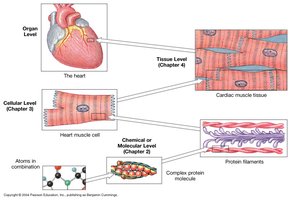
The human body is organized into several levels, from the simplest chemical level to the complex organism level.
Chemical/Molecular Level: Atoms combine to form molecules.
Cellular Level: Molecules form cells, the basic unit of life.
Tissue Level: Groups of similar cells form tissues.
Organ Level: Tissues combine to form organs.
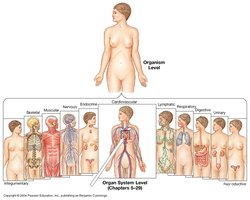
Organ System Level: Organs work together in systems.
Organism Level: All organ systems function together to form the living organism.
Major Organ Systems of the Body
Overview and Functions
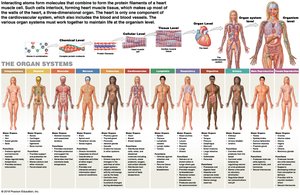
The human body consists of eleven major organ systems, each with specific organs and functions.
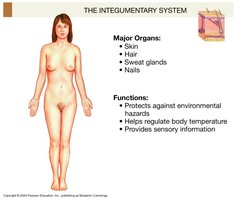
Integumentary System: Skin, hair, sweat glands, nails.
Protects against environmental hazards, regulates temperature, provides sensory information.
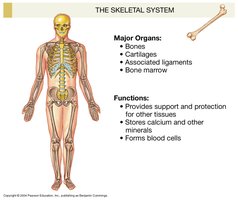
Skeletal System: Bones, cartilages, ligaments, bone marrow.
Provides support, protection, stores minerals, forms blood cells.
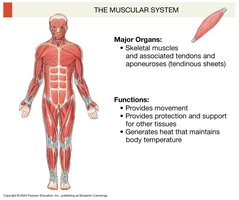
Muscular System: Skeletal muscles, tendons, aponeuroses.
Movement, protection, support, heat generation.
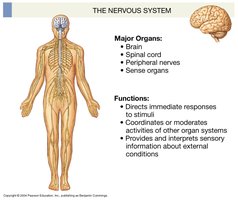
Nervous System: Brain, spinal cord, nerves, sense organs.
Directs responses, coordinates activities, interprets sensory information.
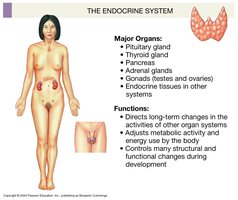
Endocrine System: Pituitary, thyroid, pancreas, adrenal glands, gonads.
Regulates hormones, metabolic activity, structural changes.
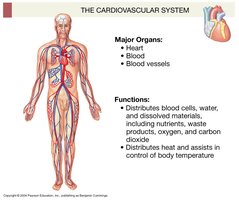
Cardiovascular System: Heart, blood, blood vessels.
Transports nutrients, wastes, oxygen, carbon dioxide; distributes heat.
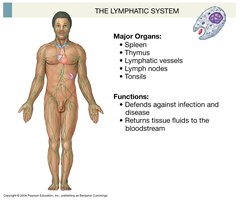
Lymphatic System: Spleen, thymus, lymph nodes, vessels, tonsils.
Defends against infection, returns tissue fluids.
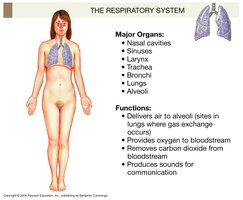
Respiratory System: Nasal cavities, sinuses, larynx, trachea, bronchi, lungs, alveoli.
Gas exchange, oxygen delivery, carbon dioxide removal, sound production.
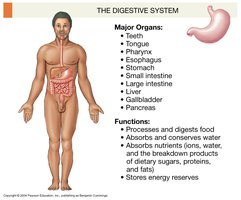
Digestive System: Teeth, tongue, pharynx, esophagus, stomach, intestines, liver, gallbladder, pancreas.
Processes food, absorbs nutrients, stores energy.
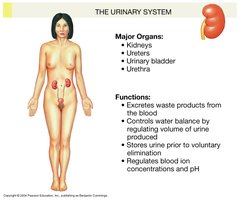
Urinary System: Kidneys, ureters, bladder, urethra.
Removes waste, regulates water and ion balance.
Reproductive System:
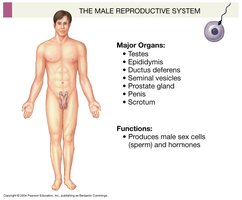
Male: Testes, epididymis, ductus deferens, seminal vesicles, prostate, penis, scrotum.
Female: Ovaries, uterine tubes, uterus, vagina, labia, clitoris, mammary glands.
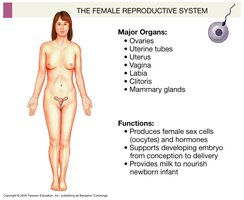
Produces sex cells and hormones, supports embryo, provides milk.
Homeostasis
Definition and Importance
Homeostasis is the existence of a stable internal environment. It is essential for survival, as it allows the body to maintain conditions necessary for life.
The term comes from "homeo" (unchanging) and "stasis" (standing).
Homeostatic control mechanisms regulate internal conditions.
Regulatory Mechanisms
Negative Feedback: A variation outside the desired range triggers a response to correct the situation. The response opposes the initial change.
Example: High blood pressure causes decreased heart rate, lowering blood pressure.
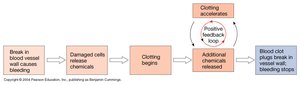
Positive Feedback: A stimulus produces a response that increases the effect. The response amplifies the initial change.
Example: Blood clotting cascade, where each protein released stimulates more proteins.
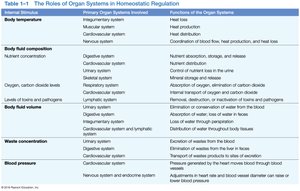
Roles of Organ Systems in Homeostatic Regulation
Organ systems work together to regulate body temperature, fluid composition, waste concentration, and blood pressure.
Internal Stimulus | Primary Organ Systems Involved | Functions of the Organ Systems |
|---|---|---|
Body temperature | Integumentary, muscular, cardiovascular, nervous | Heat production, heat loss, coordination of blood flow |
Body fluid composition | Digestive, cardiovascular, urinary, skeletal | Nutrient absorption, distribution, release; mineral storage and release |
Body fluid volume | Urinary, digestive, cardiovascular | Regulation of water absorption, loss, and distribution |
Waste concentration | Urinary, digestive, cardiovascular | Excretion of waste from blood, elimination of waste from body |
Blood pressure | Cardiovascular, nervous, endocrine | Heart rate and blood vessel diameter regulation |
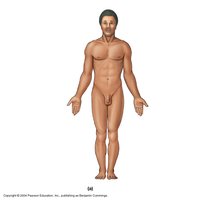
Anatomical Position and Landmarks
Anatomical Position
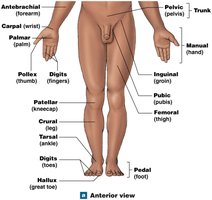
The anatomical position is a standard reference for describing locations and directions on the body. The person stands upright, facing forward, arms at sides, palms facing forward.
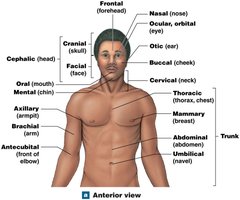
Anatomical Landmarks
Specific terms are used to describe regions of the body.
Anterior view: Frontal, nasal, ocular, otic, buccal, oral, mental, cervical, thoracic, axillary, brachial, antecubital, abdominal, umbilical, pelvic, inguinal, pubic, femoral, patellar, crural, tarsal, digits, hallux, pedal, manual, pollex, carpal, palmar, antebrachial.
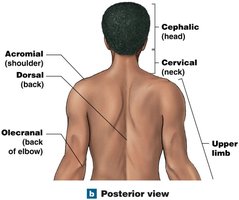
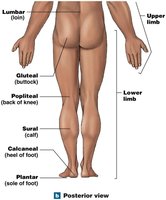
Posterior view: Cephalic, cervical, acromial, dorsal, olecranal, lumbar, gluteal, popliteal, sural, calcaneal, plantar.
Abdominopelvic Areas
Quadrants and Regions
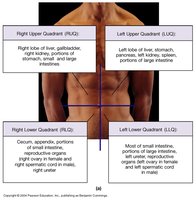
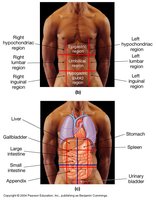
The abdominopelvic area can be divided by quadrants or regions for clinical and anatomical reference.
Quadrants: Right Upper Quadrant (RUQ), Left Upper Quadrant (LUQ), Right Lower Quadrant (RLQ), Left Lower Quadrant (LLQ).
Regions: Right/Left hypochondriac, lumbar, inguinal; epigastric, umbilical, hypogastric.
Directional Terms
Relative Positions
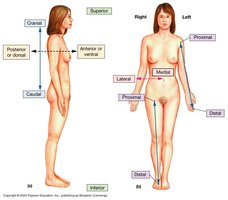
Directional terms describe the location of one body part relative to another.
Supine: Lying on back, face up.
Prone: Lying face down.
Anterior: Toward the front.
Posterior: Toward the back.
Ventral: Front.
Dorsal: Back.
Cranial/Cephalic: Head.
Caudal: Toward the tail.
Superior: Above.
Inferior: Below.
Medial: Toward the middle.
Lateral: Away from midpoint.
Proximal: Toward the trunk.
Distal: Away from the trunk.
Superficial: Close to surface.
Deep: Away from surface.
Sectional Anatomy
Sectional Planes
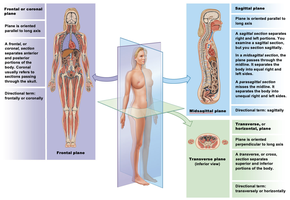
Three main planes are used to section the body:
Frontal (Coronal) Plane: Divides body into anterior and posterior.
Sagittal Plane: Divides body into left and right.
Transverse Plane: Divides body into superior and inferior (cross section).
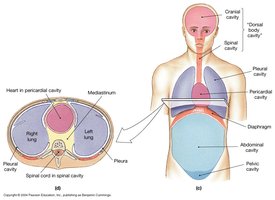
Body Cavities
Major Cavities and Their Functions
Body cavities protect organs and allow for changes in size and shape.
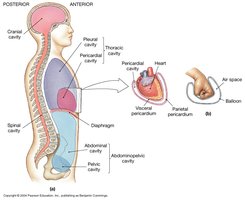
Dorsal Body Cavity: Fluid-filled space protecting the brain and spinal cord.
Subdivided into cranial and spinal cavities.
Ventral Body Cavity (Coelom): Subdivided into thoracic and abdominopelvic cavities.
Thoracic Cavity: Contains two pleural cavities (lungs) and pericardial cavity (heart). The mediastinum surrounds the pericardial cavity.
Abdominopelvic Cavity: Contains abdominal cavity (stomach) and pelvic cavity (bladder).
Summary Table: The Roles of Organ Systems in Homeostatic Regulation
Internal Stimulus | Primary Organ Systems Involved | Functions of the Organ Systems |
|---|---|---|
Body temperature | Integumentary, muscular, cardiovascular, nervous | Heat production, heat loss, coordination of blood flow |
Body fluid composition | Digestive, cardiovascular, urinary, skeletal | Nutrient absorption, distribution, release; mineral storage and release |
Body fluid volume | Urinary, digestive, cardiovascular | Regulation of water absorption, loss, and distribution |
Waste concentration | Urinary, digestive, cardiovascular | Excretion of waste from blood, elimination of waste from body |
Blood pressure | Cardiovascular, nervous, endocrine | Heart rate and blood vessel diameter regulation |
Key Terms and Concepts
Cytology: Study of cells.
Histology: Study of tissues.
Gross Anatomy: Study of structures visible to the naked eye.
Pathology: Study of disease.
Homeostasis: Maintenance of stable internal conditions.
Example: Homeostatic Control Mechanism
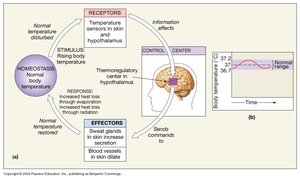
Negative feedback is illustrated by the regulation of body temperature. When body temperature rises, receptors in the skin and hypothalamus detect the change, the control center (hypothalamus) sends commands to effectors (sweat glands and blood vessels), resulting in increased heat loss and a return to normal temperature.
Example: Positive Feedback Mechanism
Positive feedback is illustrated by blood clotting. A break in a blood vessel causes chemicals to be released, which stimulate clotting. Each step releases more chemicals, accelerating the process until the clot plugs the break.
Example: Anatomical Position
The anatomical position is the reference for describing locations and directions on the body. It is essential for clear communication in anatomy and physiology.
Example: Sectional Planes
Sectional planes are used to describe internal structures and their relationships. The frontal, sagittal, and transverse planes are the most commonly used.
