 뒤로
뒤로Anatomy & Physiology I: Foundations, Chemistry, Cells, and Tissues
스터디 가이드 - 스마트 노트
 자료에 맞춘 맞춤형 노트, 핵심 정의, 예시, 맥락을 확장해 제공합니다.
Introduction to Anatomy & Physiology
Overview of Anatomy & Physiology
Anatomy and Physiology (A&P) is the study of the structure and function of the human body. Anatomy focuses on the physical structures, while physiology explores how those structures function to sustain life.
Anatomy: Study of body structures, including gross (visible to the naked eye) and microscopic (cellular and tissue level) anatomy.
Physiology: Study of how body parts work and carry out life-sustaining activities.
Structure determines function: The form of a body part or organ is closely related to its function.
Tips for Success in A&P
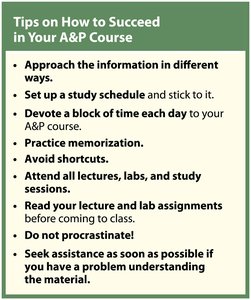
Success in Anatomy & Physiology requires consistent study habits, active engagement, and effective memorization strategies.
Approach the information in different ways.
Set up a study schedule and stick to it.
Devote a block of time each day to your A&P course.
Practice memorization and avoid shortcuts.
Attend all lectures, labs, and study sessions.
Read your lecture and lab assignments before class.
Do not procrastinate!
Seek assistance as soon as possible if you have a problem understanding the material.
Characteristics and Processes of Life
Characteristics of Living Things
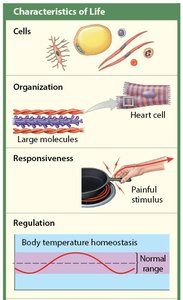
All living organisms share certain characteristics that distinguish them from non-living matter. These characteristics are essential for survival and reproduction.
Cellular Organization: All living things are composed of one or more cells.
Responsiveness: Ability to sense and respond to stimuli.
Regulation: Maintenance of a stable internal environment (homeostasis).
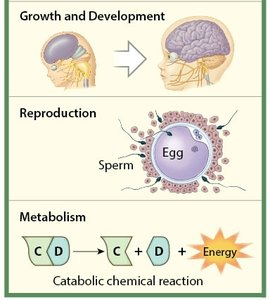
Growth and Development: Increase in size and complexity over time.
Reproduction: Ability to produce new organisms.
Metabolism: All chemical reactions that occur within an organism, including catabolism (breaking down) and anabolism (building up).
Processes of Life
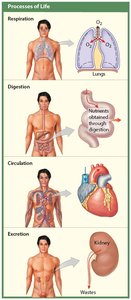
Living organisms carry out essential processes to maintain life, including respiration, digestion, circulation, and excretion.
Respiration: Exchange of gases (O2 and CO2).
Digestion: Breakdown of food into absorbable units.
Circulation: Movement of substances throughout the body.
Excretion: Removal of metabolic wastes.
Levels of Organization in the Human Body
Hierarchical Organization
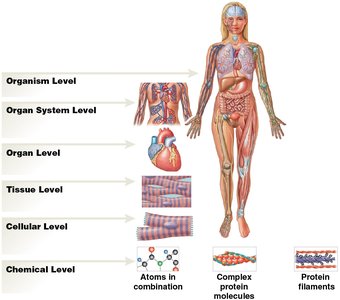
The human body is organized into a hierarchy of structural levels, each building on the previous one. Understanding these levels is fundamental to studying anatomy and physiology.
Chemical Level: Atoms combine to form molecules.
Cellular Level: Cells are the basic units of life, composed of organelles and molecules.
Tissue Level: Groups of similar cells performing a common function.
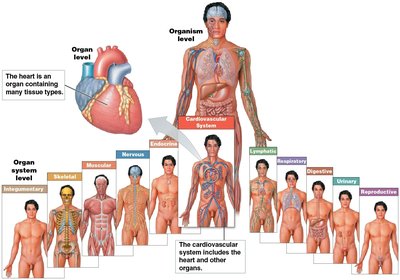
Organ Level: Structures composed of two or more tissue types working together.
Organ System Level: Groups of organs that perform related functions.
Organism Level: The complete living being.
Cell Theory and Cell Diversity
Basic Principles of Cell Theory
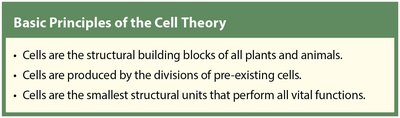
Cell theory is a foundational concept in biology, stating that all living things are composed of cells, and all cells arise from pre-existing cells.
Cells are the structural building blocks of all plants and animals.
Cells are produced by the division of pre-existing cells.
Cells are the smallest structural units that perform all vital functions.
Cell Diversity
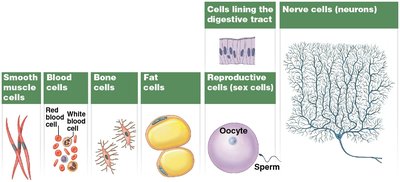
Cells vary greatly in structure and function, reflecting their specialized roles in the body.
Examples include smooth muscle cells, blood cells, bone cells, fat cells, reproductive cells, and nerve cells.
Cell structure is closely related to its function.
Tissues: The Four Primary Types
Overview of Tissue Types
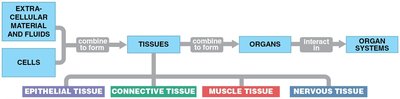
Tissues are groups of similar cells that work together to perform specific functions. There are four primary tissue types in the human body:
Epithelial Tissue: Covers and protects surfaces, lines internal passageways, and forms glands.
Connective Tissue: Provides support, fills spaces, stores energy, and transports materials.
Muscle Tissue: Contracts to produce movement.
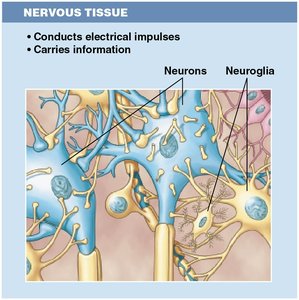
Nervous Tissue: Conducts electrical impulses and carries information.
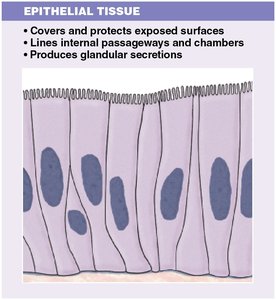
Epithelial Tissue
Epithelial tissue forms protective barriers and is involved in absorption, secretion, and sensation.
Covers and protects exposed surfaces.
Lines internal passageways and chambers.
Produces glandular secretions.
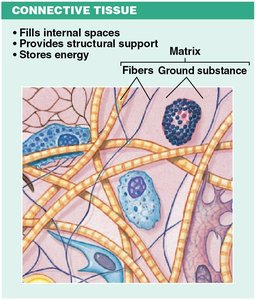
Connective Tissue
Connective tissue supports, binds, and protects other tissues and organs. It is characterized by an extracellular matrix composed of protein fibers and ground substance.
Fills internal spaces.
Provides structural support.
Stores energy.
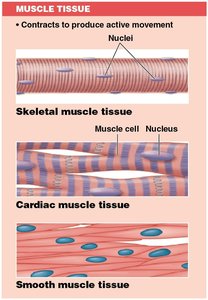
Muscle Tissue
Muscle tissue is specialized for contraction, enabling movement of the body and its parts.
Contracts to produce active movement.
Includes skeletal, cardiac, and smooth muscle tissue.
Nervous Tissue
Nervous tissue is specialized for the conduction of electrical impulses, allowing rapid communication between different parts of the body.
Conducts electrical impulses.
Carries information.
Composed of neurons and supporting neuroglia.
Organs and Organ Systems
Organs
Organs are functional units composed of two or more tissue types. The structure and organization of tissues within an organ determine its function.
Most organs contain all four tissue types.
Examples: The heart (muscle, epithelial, nervous, and connective tissues).
Organ Systems
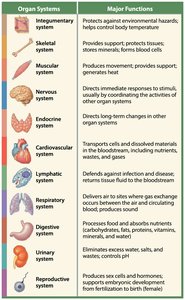
Organ systems are groups of organs that work together to perform major functions necessary for survival. There are 11 organ systems in the human body, each with specific roles.
Organ System | Major Functions |
|---|---|
Integumentary | Protects against environmental hazards; helps control body temperature |
Skeletal | Provides support, protects tissues, stores minerals, forms blood cells |
Muscular | Produces movement, provides support, generates heat |
Nervous | Directs immediate responses to stimuli, coordinates activities of other organ systems |
Endocrine | Directs long-term changes in other organ systems |
Cardiovascular | Transports cells and dissolved materials, including nutrients, wastes, and gases |
Lymphatic | Defends against infection and disease, returns tissue fluids to the bloodstream |
Respiratory | Delivers air to sites where gas exchange occurs between the air and circulating blood |
Digestive | Processes food and absorbs nutrients |
Urinary | Eliminates excess water, salts, and wastes |
Reproductive | Produces sex cells and hormones |
Homeostasis
Definition and Importance
Homeostasis is the maintenance of a stable internal environment. It is essential for the survival of organisms, as many physiological values must remain within narrow limits.
Failure to maintain homeostasis leads to illness or death.
Homeostatic regulation involves receptors (sensors), a control center, and effectors.
Feedback Mechanisms
Negative Feedback: The effector opposes or negates the original stimulus, minimizing change (e.g., body temperature regulation).
Positive Feedback: The effector enhances the original stimulus, producing an extreme response (e.g., labor contractions, blood clotting).
Basic Chemistry for Anatomy & Physiology
Atoms, Elements, and Molecules
Chemistry is the foundation of anatomy and physiology. Atoms combine to form molecules, which make up cells and tissues.
Four main elements: Oxygen (O), Carbon (C), Hydrogen (H), Nitrogen (N).
Other important elements: Calcium, Phosphorus, Sodium, Potassium, and trace elements.
Atomic structure: Protons and neutrons in the nucleus, electrons in shells.
Isotopes: Atoms of the same element with different numbers of neutrons.
Chemical Bonds
Ionic Bonds: Electrons are transferred between atoms, forming ions (cations and anions).
Covalent Bonds: Electrons are shared between atoms. Can be polar (unequal sharing) or nonpolar (equal sharing).
Hydrogen Bonds: Weak attractions between polar molecules, important in water and DNA structure.
Water and Its Properties
Water is a polar molecule, giving it unique properties essential for life.
Cohesion, adhesion, surface tension, high heat capacity, less dense as a solid, universal solvent, lubricant, essential for chemical reactions.
pH and Buffers
pH measures the concentration of hydrogen ions (H+) in a solution. Maintaining proper pH is critical for homeostasis.
Acidosis: Blood pH below 7.35.
Alkalosis: Blood pH above 7.45.
Buffers: Compounds that stabilize pH by removing or replacing H+ ions.
Macromolecules of Life
Carbohydrates: Sugars and starches, energy source, hydrophilic, monomer = glucose.
Lipids: Fats, oils, waxes, hydrophobic, energy storage, cell membranes, hormones.
Proteins: Most abundant organic molecule, made of amino acids, structure determines function, includes enzymes.
Nucleic Acids: DNA and RNA, store and transfer genetic information, monomer = nucleotide.
Cell Structure and Function
Basic Cell Structure
Cells are surrounded by a plasma membrane, filled with cytoplasm, and contain organelles with specialized functions.
Nucleus: Contains genetic material, controls cell activities.
Nucleolus: Site of ribosome production.
Ribosomes: Sites of protein synthesis.
Endoplasmic Reticulum (ER): Rough ER (protein synthesis), Smooth ER (lipid synthesis).
Golgi Apparatus: Modifies, sorts, and packages proteins and lipids.
Mitochondria: Site of ATP (energy) production.
Lysosomes and Peroxisomes: Digestive and detoxifying organelles.
Cytoskeleton: Provides structural support and facilitates movement.
Protein Synthesis
Transcription: DNA is copied into mRNA in the nucleus.
Translation: mRNA is used to assemble amino acids into proteins at the ribosome.
Cell Membrane Structure and Transport
Structure of the Cell Membrane
The cell membrane is selectively permeable, composed of a phospholipid bilayer with embedded proteins and cholesterol.
Allows some substances to pass while restricting others.
Small, lipid-soluble molecules pass freely; charged and large molecules require transport proteins.
Transport Mechanisms
Passive Transport: No energy required; includes diffusion, facilitated diffusion, and osmosis.
Active Transport: Requires ATP; moves substances against their concentration gradient (e.g., Na+/K+ pump).
Bulk Transport: Endocytosis (into cell), exocytosis (out of cell).
Cell Cycle and Division
Phases of the Cell Cycle
Interphase: G1 (growth), S (DNA replication), G2 (preparation for division).
M Phase: Mitosis (nuclear division) and cytokinesis (cytoplasmic division).
G0 Phase: Non-dividing state for some cells.
Mitosis
Prophase: Chromosomes condense, spindle forms.
Metaphase: Chromosomes align at the cell equator.
Anaphase: Chromatids separate to opposite poles.
Telophase: Nuclear envelopes reform, chromosomes uncoil.
Cell Division and Cancer
Cell division is tightly regulated; errors can lead to cancer.
Cancer cells divide uncontrollably and may spread (metastasis).
Summary Table: Four Primary Tissue Types
Tissue Type | Main Function | Example |
|---|---|---|
Epithelial | Protection, secretion, absorption | Skin, lining of GI tract |
Connective | Support, binding, storage | Bone, blood, fat |
Muscle | Movement | Skeletal muscle, heart |
Nervous | Communication, control | Brain, nerves |
Additional info: This guide covers foundational concepts from Chapters 1, 2, and 3, including the introduction to anatomy and physiology, basic chemistry, cell structure and function, and the four primary tissue types. These topics are essential for understanding subsequent material in Anatomy & Physiology courses.
