 뒤로
뒤로Anatomy & Physiology: Key Concepts, Levels of Organization, and Anatomical Terms
스터디 가이드 - 스마트 노트
 자료에 맞춘 맞춤형 노트, 핵심 정의, 예시, 맥락을 확장해 제공합니다.
Q1. Mark the following statements with an “A” if you think it relates to anatomy and a “P” if you think it relates more to physiology.
Background
Topic: Distinguishing Anatomy vs. Physiology
This question tests your understanding of the difference between anatomy (the study of structure) and physiology (the study of function) in the human body.
Key Terms:
Anatomy: Study of the structure and physical organization of living things.
Physiology: Study of the functions and processes of living organisms and their parts.
Step-by-Step Guidance
Read each statement carefully and identify whether it describes a structure (anatomy) or a function/process (physiology).
Look for keywords: If the statement describes what something is made of, where it is located, or its physical characteristics, it is likely anatomy.
If the statement describes how something works, what it does, or a process that occurs, it is likely physiology.
For each statement, decide if it is best categorized as anatomy (A) or physiology (P), but do not mark your final answers yet.
Try solving on your own before revealing the answer!
Final Answer:
The hormone insulin is released when blood glucose levels increase. — P
Two major blood vessels enter the liver, the hepatic portal vein, and the hepatic artery. — A
Electric charge in neurons is maintained through a gradient of ions across the cell membrane. — P
Ligaments and tendons are largely composed of collagen fibers. — A
There are 206 named bones in the human body. — A
Activation of the sympathetic nervous system will increase heart rate and elevate blood pressure. — P
Anatomy focuses on structure, while physiology focuses on function and processes.
Q2. Anatomy & Physiology: the study of body’s structure and function. Fill in the blanks: Anatomy is the study of the body’s ______; Physiology is the study of the body’s ______.
Background
Topic: Definitions of Anatomy and Physiology
This question checks your understanding of the basic definitions of anatomy and physiology.
Key Terms:
Structure: The physical parts and organization of the body.
Function: The processes and activities carried out by body parts.
Step-by-Step Guidance
Recall the definitions: Anatomy is concerned with what things are and where they are located.
Physiology is concerned with what things do and how they work.
Fill in the first blank with the word that best describes what anatomy studies.
Fill in the second blank with the word that best describes what physiology studies.
Try solving on your own before revealing the answer!
Final Answer:
Anatomy is the study of the body’s structure; Physiology is the study of the body’s function.
Structure and function are the foundational concepts in anatomy and physiology.
Q3. Example: Two biologists are studying the causes of acid reflux (heartburn). Determine whether each biologist takes a more anatomical approach or a more physiological approach.
Background
Topic: Application of Anatomy vs. Physiology in Research
This question asks you to distinguish between anatomical and physiological approaches in scientific studies.
Key Terms:
Anatomical approach: Focuses on structure, form, or physical characteristics.
Physiological approach: Focuses on function, processes, or how something works.
Step-by-Step Guidance
Read each biologist’s method carefully.
Ask yourself: Is the biologist measuring or observing a structure (anatomy) or a function/process (physiology)?
For Rita, consider if measuring pH changes and relating them to symptoms is about function or structure.
For Andre, consider if comparing the shape of organs is about structure or function.
Decide which approach each biologist is using, but do not write the final answer yet.
Try solving on your own before revealing the answer!
Final Answer:
Rita: Physiological approach (measuring function—pH changes and their effects).
Andre: Anatomical approach (comparing structure—shapes of organs).
Physiology focuses on processes and function, while anatomy focuses on physical structure.
Q4. Practice: People who lift weights or participate in similar resistance exercise will typically have bones that are thicker and even restructured internally compared to people who do not lift weights. Is this difference a matter of anatomy or physiology?
Background
Topic: Distinguishing Structural vs. Functional Changes
This question asks you to determine whether observed changes are structural (anatomy) or functional (physiology).
Key Terms:
Anatomy: Structure, form, and organization.
Physiology: Function and processes.
Step-by-Step Guidance
Identify what is changing: Is it the structure of the bones or how they function?
Thicker and restructured bones refer to physical characteristics.
Ask yourself if the description is about what the bones do or what they look like.
Decide if this is a change in anatomy or physiology, but do not write the final answer yet.
Try solving on your own before revealing the answer!
Final Answer:
This is a difference in anatomy because it describes a change in the structure of the bones, not their function.
Structural changes are anatomical, while changes in function are physiological.
Q5. Practice: Which describes an activity that would most likely be performed by someone that considers themselves a physiologist?
Background
Topic: Careers in Anatomy vs. Physiology
This question tests your ability to identify activities that are characteristic of physiology (function) versus anatomy (structure).
Key Terms:
Physiologist: Studies how body systems and organs function.
Anatomist: Studies the structure and organization of body parts.
Step-by-Step Guidance
Read each activity and determine if it focuses on structure or function.
Look for activities that involve measuring, testing, or analyzing processes or functions.
Identify which activity is most related to studying how something works, not just what it looks like.
Choose the answer that best fits the role of a physiologist, but do not write the final answer yet.
Try solving on your own before revealing the answer!
Final Answer:
The activity most likely performed by a physiologist is: Grow liver cells in cell culture to measure how quickly they metabolize alcohol in different conditions.
This activity focuses on function and metabolic processes, which are central to physiology.
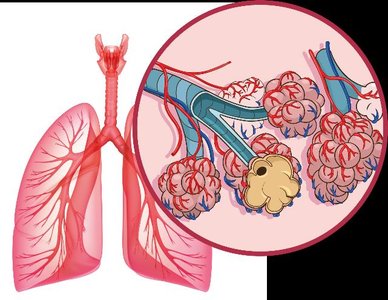
Q6. Example: What relationship does the following information illustrate? (Structure of lungs: network of passageways, alveoli, thin walls, capillaries; Function of lungs: gas exchange)
Background
Topic: Principle of Complementarity of Structure and Function
This question is about the relationship between anatomical structure and physiological function, a core concept in A&P.
Key Terms:
Principle of Complementarity: Structure determines function, and function reflects structure.
Alveoli: Tiny air sacs in the lungs that increase surface area for gas exchange.
Step-by-Step Guidance
Review the structural features of the lungs (passageways, alveoli, thin walls, capillaries).
Consider how these features enable the function of gas exchange.
Think about the general principle that links structure and function in biology.
Identify the name of this relationship, but do not write the final answer yet.
Try solving on your own before revealing the answer!
Final Answer:
This illustrates the principle of complementarity of structure and function: the structure of the lungs enables their function of gas exchange.
Understanding how structure and function are interrelated is essential in anatomy and physiology.
