 뒤로
뒤로Anatomy & Physiology Lab Exam 1 Study Guidance
스터디 가이드 - 스마트 노트
 자료에 맞춘 맞춤형 노트, 핵심 정의, 예시, 맥락을 확장해 제공합니다.
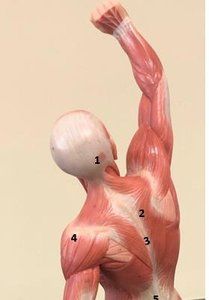
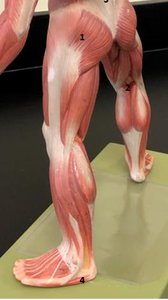
Q4. Identify the following anatomical landmarks on the model.
Background
Topic: Anatomical Landmarks
This question tests your ability to recognize and name key anatomical landmarks on a human model, which is essential for understanding body orientation and communication in anatomy.
Key Terms:
Anatomical landmarks: Specific locations on the body used as reference points in anatomy.
Muscle groups and regions: Names of muscles or regions that are commonly used as landmarks.
Step-by-Step Guidance
Examine the model carefully and note the numbered regions. Each number corresponds to a specific anatomical landmark.
Recall the major landmarks of the head, torso, arms, and legs. For example, on the face, look for features like the forehead, cheek, jaw, and neck.
Use your textbook or lab manual to match the numbers to the correct anatomical names. For example, number 1 on the face model may correspond to the chin (mental region), while number 2 may be the forehead (frontal region).
For the full-body model, identify regions such as the shoulder (deltoid), chest (pectoral), abdomen, thigh (femoral), and so on.
Write down the anatomical name for each numbered landmark, but stop before completing the full list. Focus on matching the first few numbers to their regions.
Try solving on your own before revealing the answer!
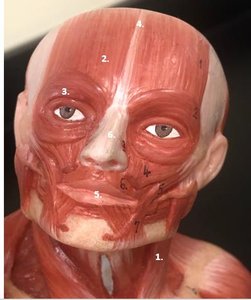
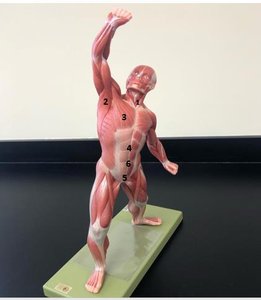
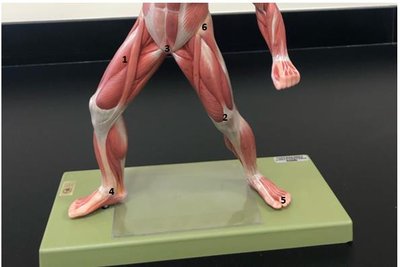
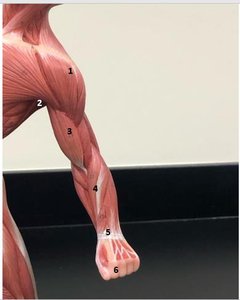
Final Answer:
The numbered landmarks on the models correspond to specific anatomical regions. For example:
Head model: 1. Chin (mental), 2. Forehead (frontal), 3. Cheek (zygomatic), 4. Nose (nasal), 5. Mouth (oral), 6. Jaw (mandibular), 7. Neck (cervical).
Body model: 1. Thigh (femoral), 2. Shoulder (deltoid), 3. Groin (inguinal), 4. Abdomen (abdominal), 5. Knee (patellar), 6. Hip (coxal).
Arm model: 1. Shoulder (deltoid), 2. Upper arm (brachial), 3. Elbow (cubital), 4. Forearm (antebrachial), 5. Wrist (carpal), 6. Hand (manual).
Leg model: 1. Thigh (femoral), 2. Lower leg (crural), 3. Knee (patellar), 4. Ankle (tarsal).
Back model: 1. Back of head (occipital), 2. Shoulder blade (scapular), 3. Upper back (thoracic), 4. Lower back (lumbar), 5. Buttock (gluteal).
These landmarks are used to describe locations and movements in anatomy. Review your lab manual for the exact names used in your course.
