 뒤로
뒤로Blood: Plasma Proteins, Erythropoiesis, Platelets, and Leukocytes – Study Notes
스터디 가이드 - 스마트 노트
 자료에 맞춘 맞춤형 노트, 핵심 정의, 예시, 맥락을 확장해 제공합니다.
Blood: Plasma Proteins, Erythropoiesis, Platelets, and Leukocytes
Overview of Blood Components
The blood is a specialized connective tissue composed of plasma and formed elements (erythrocytes, leukocytes, and platelets). Each component plays a critical role in maintaining homeostasis, transporting substances, and defending the body against disease.
Plasma Proteins
Major Types, Synthesis Sites, and Functions
Plasma proteins are essential for maintaining osmotic balance, transporting substances, and facilitating immune responses. The three main types are:
Plasma Protein | Site of Synthesis | Main Functions |
|---|---|---|
Albumin | Liver | Maintains blood colloid (oncotic) osmotic pressure, helps keep fluid in the bloodstream, and transports substances such as fatty acids, hormones, drugs, and bilirubin. |
Globulins (α, β, γ) | α and β globulins: Liver; γ globulins: Plasma cells/lymphoid tissues | Transport lipids, metal ions, and vitamins; contribute to immunity; gamma globulins function as antibodies that help defend against infection. |
Fibrinogen | Liver | Essential for blood clotting; converted to fibrin during coagulation to form blood clots. |
Erythropoietin (EPO) and Erythropoiesis
Production, Stimulus, Target, and Action
Erythropoietin (EPO) is a hormone crucial for the regulation of red blood cell production (erythropoiesis). Its synthesis, release, and action are summarized below:
Item | Answer |
|---|---|
Site of EPO Production | Primarily the kidneys (renal cells). A small amount is produced by the liver. |
Stimulus for EPO Release | Low blood oxygen levels (hypoxia), such as during anemia, blood loss, high altitude exposure, or reduced oxygen delivery to tissues. |
Target Tissue(s) | Red bone marrow, specifically erythroid progenitor and precursor cells that develop into red blood cells. |
Action of EPO | Stimulates erythropoiesis (red blood cell production) by promoting the survival, proliferation, and differentiation of erythroid precursor cells, leading to an increased number of circulating red blood cells and improved oxygen-carrying capacity of the blood. |
Platelets (Thrombocytes) and Thrombopoiesis
Structure, Function, and Formation
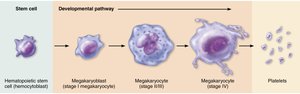
Platelets are small, anucleate cell fragments essential for blood clotting. They are produced through a process called thrombopoiesis, regulated by the hormone thrombopoietin (TPO).
Structure: Platelets are fragments of large cells called megakaryocytes.
Function: Platelets help stop bleeding by forming plugs in blood vessel injuries and releasing factors that promote clotting.
Formation: Thrombopoiesis involves the differentiation of hematopoietic stem cells into megakaryoblasts, which mature into megakaryocytes. These cells extend cytoplasmic projections into blood vessels, which fragment into platelets.
Leukocytes (White Blood Cells, WBCs)
Types, Abundance, and Functions
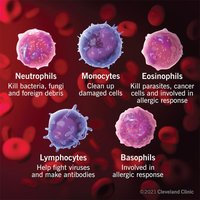
Leukocytes are the body's primary defense against infection and foreign substances. There are five main types, classified as granulocytes or agranulocytes based on the presence of cytoplasmic granules.
Neutrophils: Most abundant; phagocytize bacteria and fungi.
Lymphocytes: Second most abundant; include T cells (cell-mediated immunity) and B cells (antibody production).
Monocytes: Largest WBCs; differentiate into macrophages that phagocytize pathogens and debris.
Eosinophils: Combat parasitic infections and modulate allergic responses.
Basophils: Release histamine during allergic reactions and inflammation.
Relative Abundance and Blood Smear Appearance
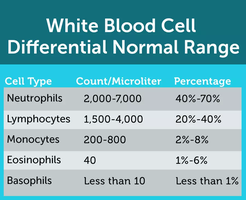
The relative abundance of each leukocyte type in normal blood is as follows:
Cell Type | Count/Microliter | Percentage |
|---|---|---|
Neutrophils | 2,000–7,000 | 40%–70% |
Lymphocytes | 1,500–4,000 | 20%–40% |
Monocytes | 200–800 | 2%–8% |
Eosinophils | 40 | 1%–6% |
Basophils | Less than 10 | Less than 1% |
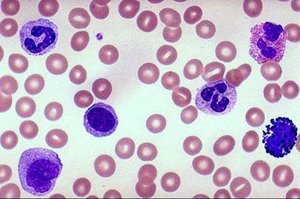
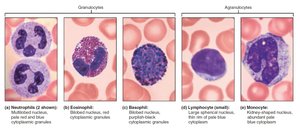
In a stained blood smear, leukocytes can be identified by their distinct nuclear shapes and cytoplasmic granules:
Granulocytes vs. Agranulocytes
Granulocytes: Neutrophils, eosinophils, and basophils; contain visible granules in their cytoplasm.
Agranulocytes: Lymphocytes and monocytes; lack visible granules.
Summary Table: Leukocyte Types and Functions
Leukocyte | Main Function |
|---|---|
Neutrophil | Phagocytosis of bacteria and fungi; first responders to infection |
Lymphocyte | Adaptive immunity; T cells destroy infected cells, B cells produce antibodies |
Monocyte | Phagocytosis; differentiate into macrophages in tissues |
Eosinophil | Combat parasitic infections; modulate allergic and inflammatory responses |
Basophil | Release histamine; involved in allergic reactions and inflammation |
Key Concepts and Clinical Relevance
Leukocytosis: Elevated WBC count, often due to infection or inflammation.
Leukopenia: Low WBC count, increasing risk of infection.
Thrombocytopenia: Low platelet count, leading to bleeding risk.
Thrombocytosis: High platelet count, increasing risk of clot formation.
Anemia: Reduced oxygen-carrying capacity of blood due to low RBCs or hemoglobin.
