뒤로
뒤로Body Organization, Homeostasis, Basic Chemistry, and Terminology: Study Notes for Anatomy & Physiology
스터디 가이드 - 스마트 노트
 자료에 맞춘 맞춤형 노트, 핵심 정의, 예시, 맥락을 확장해 제공합니다.
Form and Function of Anatomy & Physiology
Anatomy and Physiology: Definitions and Relationship
Anatomy is the study of the structure of body parts and their relationships, while physiology focuses on the function of these parts and how they work to sustain life. Understanding anatomical terminology is essential for clear communication in biology and medicine.
Anatomy: Examines the physical structure, such as the chambers of the heart.
Physiology: Investigates how structures function, e.g., the heart's contraction and relaxation cycle to pump blood.
Principle of Complementarity: Structure and function are interdependent; the form of a body part reflects its function.
Example: The hand's structure allows grasping, while the eye's form enables vision.
Topics and Subdivisions of Anatomy
Gross and Microscopic Anatomy
Anatomy is divided into several subdivisions based on the scale and focus of study.
Gross (Macroscopic) Anatomy: Study of large structures visible to the naked eye.
Regional Anatomy: Focuses on all structures in a specific body region.
Systemic Anatomy: Examines one body system at a time (e.g., skeletal, muscular).
Microscopic Anatomy: Studies structures too small to be seen unaided, including:
Cytology: Study of cells.
Histology: Study of tissues.
Developmental Anatomy: Studies anatomical changes throughout life, including embryology (development before birth).
Topics of Physiology
Subdivisions and Principles
Physiology is organized by organ systems and often focuses on homeostasis and the body's response to disease or injury.
Organ System Physiology: Includes renal, cardiovascular, and other systems.
Pathophysiology: Studies changes in function due to disease or injury.
Basic Principles: Understanding physiology requires knowledge of chemistry, physics, and biological processes.
Structural Organization of the Human Body
Levels of Organization
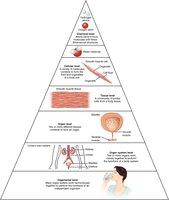
The human body is organized hierarchically, from the smallest chemical level to the whole organism.
Chemical Level: Atoms and molecules.
Cellular Level: Cells and their organelles.
Tissue Level: Groups of similar cells.
Organ Level: Two or more types of tissues working together.
Organ System Level: Organs that work closely together.
Organismal Level: All organ systems combined to form the whole organism.
Body Systems Overview
Major Organ Systems
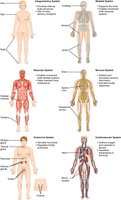
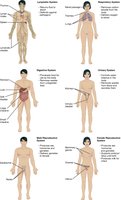
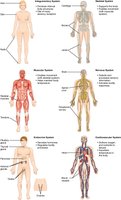
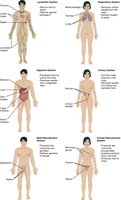
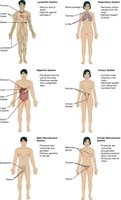
The body is composed of multiple organ systems, each with specific functions essential for life.
Integumentary System: Protects the body, regulates temperature.
Skeletal System: Provides structure and support.
Muscular System: Enables movement.
Nervous System: Controls and coordinates body activities.
Endocrine System: Regulates processes via hormones.
Cardiovascular System: Transports blood, nutrients, and wastes.
Lymphatic System: Defends against infection.
Respiratory System: Facilitates gas exchange.
Digestive System: Breaks down and absorbs nutrients.
Urinary System: Removes waste and maintains fluid balance.
Reproductive System: Produces offspring.
Requirements for Life
Necessary Life Functions
All living organisms must perform certain functions to maintain life, including organization, metabolism, responsiveness, movement, development, and reproduction.
Organization: Maintaining boundaries between internal and external environments (e.g., skin, plasma membrane).
Metabolism: All chemical reactions in the body, including catabolism (breakdown) and anabolism (synthesis).
Responsiveness: Ability to sense and respond to changes (e.g., withdrawal reflex, sweating).
Movement: Motion of the body, cells, and organs.
Development: Growth and differentiation of cells and tissues.
Reproduction: Cellular division for growth and repair; production of offspring.

Organization: Maintaining Boundaries
Boundaries are essential for separating internal environments from external threats and maintaining homeostasis.
Cellular Boundaries: Plasma membrane separates cell contents from surroundings.
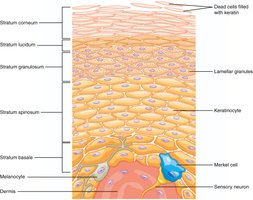
Organismal Boundaries: Skin protects internal organs and fluids.
Metabolism: Chemical Reactions
Metabolism encompasses all chemical reactions in the body, including digestion and excretion.
Catabolism: Breakdown of molecules for energy.
Anabolism: Synthesis of molecules for growth and repair.
Example: Digestion breaks down food into absorbable molecules; excretion removes waste.
Responsiveness: Sensing and Reacting
Responsiveness is the ability to detect and respond to stimuli, ensuring survival and adaptation.
Example: Withdrawal reflex prevents injury; sweating regulates temperature.

Movement: Motion and Locomotion
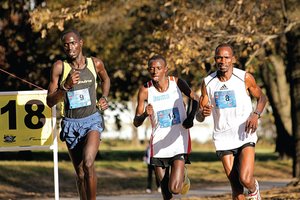
Movement includes both voluntary actions (e.g., running) and involuntary processes (e.g., blood flow).
Cellular Movement: Blood flow, hormone secretion.
Body Movement: Running, reaching, bending.
Development: Growth and Differentiation
Development refers to all changes throughout life, including growth and differentiation of cells.
Differentiation: Unspecialized cells become specialized.
Growth: Increase in body size.
Reproduction: Cellular and Organismal
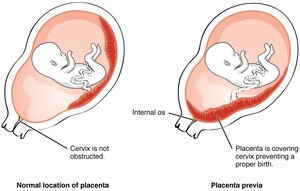
Reproduction is essential for maintaining cell populations and producing offspring.
Cellular Reproduction: Cell division for growth and repair.
Organismal Reproduction: Production of offspring.
Survival Needs
Essential Factors for Human Survival
Humans require several factors in appropriate amounts for survival, including nutrients, oxygen, water, normal body temperature, and atmospheric pressure.
Nutrients: Chemicals for energy and cell building (carbohydrates, proteins, fats, minerals, vitamins).
Oxygen: Required for oxidative metabolism; survival is limited without oxygen.
Water: Most abundant chemical; necessary for chemical reactions and as a fluid base.
Normal Body Temperature: Essential for proper rates of chemical reactions (37°C).
Atmospheric Pressure: Required for adequate breathing and gas exchange.
Homeostasis
Definition and Importance
Homeostasis is the maintenance of stable internal conditions despite external changes. It is achieved through dynamic equilibrium and the coordinated actions of all organ systems.
Examples: Regulation of body temperature, pH, and metabolite levels.
Dynamic Equilibrium: Continuous adjustment within narrow limits.
Homeostatic Controls: Components and Mechanisms
Homeostatic regulation involves three main components: receptor, control center, and effector.
Receptor (Sensor): Monitors environment and responds to stimuli.
Control Center: Determines set point, receives input, and directs response.
Effector: Executes response to restore balance (e.g., sweating, shivering).
Feedback: Negative feedback reduces stimulus; positive feedback enhances stimulus.
Discussion Questions
Learning Habits and Life Factors
Good Learning Habits: Preparation, active engagement, and reflection improve exam performance.
Three Factors Required for Life: Organization, metabolism, and responsiveness.
Body Systems Impacted by a Broken Arm: Skeletal system (bone injury), muscular system (movement impairment), nervous system (pain and sensation), and cardiovascular system (blood supply).
Appendix: Cardiovascular System Example
Heart Chambers and Circulation
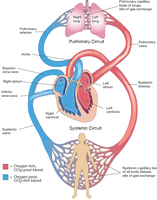
The heart is a central organ in the cardiovascular system, with four chambers (right atrium, left atrium, right ventricle, left ventricle) and two main circuits (pulmonary and systemic).
Pulmonary Circuit: Carries blood to and from the lungs for gas exchange.
Systemic Circuit: Delivers oxygen-rich blood to the body and returns oxygen-poor blood to the heart.