 뒤로
뒤로Body Orientation, Anatomical Terminology, and Organ Systems: Study Guide
스터디 가이드 - 스마트 노트
 자료에 맞춘 맞춤형 노트, 핵심 정의, 예시, 맥락을 확장해 제공합니다.
Body Orientation & Anatomical Position
Anatomical Position
The anatomical position is the standard reference for describing the human body. The body stands upright, feet shoulder-width apart, arms at the sides, and palms facing forward. This position ensures consistency in anatomical descriptions.
Importance: Provides a universal starting point for anatomical terminology.
Application: Used to describe locations and relationships of body parts.
Anatomical Terminology
Directional Terms
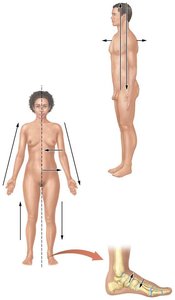
Directional terms are used to describe the location of one body part relative to another.
Anterior (ventral): Toward the front of the body.
Posterior (dorsal): Toward the back of the body.
Superior (cranial): Toward the head.
Inferior (caudal): Toward the feet.
Proximal: Closer to the point of origin (usually the trunk).
Distal: Farther from the point of origin.
Medial: Closer to the midline of the body.
Lateral: Farther from the midline.
Superficial: Closer to the surface.
Deep: Farther below the surface.
Example: The esophagus is anterior to the spinal cord.
Anatomical Planes & Sections
Anatomical planes are imaginary lines that divide the body into sections, aiding in anatomical study and medical imaging.
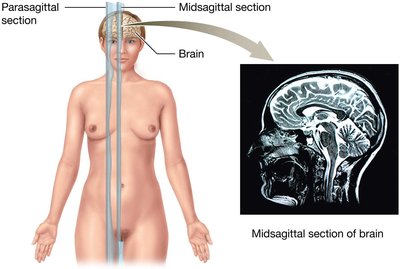
Sagittal Plane: Divides the body into left and right portions.
Midsagittal (Median) Plane: Divides the body into equal left and right halves.
Parasagittal Plane: Divides the body into unequal left and right portions.
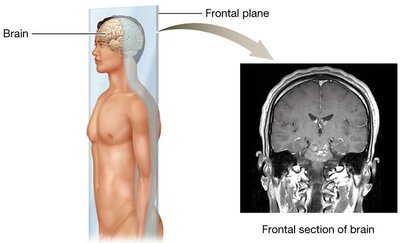
Frontal (Coronal) Plane: Divides the body into anterior and posterior portions.
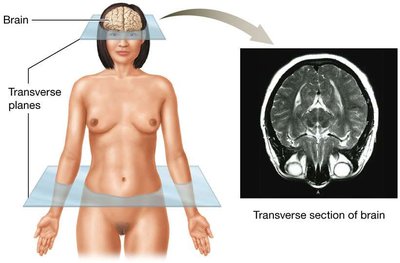
Transverse (Horizontal) Plane: Divides the body into superior and inferior portions.
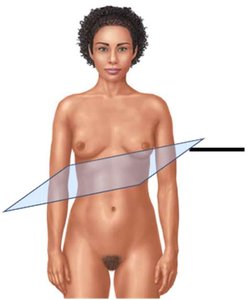
Oblique Plane: Divides the body at an angle.
Application: Used in medical imaging (e.g., MRI, CT scans) to view internal structures.
Plane | Description |
|---|---|
Sagittal | Left and right portions |
Midsagittal | Equal left and right halves |
Parasagittal | Unequal left and right portions |
Frontal (Coronal) | Anterior and posterior portions |
Transverse (Horizontal) | Superior and inferior portions |
Oblique | Angled portions |
Regional Terminology
Major Anatomical Regions
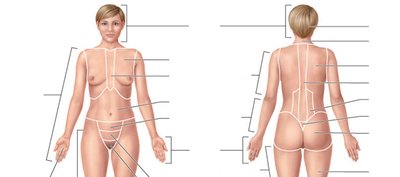
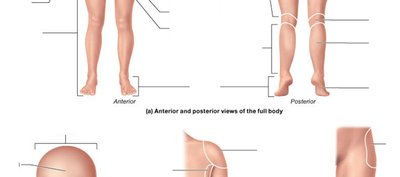
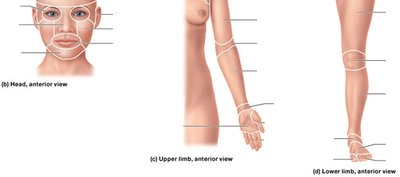
Regional terms specify distinct areas of the body, aiding in precise anatomical descriptions.
Trunk: Thoracic, sternal, abdominal, pelvic, inguinal, pubic, dorsal, vertebral, lumbar, sacral, gluteal
Head & Neck: Cephalic, occipital, cervical, cranial, frontal, ocular, nasal, mental, otic, buccal, oral
Upper Limb: Palmar, manual, brachial, antecubital, antebrachial, axillary, arm, acromial, forearm, carpal, digital, metacarpal, pollex
Lower Limb: Leg, thigh, pedal, coxal, femoral, metatarsal, patellar, crural, tarsal, metatarsal, digital, hallux, plantar, sural, popliteal
Example: The brachial region refers to the upper arm.
Abdominopelvic Quadrants
Four Quadrants
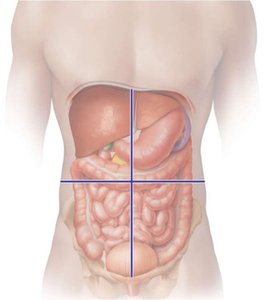
The abdominopelvic cavity is divided into four quadrants for clinical and anatomical reference.
Right Upper Quadrant (RUQ): Contains liver, gallbladder, part of colon.
Right Lower Quadrant (RLQ): Contains appendix, part of small intestine.
Left Upper Quadrant (LUQ): Contains stomach, spleen, part of colon.
Left Lower Quadrant (LLQ): Contains descending colon, part of small intestine.
Application: Used to localize pain or pathology in clinical practice.
Organ Systems of the Human Body
Overview of Major Organ Systems
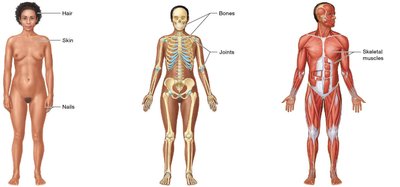
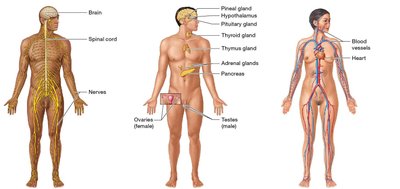
The human body consists of several organ systems, each with specific functions and major organs.
Organ System | Major Organs | Function(s) |
|---|---|---|
Integumentary | Skin, hair, nails | Protection, temperature regulation |
Skeletal | Bones, joints | Support, movement, protection |
Muscular | Skeletal muscles | Movement, posture |
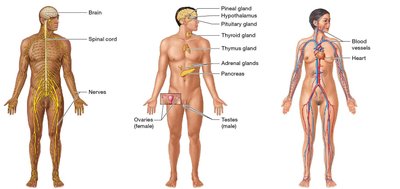
Nervous | Brain, spinal cord, nerves | Control, communication |
Endocrine | Pituitary, thyroid, adrenal glands, pancreas, ovaries, testes | Hormone regulation |
Cardiovascular | Heart, blood vessels | Transport of nutrients and waste |
Lymphatic & Immune | Lymph nodes, spleen, thymus | Defense, fluid balance |
Respiratory | Lungs, trachea, pharynx | Gas exchange |
Digestive | Stomach, intestines, liver | Digestion, absorption |
Urinary | Kidneys, bladder | Waste removal, fluid balance |
Male Reproductive | Testes, prostate, penis | Reproduction |
Female Reproductive | Ovaries, uterus, vagina | Reproduction |
Laboratory Activities & Applications
Applying Anatomical Terminology
Lab exercises reinforce the use of anatomical position, directional terms, regional terminology, and identification of organ systems. Activities include labeling diagrams, using models, and applying terminology to real-life scenarios.
Practice assuming anatomical position and correcting posture.
Label diagrams with directional and regional terms.
Identify anatomical planes and sections using models and diagrams.
Locate abdominopelvic quadrants and major organs.
Sort organs into their respective systems.
Example: Cutting a Play-Doh model along different planes to visualize anatomical sections.
References
Definitions and functions adapted from Amerman, E. (2025). Human Anatomy & Physiology (3rd ed.), Pearson Education, Inc. and Greene, M.L., Robison, R.H., and L.C. Strong. (2021). Laboratory Manual for Human Anatomy & Physiology: A Hands-on Approach, Pig Version. Pearson Education, Inc.
