 뒤로
뒤로Body Orientation, Anatomical Terminology, and Organ Systems: Foundational Concepts in Anatomy & Physiology
스터디 가이드 - 스마트 노트
 자료에 맞춘 맞춤형 노트, 핵심 정의, 예시, 맥락을 확장해 제공합니다.
Body Orientation & Anatomical Position
Anatomical Position
The anatomical position is the standard reference posture used to describe locations and directions on the human body. In this position, the body stands upright, feet shoulder-width apart, arms at the sides, and palms facing forward. The head and eyes are directed straight ahead. This position provides a consistent frame of reference for anatomical terminology.
Anatomical Terminology
Directional Terms
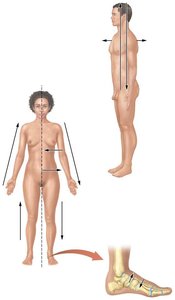
Directional terms are used to describe the locations of structures or the direction of movements relative to the body or another structure. These terms are essential for clear communication in anatomy.
Anterior (ventral): Toward the front of the body (e.g., the esophagus is anterior to the spinal cord).
Posterior (dorsal): Toward the back of the body.
Superior (cranial): Toward the head.
Inferior (caudal): Toward the feet or tail.
Proximal: Closer to the point of origin (usually the trunk).
Distal: Farther from the point of origin.
Medial: Closer to the midline of the body.
Lateral: Farther from the midline.
Superficial: Closer to the surface of the body.
Deep: Farther below the surface.
Anatomical Planes and Sections
Anatomical planes are imaginary lines that divide the body into sections. These planes are used to describe locations, directions, and to make cross-sectional images for study.
Plane | Description |
|---|---|
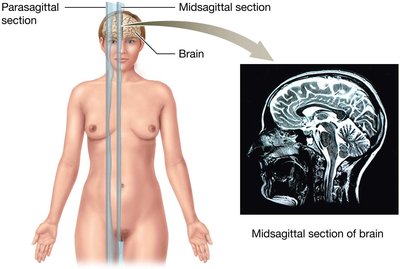
Sagittal | Divides the body into right and left portions |
Midsagittal (median) | Divides the body into equal right and left halves |
Parasagittal | Divides the body into unequal right and left portions |
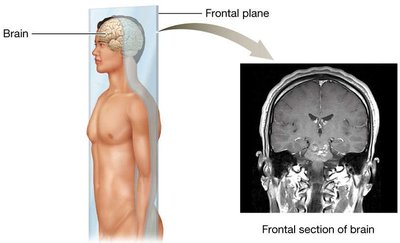
Frontal (coronal) | Divides the body into anterior (front) and posterior (back) portions |
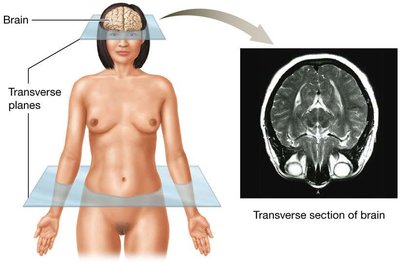
Transverse (horizontal) | Divides the body into superior (upper) and inferior (lower) portions |
Oblique | Divides the body at an angle that is not parallel to the other planes |
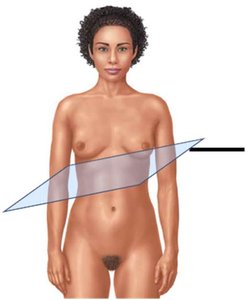
Application of Planes and Sections
Longitudinal sections are made along the length of a structure (e.g., sagittal, frontal).
Cross sections are made perpendicular to the length (e.g., transverse).
Sections are used in anatomy to visualize internal structures and relationships.
Regional Terms
Major Body Regions
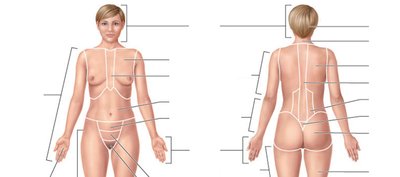
Regional terms specify distinct areas of the body, aiding in precise identification and communication. These regions are grouped by trunk, head & neck, upper limb, and lower limb.
Trunk: Thoracic, sternal, abdominal, pelvic, inguinal, pubic, dorsal, vertebral, lumbar, sacral, gluteal
Head & Neck: Cephalic, occipital, cervical, cranial, frontal, ocular, nasal, mental, otic, buccal, oral
Upper Limb: Palmar, manual, brachial, antecubital, antebrachial, axillary, arm, acromial, forearm, carpal, digital, metacarpal, pollex
Lower Limb: Leg, thigh, pedal, coxal, femoral, metatarsal, patellar, crural, tarsal, digital, hallux, plantar, sural, popliteal
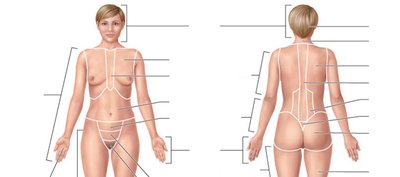
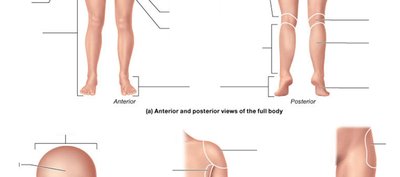
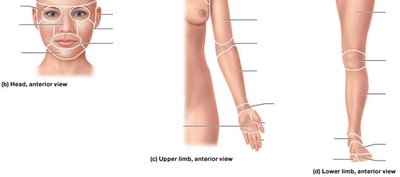
Abdominopelvic Quadrants
Quadrant System
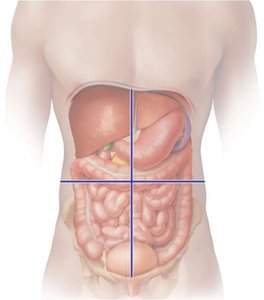
The abdominopelvic cavity is divided into four quadrants to help locate organs and describe pain or injury. The quadrants are:
Quadrant Name | Description |
|---|---|
Right Upper Quadrant (RUQ) | Contains liver, gallbladder, right kidney, portions of stomach, small and large intestines |
Right Lower Quadrant (RLQ) | Contains cecum, appendix, right ovary and fallopian tube (female), right ureter |
Left Upper Quadrant (LUQ) | Contains stomach, spleen, left lobe of liver, pancreas, left kidney, portions of large intestine |
Left Lower Quadrant (LLQ) | Contains most of small intestine, left ureter, left ovary and fallopian tube (female) |
Organ Systems of the Human Body
Overview of Major Organ Systems
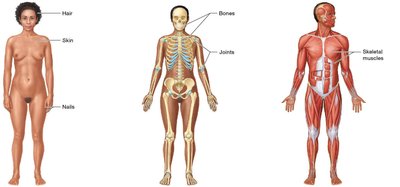
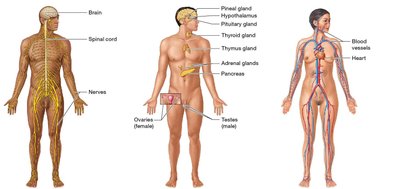
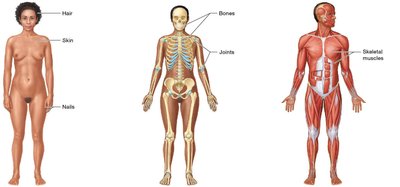
The human body is organized into eleven major organ systems, each with specific functions and major organs. Understanding these systems is foundational to anatomy and physiology.
Organ System | Major Organs | Function(s) |
|---|---|---|
Integumentary | Skin, hair, nails | Protection, temperature regulation, sensation |
Skeletal | Bones, joints | Support, movement, protection, blood cell production |
Muscular | Skeletal muscles | Movement, posture, heat production |
Nervous | Brain, spinal cord, nerves | Control, coordination, response to stimuli |
Endocrine | Pituitary, thyroid, adrenal glands, pancreas, gonads | Hormone production, regulation of metabolism and growth |
Cardiovascular | Heart, blood vessels | Transport of nutrients, gases, wastes; immune response |
Lymphatic & Immune | Lymph nodes, spleen, thymus, lymphatic vessels | Fluid balance, defense against pathogens |
Respiratory | Lungs, trachea, bronchi | Gas exchange (O2/CO2) |
Digestive | Mouth, esophagus, stomach, intestines, liver, pancreas | Breakdown and absorption of nutrients, waste elimination |
Urinary | Kidneys, ureters, bladder, urethra | Waste removal, water and electrolyte balance |
Reproductive (Male/Female) | Testes, penis / Ovaries, uterus, vagina | Production of gametes, hormone secretion, reproduction |
Summary Table: Anatomical Planes and Sections
Plane | How it Divides the Body | Example |
|---|---|---|
Midsagittal | Equal right and left halves | Brain MRI in midsagittal section |
Parasagittal | Unequal right and left portions | Section lateral to the midline |
Frontal (coronal) | Anterior and posterior portions | Frontal section of the brain |
Transverse (horizontal) | Superior and inferior portions | Transverse section of the brain |
Oblique | At an angle | Oblique section through the abdomen |
Key Takeaways
Mastery of anatomical terminology is essential for clear communication in health sciences.
Understanding body planes and sections is crucial for interpreting medical imaging and anatomical diagrams.
Regional and directional terms allow precise localization of structures and injuries.
The human body is organized into eleven major organ systems, each with specialized functions vital for survival.
