 뒤로
뒤로Cell Division and Protein Synthesis: Structure, Regulation, and Clinical Relevance
스터디 가이드 - 스마트 노트
 자료에 맞춘 맞춤형 노트, 핵심 정의, 예시, 맥락을 확장해 제공합니다.
Cell Cycle and Cell Division
Overview of the Cell Cycle
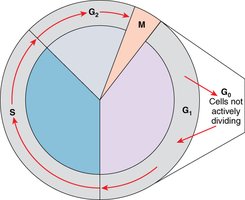
The cell cycle is a series of events that cells go through as they grow and divide. It consists of two major periods: interphase (when the cell grows and performs its normal functions) and the M phase (when the cell divides).
Interphase: Includes G1 (growth), S (DNA synthesis), and G2 (preparation for division).
M phase (Mitotic phase): Includes mitosis (nuclear division) and cytokinesis (cytoplasmic division).
G0 phase: Cells that exit the cycle and do not actively divide.
Interphase and DNA Replication
During interphase, the cell prepares for division by growing and replicating its DNA. The S phase is critical for DNA replication, ensuring each daughter cell receives an identical set of chromosomes.
G1 phase: Cell grows and carries out metabolism.
S phase: DNA is replicated; each chromosome forms two sister chromatids.
G2 phase: Cell prepares for mitosis.
G0 phase: Non-dividing state for cells that have exited the cycle.
DNA Replication
DNA replication is a semiconservative process, meaning each new DNA molecule consists of one old strand and one new strand. The process involves several enzymes and occurs at the replication fork.
Helicase: Unwinds and separates DNA strands.
DNA polymerase: Synthesizes new DNA strands by adding nucleotides to the template strand.
Leading strand: Synthesized continuously.
Lagging strand: Synthesized discontinuously in Okazaki fragments, later joined by DNA ligase.
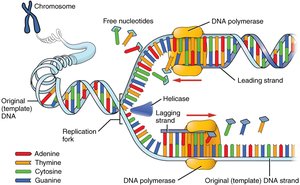
Semiconservative replication: Each daughter DNA molecule contains one parental and one newly synthesized strand.
Mitosis and Cytokinesis
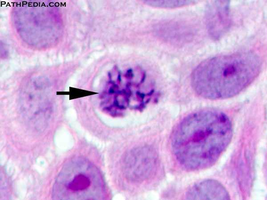
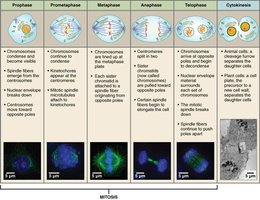
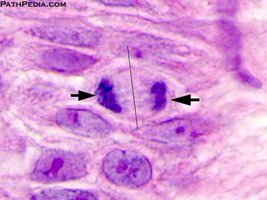
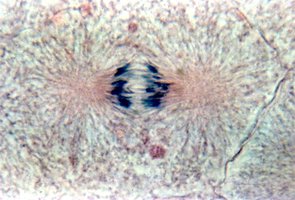
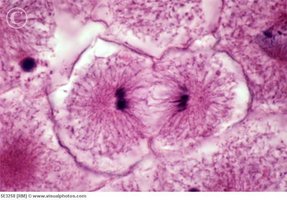
Mitosis is the process by which a cell divides its nucleus and contents. It consists of four main phases: prophase, metaphase, anaphase, and telophase, followed by cytokinesis.
Prophase: Chromatin condenses into chromosomes; spindle fibers form; nuclear envelope breaks down.
Metaphase: Chromosomes align at the metaphase plate.
Anaphase: Sister chromatids separate and move toward opposite poles.
Telophase: Chromosomes decondense; nuclear envelopes reform.
Cytokinesis: Division of the cytoplasm, forming two daughter cells.
Control of Cell Division
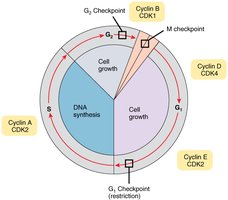
Cell division is tightly regulated by internal and external signals to ensure proper growth and tissue maintenance. Key regulatory proteins include cyclins and cyclin-dependent kinases (CDKs), which control progression through cell cycle checkpoints.
Go signals: Surface-to-volume ratio, growth factors, hormones.
Stop signals: Contact inhibition, lack of space.
Checkpoints: G1 (restriction point), G2, and M checkpoints ensure DNA integrity and proper division.
Protein Synthesis
Genetic Code and Role of DNA
DNA contains the genetic instructions for protein synthesis. Genes are segments of DNA that code for specific polypeptides. The genetic code is a sequence of three bases (triplet code) that specifies each amino acid.
Exons: Coding regions of genes.
Introns: Non-coding regions removed during mRNA processing.
Transcription and RNA Types
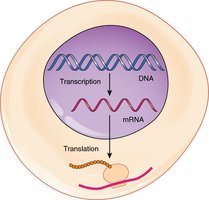
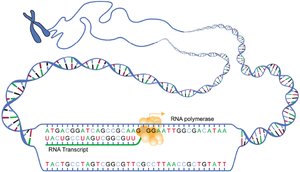
Transcription is the process of copying DNA information into messenger RNA (mRNA). RNA acts as the intermediary between DNA and protein synthesis.
mRNA (messenger RNA): Carries genetic code from DNA to ribosomes.
rRNA (ribosomal RNA): Structural component of ribosomes.
tRNA (transfer RNA): Brings amino acids to ribosomes during translation.
Phases of Transcription
Initiation: RNA polymerase binds to promoter and unwinds DNA.
Elongation: RNA polymerase adds complementary RNA nucleotides.
Termination: RNA polymerase reaches a stop signal and releases the mRNA transcript.
Processing of mRNA
Before translation, pre-mRNA is processed to remove introns and splice together exons, forming mature mRNA ready for translation.
Translation and the Role of tRNA
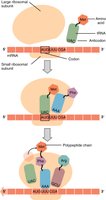
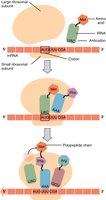
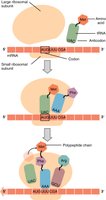
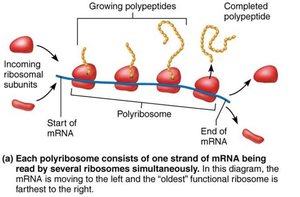
Translation is the process by which ribosomes synthesize proteins using the mRNA template. tRNA molecules bring specific amino acids to the ribosome, matching their anticodon to the mRNA codon.
Initiation: Ribosome assembles around the start codon of mRNA.
Elongation: Amino acids are added one by one to the growing polypeptide chain.
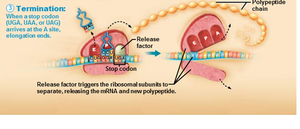
Termination: When a stop codon is reached, the polypeptide is released.
Cellular Growth, Differentiation, and Aging
Cellular Differentiation and Growth
All cells contain the same DNA, but differentiation allows cells to develop specialized functions. Growth and repair require regulated cell division, while hyperplasia and atrophy refer to increased or decreased cell size, respectively.
Cell Aging and Clinical Relevance
Cell aging is influenced by genetic and environmental factors. Telomeres protect chromosome ends but shorten with each division, limiting cell lifespan. The enzyme telomerase can extend telomeres, contributing to cellular immortality in cancer cells.
Wear and tear theory: Accumulated damage over time leads to aging.
Mitochondrial theory: Free radicals damage mitochondria, reducing energy production.
Genetic theory: Aging is programmed into genes.
Clinical Example: Progeria
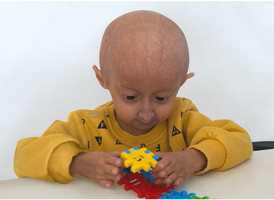
Progeria is a rare genetic disorder that mimics accelerated aging due to a defective protein in the nuclear lamina, leading to an unstable nucleus and early onset of aging symptoms.
Summary Table: Stages of Mitosis
Stage | Key Events |
|---|---|
Prophase | Chromosomes condense, spindle fibers form, nuclear envelope breaks down |
Metaphase | Chromosomes align at metaphase plate |
Anaphase | Sister chromatids separate and move to opposite poles |
Telophase | Chromosomes decondense, nuclear envelopes reform |
Cytokinesis | Cytoplasm divides, forming two daughter cells |
Key Equations and Concepts
Number of possible codons:
Semiconservative replication: Each new DNA molecule contains one parental and one new strand.
