 뒤로
뒤로Cell Structure and the Cell Cycle: Foundations of Anatomy & Physiology
스터디 가이드 - 스마트 노트
 자료에 맞춘 맞춤형 노트, 핵심 정의, 예시, 맥락을 확장해 제공합니다.
Cell Structure
Overview of Eukaryotic Cells
Eukaryotic cells are the fundamental units of structure and function in the human body. They are characterized by membrane-bound organelles and a defined nucleus, which distinguishes them from prokaryotic cells.
Plasma Membrane: The outer boundary of the cell, composed of a phospholipid bilayer. It regulates the movement of substances into and out of the cell and cannot be seen under a light microscope.
Cytoplasm: The internal environment of the cell, containing cytosol, cytoskeleton, and organelles. It is enclosed by the plasma membrane.
Major Organelles and Their Functions
Ribosomes: Sites of protein synthesis. They may be free-floating in the cytoplasm or attached to the rough endoplasmic reticulum (RER).
Endoplasmic Reticulum (ER):
Smooth ER: Lacks ribosomes; synthesizes lipids and detoxifies certain chemicals.
Rough ER: Studded with ribosomes; synthesizes and processes proteins.
Mitochondria: The "powerhouse" of the cell, converting chemical energy from nutrients into ATP. Key features include cristae (folded inner membrane) and the matrix (internal space).
Golgi Apparatus: Modifies, sorts, and packages proteins and lipids for secretion or delivery to other organelles.
Lysosomes: Contain digestive enzymes to break down damaged organelles and cellular debris.
Peroxisomes: Oxidize organic compounds, producing hydrogen peroxide, which is then used to detoxify harmful substances.
Centrioles: Involved in organizing microtubules and forming the spindle apparatus during cell division.
Vesicles: Membrane-bound sacs for storage and transport of materials within the cell.
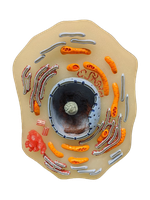
Nucleus and Associated Structures
The nucleus is the control center of the cell, housing genetic material and coordinating cellular activities.
Nuclear Envelope: Double membrane structure with nuclear pores for material exchange between the nucleus and cytoplasm.
Nucleolus: Dense region within the nucleus responsible for ribosome synthesis.
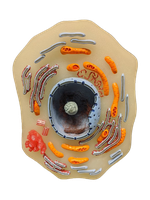
Other Cell Components
Cytoskeleton: Network of microfilaments and microtubules providing structural support and facilitating movement.
Microvilli: Extensions of the plasma membrane that increase surface area for absorption.
Cilia: Short, hair-like structures aiding in movement of substances across the cell surface.
Flagella: Longer, whip-like structures that propel the cell.
The Cell Cycle
Phases of the Cell Cycle
The cell cycle is the series of events that cells go through as they grow and divide. It consists of interphase and the mitotic phase (mitosis and cytokinesis).
Interphase: The period of cell growth and DNA replication, subdivided into:
G1 phase: Cell growth and organelle production.
S phase: DNA synthesis (replication).
G2 phase: Preparation for mitosis and further growth.
Mitosis: Division of the nucleus, followed by cytokinesis (division of the cytoplasm).
Stages of Mitosis
Mitosis is divided into four main stages, each with distinct events:
Prophase: Chromatin condenses into visible chromosomes; nuclear envelope and nucleolus disappear.
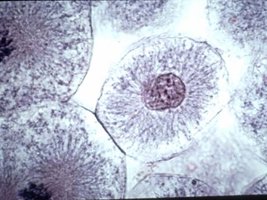
Metaphase: Chromosomes align at the cell's equatorial plane (metaphase plate).
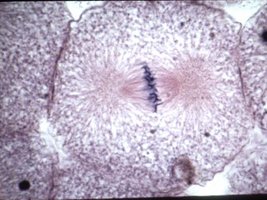
Anaphase: Sister chromatids are pulled apart toward opposite poles; cell elongates.
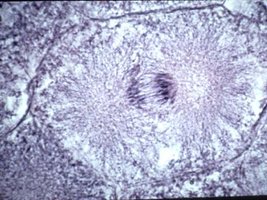
Telophase: Chromosomes decondense; nuclear envelopes reform around each set; cleavage furrow appears.
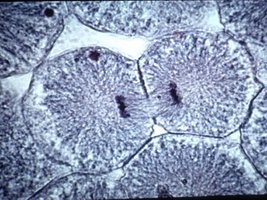
Cytokinesis
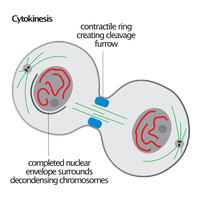
Cytokinesis is the process of dividing the cytoplasm to form two distinct daughter cells. It typically overlaps with telophase but is a separate process. The contractile ring forms, and the nucleolus reappears in each new cell.
Applications and Importance
Oncology: Understanding the cell cycle is crucial for cancer research, as uncontrolled cell division is a hallmark of cancer.
Cytotechnology: Early detection of cancer relies on identifying abnormal cell growth and division patterns.
Pharmacology and Medical Chemistry: Targeted therapies often disrupt specific cell cycle stages to treat cancer.
Reproductive Endocrinology, Clinical Embryology, Molecular Biology, Genetic Counseling: Knowledge of cell division (including meiosis) is essential for understanding development, inheritance, and genetic disorders.
Review and Study Recommendations
Be able to identify all organelles and their functions on cell models.
Recognize all stages of the cell cycle in both diagrams and microscope slides.
Understand the significance of cell cycle checkpoints and their implications in disease.
