 뒤로
뒤로Cellular Structure, Function, and Division: Study Notes for Anatomy & Physiology
스터디 가이드 - 스마트 노트
 자료에 맞춘 맞춤형 노트, 핵심 정의, 예시, 맥락을 확장해 제공합니다.
Cell Theory and Cellular Organization
Cell Theory
The cell theory is foundational to biology and states that cells are the basic building blocks of all living things, the smallest functional units of life, produced by division of preexisting cells, and maintain homeostasis at the cellular level.
Definition: Cells are the structural and functional units of organisms.
Homeostasis: Maintained by coordinated cellular actions.
Cell Diversity: Trillions of cells in the body, with shapes and sizes adapted to their functions.
Cell Structure and Function
Major Parts of a Cell
Cells contain specialized structures called organelles, each with distinct functions.
Nucleus: Control center, stores genetic information, directs protein synthesis.
Cytoplasm: Contains cytosol, organelles, and inclusions.
Plasma Membrane: Encircling barrier, regulates exchange, provides support and sensitivity.
Plasma Membrane Structure
The plasma membrane is a phospholipid bilayer with embedded proteins, cholesterol, and carbohydrates.
Phospholipid Bilayer: Provides isolation and selective permeability.
Cholesterol: Stabilizes membrane fluidity.
Proteins: Act as receptors, channels, carriers, enzymes, and anchors.
Carbohydrates: Lubrication, cell identity, and receptor functions.
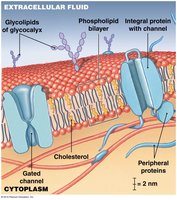
Cell Membrane Proteins
Integral Proteins: Span the membrane, function as channels or carriers.
Peripheral Proteins: Attached to membrane surface, involved in signaling and support.
Gated Channels: Open or close in response to stimuli.
Cytosol and Organelles
Cytosol is the fluid component of cytoplasm, rich in ions, proteins, carbohydrates, and lipids, suspending organelles and facilitating homeostasis.
Non-membranous Organelles: Cytoskeleton, centrosomes/centrioles, cellular extensions, ribosomes, proteasomes.
Membranous Organelles: Endoplasmic reticulum, Golgi apparatus, lysosomes, peroxisomes, mitochondria.
Inclusions: Masses of insoluble materials (glycogen, fat, melanin).
Cytoskeleton
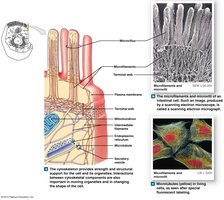
The cytoskeleton provides strength, support, and movement, composed of microfilaments, intermediate filaments, and microtubules.
Microfilaments: Actin filaments for cell shape and movement.
Intermediate Filaments: Structural stability.
Microtubules: Tubulin, form spindle fibers and cellular extensions.
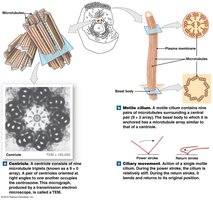
Centrosomes and Centrioles
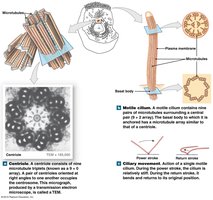
Centrosomes contain centrioles, essential for cell division, forming spindle fibers.
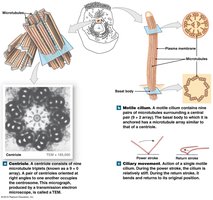
Cellular Extensions: Cilia, Flagella, Microvilli
Cilia: Stationary or moving, sensory or motile functions.
Flagella: Propulsion (e.g., sperm cells).
Microvilli: Increase surface area for absorption.
Ribosomes and Proteasomes
Ribosomes: Sites of protein synthesis, composed of RNA and protein, fixed or free.
Proteasomes: Enzyme complexes that degrade and recycle abnormal proteins.
Membranous Organelles
Endoplasmic Reticulum (ER): Rough ER synthesizes proteins; smooth ER synthesizes lipids, carbohydrates, and detoxifies.
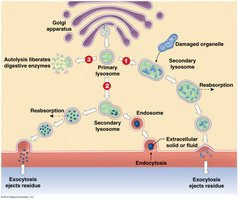
Golgi Apparatus: Modifies, packages, and sorts proteins and enzymes.
Lysosomes: Digest effete organelles, destroy pathogens, autolysis.
Peroxisomes: Catabolize organics, neutralize toxins.
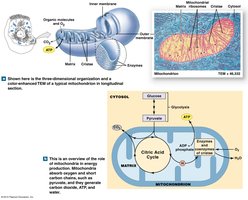
Mitochondria: Site of aerobic respiration and ATP production.
Membrane Transport Mechanisms
Selective Permeability
The cell membrane allows selective transport based on size, shape, solubility, and charge.
Passive Transport: No energy required; includes diffusion, osmosis, and facilitated diffusion.
Active Transport: Requires ATP; includes ion pumps, exchange pumps, and vesicular transport.
Passive Transport
Simple Diffusion: Movement of molecules from high to low concentration.
Channel-mediated Diffusion: Uses transmembrane proteins for non-lipid soluble substances.
Osmosis: Selective diffusion of water through aquaporins, following osmotic gradients.
Osmolality and Tonicity
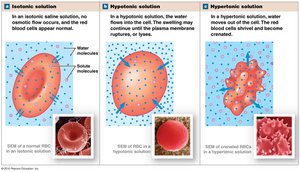
Osmolality refers to the concentration of solutes; tonicity describes the effect of a solution on cell volume.
Isotonic: No net movement of water; cell remains normal.
Hypotonic: Water moves in; cell swells and may rupture.
Hypertonic: Water moves out; cell shrivels.
Carrier-mediated Transport
Facilitated Diffusion: Carrier protein required, follows concentration gradient, no ATP needed.
Active Transport: Requires ATP, independent of concentration gradient.
Symport/Antiport: Linked transport of substances in same or opposite directions.
Vesicular Transport
Endocytosis: Uptake of substances via vesicles; includes receptor-mediated, pinocytosis, and phagocytosis.
Exocytosis: Release of substances from cell via vesicles.
Transcytosis: Bulk transport across cell, combining endocytosis and exocytosis.
Nucleus and Genetic Control
Nucleus Structure
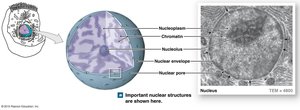
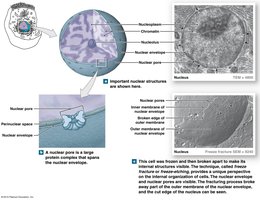
The nucleus is the largest organelle, surrounded by a double membrane (envelope) with pores for communication.
Nucleoplasm: Contains filaments, nucleotides, enzymes, proteins, chromatin, ions, water.
Nucleolus: Synthesizes rRNA, assembles ribosomes.
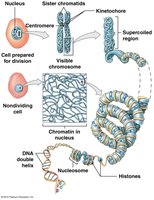
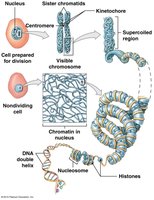
Chromatin: Loose DNA in resting cells.
Chromosomes: Tightly wound DNA for cell division.
Gene Activation and Protein Synthesis
Transcription: DNA is copied to mRNA; involves coding/template strands, polymerase binding, nucleotide linking, and editing (introns/exons).
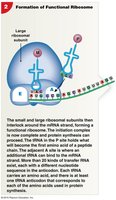
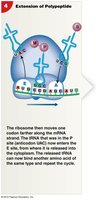
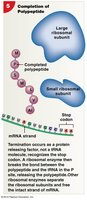
Translation: mRNA is decoded to synthesize proteins; involves tRNA, ribosomes, and codons.
Stages of Translation: Initiation (AUG codon), elongation (polypeptide bonds), termination (stop codons).
Cell Life Cycle and Division
Interphase
Interphase is the period of cell growth and DNA replication, divided into G0, G1, S, and G2 phases.
G0: Normal cell functions.
G1: Organelle duplication.
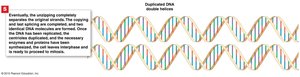
S: DNA replication.
G2: Protein synthesis and preparation for division.
Mitosis and Cytokinesis
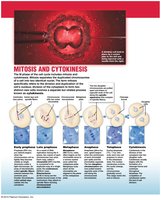
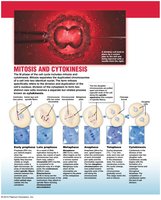
Mitosis is the process of nuclear division, followed by cytokinesis (division of cytoplasm).
Prophase: Chromatin condenses, spindle fibers form.
Metaphase: Chromatids align at metaphase plate.
Anaphase: Centromeres split, chromatids move to poles.
Telophase: Nuclear membrane reforms, chromosomes uncoil.
Cytokinesis: Cytoplasm divides, cleavage furrow forms.
Cellular Differentiation and Abnormal Growth
Cellular Differentiation
Totipotent: Can become any cell type.
Pluripotent: Can become most cell types.
Multipotent: Can become a limited range of cells.
Differentiated Cells: Specialized for specific functions.
Abnormal Growth and Division
Tumors: Benign (non-invasive) or malignant (invasive).
Primary/Secondary Tumors: Origin and spread (metastasis).
Mutations/Mutagens: Genetic changes leading to cancer.
Carcinogens: Agents causing cancer.
Summary Table: Cell Organelles and Functions
Organelle | Function |
|---|---|
Cell wall | Structural support (plants only) |
Cytosol | Suspends organelles, site of metabolic reactions |
Centrioles | Cell division, spindle formation |
Cytoskeleton | Support, movement, shape |
Cilia | Movement, sensory functions |
Flagellum | Propulsion |
Golgi apparatus | Modification, packaging of proteins |
Lysosome | Digestion, autolysis |
Microvilli | Increase surface area |
Mitochondrion | ATP production |
Nucleus | Genetic control, protein synthesis |
Peroxisome | Catabolism, detoxification |
Rough ER | Protein synthesis |
Ribosomes | Protein synthesis |
Smooth ER | Lipid, carbohydrate synthesis, detoxification |
Key Definitions and Comparisons
Osmosis: Diffusion of water across a selectively permeable membrane.
Active vs. Passive Transport: Active requires ATP; passive does not.
Chromatid vs. Chromosome: Chromatids are identical halves of a chromosome; chromosomes are DNA structures for division.
Mutagen vs. Carcinogen: Mutagen causes mutations; carcinogen causes cancer.
Translation vs. Transcription: Transcription copies DNA to mRNA; translation synthesizes protein from mRNA.
Centrosome vs. Kinetochore: Centrosome organizes spindle; kinetochore attaches chromatids to spindle.
Telophase vs. Cytokinesis: Telophase reforms nuclei; cytokinesis divides cytoplasm.
Key Equations
Diffusion Rate: $ Rate = \frac{(Concentration\ Difference) \times (Surface\ Area)}{Distance} $
Osmosis: $ \Pi = iMRT $ (Osmotic pressure: i = ionization constant, M = molarity, R = gas constant, T = temperature)
Additional info:
Some content was expanded for clarity and completeness, including definitions and examples.
Tables and images were recreated and placed only where directly relevant to the explanation.
