 뒤로
뒤로Chapter 1: An Introduction to Anatomy and Physiology – Structured Study Notes
스터디 가이드 - 스마트 노트
 자료에 맞춘 맞춤형 노트, 핵심 정의, 예시, 맥락을 확장해 제공합니다.
Introduction to Anatomy and Physiology
Overview
Anatomy and physiology are foundational sciences in understanding the structure and function of the human body. Anatomy is the study of body structures, while physiology focuses on the functions of those structures. Together, they provide a comprehensive understanding of how the body operates and maintains life.
Levels of Organization in the Human Body
Hierarchical Structure
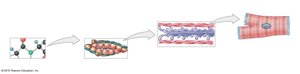
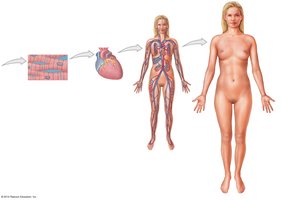
The human body is organized into a series of hierarchical levels, each building upon the previous:
Chemical Level: Atoms combine to form molecules, such as proteins and nucleic acids.
Cellular Level: Molecules interact to form cells, the basic units of life.
Tissue Level: Similar cells group together to perform specific functions, forming tissues.
Organ Level: Different tissues combine to form organs, each with specialized functions.
Organ System Level: Organs work together in organ systems to perform complex functions.
Organism Level: All organ systems function together to maintain the life of the organism.
The Organ Systems of the Human Body
Major Organ Systems and Their Functions
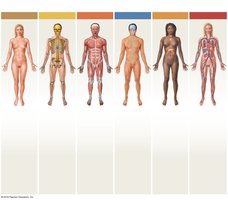
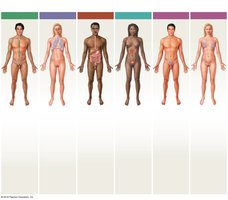
The body consists of eleven major organ systems, each with distinct organs and functions. Understanding these systems is essential for studying anatomy and physiology.
Organ System | Major Organs | Primary Functions |
|---|---|---|
Integumentary | Skin, hair, sweat glands, nails | Protection, temperature regulation, sensory information |
Skeletal | Bones, cartilages, ligaments, bone marrow | Support, protection, mineral storage, blood cell formation |
Muscular | Skeletal muscles, tendons | Movement, support, heat production |
Nervous | Brain, spinal cord, nerves, sense organs | Immediate response to stimuli, coordination, sensory interpretation |
Endocrine | Pituitary, thyroid, pancreas, adrenal glands, gonads | Long-term changes, metabolism regulation, development |
Cardiovascular | Heart, blood, blood vessels | Transport of cells and dissolved materials, heat distribution |
Lymphatic | Spleen, thymus, lymphatic vessels, lymph nodes, tonsils | Defense against infection, return of tissue fluids |
Respiratory | Nasal cavities, sinuses, larynx, trachea, bronchi, lungs, alveoli | Gas exchange, sound production |
Digestive | Teeth, tongue, pharynx, esophagus, stomach, intestines, liver, gallbladder, pancreas | Food processing, nutrient absorption, water conservation |
Urinary | Kidneys, ureters, bladder, urethra | Waste excretion, water balance, pH regulation |
Reproductive (Male) | Testes, epididymides, ductus deferentia, seminal vesicles, prostate, penis, scrotum | Production of sperm, hormones, sexual intercourse |
Reproductive (Female) | Ovaries, uterine tubes, uterus, vagina, labia, clitoris, mammary glands | Production of oocytes, hormones, support of embryo, milk production, sexual intercourse |
Anatomical Terminology
Anatomical Landmarks
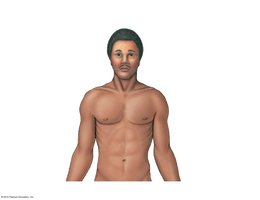
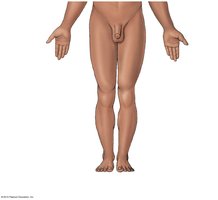
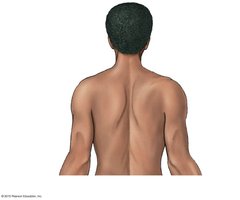
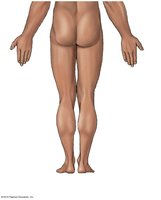
Standard anatomical terms are used to describe locations and regions of the body. These terms help avoid confusion and ensure clear communication in clinical and academic settings.
Anterior (ventral): Front of the body
Posterior (dorsal): Back of the body
Superior: Toward the head
Inferior: Toward the feet
Medial: Toward the midline
Lateral: Away from the midline
Proximal: Closer to the point of attachment
Distal: Farther from the point of attachment
Superficial: Near the surface
Deep: Farther from the surface
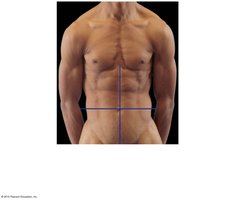
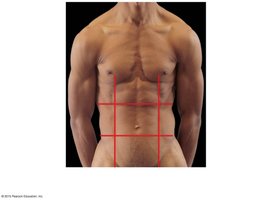
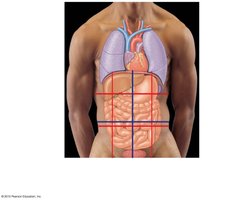
Abdominopelvic Quadrants and Regions
The abdominopelvic area is divided into quadrants and regions for clinical and anatomical reference:
Quadrants: Right Upper (RUQ), Right Lower (RLQ), Left Upper (LUQ), Left Lower (LLQ)
Regions: Nine regions including hypochondriac, lumbar, inguinal, epigastric, umbilical, and hypogastric (pubic)
Sectional Planes
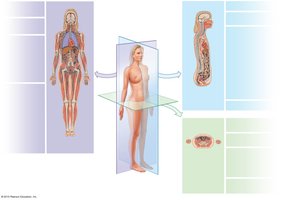
Sectional planes are used to describe slices of the body or its organs:
Frontal (coronal) plane: Divides the body into anterior and posterior portions.
Sagittal plane: Divides the body into right and left portions. The midsagittal plane divides it into equal halves; the parasagittal plane divides it unequally.
Transverse (horizontal) plane: Divides the body into superior and inferior portions.
Body Cavities and Serous Membranes
Major Body Cavities
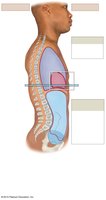
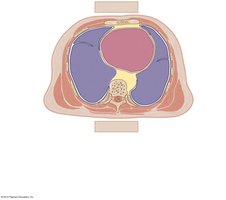
The trunk of the body contains major cavities that house vital organs:
Thoracic cavity: Contains the heart and lungs, subdivided into pleural and pericardial cavities.
Abdominopelvic cavity: Contains digestive, urinary, and reproductive organs; subdivided into abdominal and pelvic cavities.
Serous Membranes
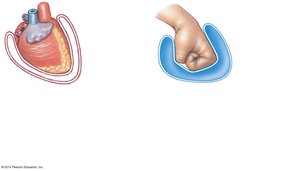
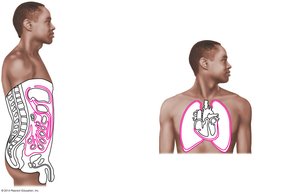
Serous membranes line body cavities and cover organs, reducing friction:
Parietal layer: Lines the cavity wall.
Visceral layer: Covers the organ surface.
Examples include the pericardium (heart), pleura (lungs), and peritoneum (abdominal organs).
Homeostasis and Feedback Mechanisms
Homeostasis
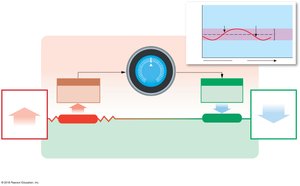
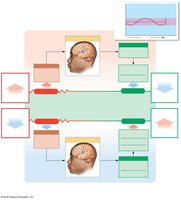
Homeostasis is the maintenance of a stable internal environment. It is essential for the survival of cells and the organism as a whole. Homeostatic regulation involves three components:
Receptor: Detects changes in the environment (stimuli).
Control Center: Processes information and determines the response (often the brain or endocrine glands).
Effector: Carries out the response to restore balance.
Negative Feedback
Negative feedback is the primary mechanism of homeostatic regulation. It counteracts changes from the set point, restoring normal conditions. Example: regulation of body temperature.
Positive Feedback
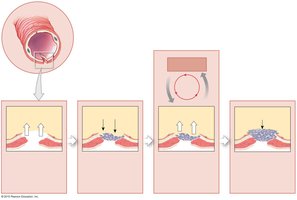
Positive feedback amplifies a change instead of reversing it. It is less common but important in processes like blood clotting and childbirth. Example: blood clotting cascade.
Roles of Organ Systems in Homeostatic Regulation
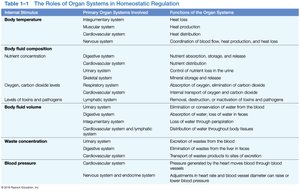
Each organ system contributes to homeostasis by regulating specific variables such as temperature, fluid balance, and waste concentration.
Homeostatic Variable | Primary Organ Systems Involved | Functions |
|---|---|---|
Body temperature | Integumentary, muscular, cardiovascular, nervous | Heat loss, heat production, heat distribution |
Body fluid composition | Digestive, cardiovascular, urinary, skeletal, respiratory | Nutrient absorption, oxygen and carbon dioxide transport, waste removal |
Body fluid volume | Urinary, digestive, integumentary, cardiovascular, lymphatic | Water absorption, loss, and distribution |
Waste concentration | Urinary, digestive, cardiovascular | Excretion of waste from blood and body |
Blood pressure | Cardiovascular, nervous, endocrine | Heart rate and force, blood vessel diameter |
Summary
This chapter introduces the essential concepts of anatomy and physiology, including the organization of the human body, the major organ systems, anatomical terminology, body cavities, and the principles of homeostasis. Mastery of these foundational topics is critical for further study in the field.
