 뒤로
뒤로Chapter 1: Introduction to Anatomy & Physiology – Study Notes
스터디 가이드 - 스마트 노트
 자료에 맞춘 맞춤형 노트, 핵심 정의, 예시, 맥락을 확장해 제공합니다.
Introduction to Anatomy & Physiology
Overview of Anatomy and Physiology
Anatomy is the study of the structure of the body, while physiology is the study of its function. These two disciplines are closely related and cannot be fully separated, as the structure of a body part determines its function, and understanding function provides meaning to structure.
Anatomy: Focuses on the form and organization of body parts.
Physiology: Explores how those parts work and interact.
Structure = Function: Any alteration in structure can affect function.
Subdisciplines of Anatomy
Anatomy is divided into several subfields, each focusing on different levels of biological organization:
Gross Anatomy: Study of structures visible to the naked eye.
Histology (Microscopic Anatomy): Examination of tissues using a microscope.
Histopathology: Microscopic study of tissues for signs of disease.
Cytology: Study of cell structure and function, often using electron microscopy for fine details.
The Body’s Structural Hierarchy
Levels of Organization
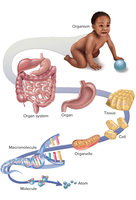
The human body is organized into a hierarchy of increasing complexity, from the smallest chemical units to the complete organism.
Atom: Smallest unit of matter with unique chemical identity.
Molecule: Two or more atoms bonded together; macromolecules include proteins, fats, and DNA.
Organelle: Specialized structures within cells that perform specific functions.
Cell: Basic unit of life capable of carrying out all life processes.
Tissue: Groups of similar cells performing a specific function.
Organ: Structure composed of two or more tissue types working together.
Organ System: Group of organs with a unique collective function (e.g., digestive, circulatory systems).
Organism: A single, complete individual.
Anatomical Variation
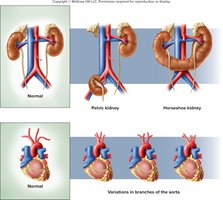
No two humans are exactly alike. While textbooks show the most common anatomical arrangements, variations exist:
Some individuals lack certain muscles or have extra vertebrae or organs.
Situs inversus: A condition where organ placement is mirrored left-to-right.
Characteristics of Life
Defining Life
Living organisms are distinguished from nonliving things by several key characteristics:
Organization: Highly ordered structure.
Cellular Composition: Composed of one or more cells.
Metabolism: Sum of all internal chemical reactions.
Responsiveness (Excitability): Ability to sense and respond to stimuli.
Movement: Movement of the organism or substances within it.
Homeostasis: Maintenance of stable internal conditions.
Development: Change in form or function over time, including differentiation and growth.
Reproduction: Production of offspring and transmission of genetic material.
Evolution: Genetic change in populations over generations.
Homeostasis and Feedback Mechanisms
Negative Feedback and Homeostasis
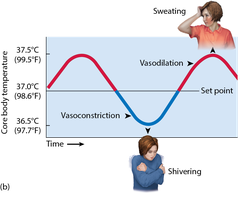
Homeostasis is the body's ability to maintain stable internal conditions. Negative feedback loops are the primary mechanism for maintaining homeostasis, constantly working to correct deviations from a set point.
If body temperature rises, mechanisms such as vasodilation and sweating lower it.
If body temperature falls, vasoconstriction and shivering raise it.
Loss of homeostatic control can result in illness or death.
Components of a Negative Feedback Loop
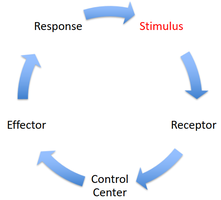
Each negative feedback loop involves several key components:
Stimulus: Change that triggers a response.
Receptor: Detects the change.
Input: Information sent to the control center.
Control Center: Processes information and determines response.
Output: Instructions sent to the effector.
Effector: Carries out the response to restore balance.
Response: Action that negates the original stimulus.
Positive Feedback and Rapid Change
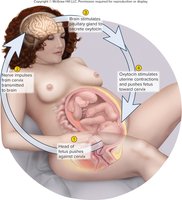
Positive feedback amplifies a change rather than reversing it. This mechanism is less common but important in processes that need a definitive outcome, such as childbirth or blood clotting. Positive feedback can be dangerous if uncontrolled, as in runaway fever.
Self-amplifying cycle: The response increases the original stimulus.
Examples: Childbirth, blood clotting, protein digestion, nerve signal generation.
Gradients and Flow
Concept of Gradients
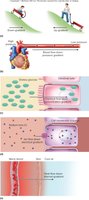
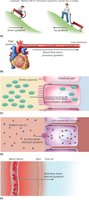
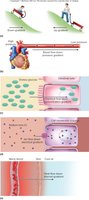
Movement of matter and energy in the body typically occurs down gradients—differences in concentration, pressure, temperature, or electrical charge between two points. Movement down a gradient does not require energy, while movement against a gradient does.
Pressure Gradient: Blood flows from high to low pressure.
Concentration Gradient: Chemicals move from high to low concentration.
Electrical Gradient: Charged particles move from high to low charge concentration.
Electrochemical Gradient: Combination of concentration and electrical gradients.
Thermal Gradient: Heat moves from high to low temperature.
Summary Table: Levels of Organization
Level | Description | Example |
|---|---|---|
Atom | Smallest unit of matter | Oxygen atom |
Molecule | Two or more atoms bonded | Water (H2O) |
Organelle | Functional structure within a cell | Mitochondrion |
Cell | Basic unit of life | Muscle cell |
Tissue | Group of similar cells | Muscle tissue |
Organ | Two or more tissues working together | Stomach |
Organ System | Group of organs with a collective function | Digestive system |
Organism | Complete individual | Human |
Additional info: Understanding these foundational concepts is essential for further study in anatomy and physiology, as they provide the framework for exploring more complex systems and processes in the human body.
