 뒤로
뒤로Chapter 1: Introduction to Anatomy and Physiology – Structured Study Notes
스터디 가이드 - 스마트 노트
 자료에 맞춘 맞춤형 노트, 핵심 정의, 예시, 맥락을 확장해 제공합니다.
Introduction to Anatomy and Physiology
Definition and Scope
Anatomy and physiology are foundational sciences for understanding the human body. Human Anatomy is the study of the structure or form of the human body, while Human Physiology is the study of the body’s functions. The relationship between structure and function is central: the form of a body part is closely related to its function, summarized by the principle 'form follows function.'
Levels of Structural Organization and Body Systems
Hierarchical Levels of Organization
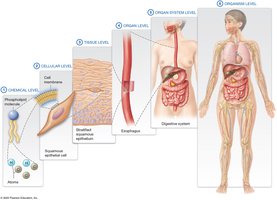
The human body is organized into a series of progressively larger building blocks, each with distinct structural and functional characteristics:
Chemical Level: The smallest level, consisting of atoms and molecules that form the basis of all matter.
Cellular Level: Molecules combine to form cellular structures, the basic units of life.
Tissue Level: Groups of similar cells and their extracellular matrix perform a common function.
Organ Level: Two or more tissue types combine to form organs with specialized tasks.
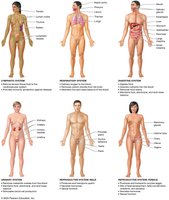
Organ System Level: Multiple organs work together to carry out broad functions; the human body has 11 organ systems.
Organism Level: All organ systems function together to form the complete human organism.
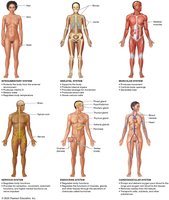
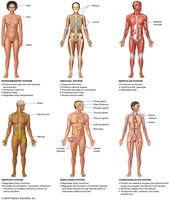
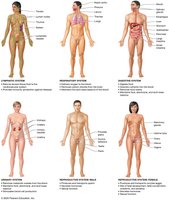
The 11 Organ Systems of the Human Body
The human body is composed of 11 distinct organ systems, each responsible for specific physiological functions. These systems include:
Integumentary System
Skeletal System
Muscular System
Nervous System
Endocrine System
Cardiovascular System
Lymphatic System
Respiratory System
Digestive System
Urinary System
Reproductive System
Core Principles in Anatomy and Physiology
Overview of Core Principles
Several basic concepts are fundamental to anatomy and physiology, especially in maintaining the body’s internal environment:
Feedback Loops
Relationship of Structure and Function
Gradients
Cell-Cell Communication
Homeostasis: The Central Theme
Definition and Importance
Homeostasis is the condition in which the body maintains a relatively stable internal environment. Disturbances in homeostasis, known as homeostatic imbalances, can lead to disease or death if uncorrected. Variables such as temperature, blood sugar, and blood pressure are regulated to stay close to a normal value.
Feedback Loops: Mechanisms of Homeostasis
Types of Feedback Loops
Feedback loops are a series of events that lead to an output, which then influences the events of the loop itself. There are two main types:
Negative Feedback Loops: Oppose the initial change and reduce the output, promoting stability.
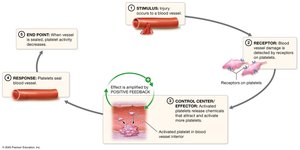
Positive Feedback Loops: Reinforce the initial change and increase the output, often found within negative feedback loops for rapid responses.
Negative Feedback Loops
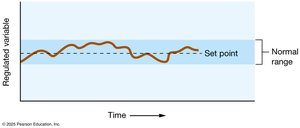
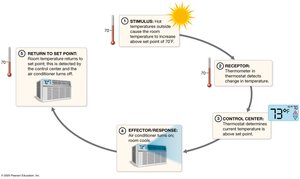
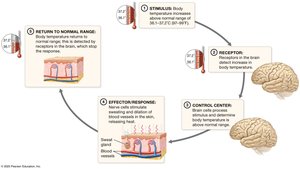
Negative feedback loops maintain variables within a set point and a normal range. The process involves:
Stimulus: A regulated variable is outside the normal range.
Receptor/Sensor: Detects the stimulus.
Control Center: Receives information and determines the response.
Effector: Executes the response to return the variable to normal.
Positive Feedback Loops
Positive feedback loops amplify the response to a stimulus and are less common. They eventually shut off in response to an external event. Example: blood clotting.
Common Misconceptions about Homeostasis
Clarifications
Both negative and positive feedback loops promote homeostasis under normal circumstances.
Homeostasis does not mean the internal environment is static; changes are normal and constant.
Regulatory mechanisms are not simply "on" or "off"; they are dynamic and always active to some degree.
Only variables with detectable receptors can be controlled by feedback loops.
Principle of Complementarity of Structure and Function
Structure-Function Relationship
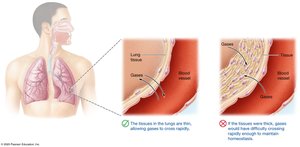
The form of a structure is optimized for its function at all levels of organization. This principle is known as the Principle of Complementarity.
Gradients in Physiology
Definition and Role
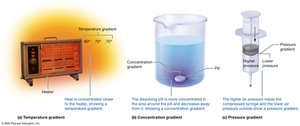
A gradient exists when more of something is present in one area than another, and the two areas are connected. Gradients drive many physiological processes, such as movement of substances across membranes.
Cell-Cell Communication
Mechanisms of Communication
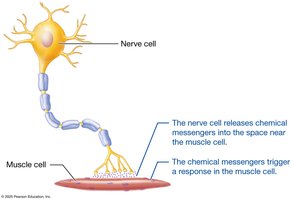
Cells communicate to coordinate body functions and maintain homeostasis. Communication occurs via:
Electrical Signals: Transmitted between neighboring cells.
Chemical Messengers: Released from cells to act on neighboring or distant cells.
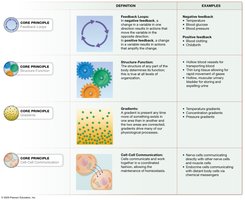
Summary Table: Core Principles
Comparison of Core Principles
Core Principle | Definition | Examples |
|---|---|---|
Feedback Loops | Negative feedback: change is opposed; Positive feedback: change is reinforced | Body temperature, blood pressure, blood clotting |
Structure-Function | Structure of any part of the body is optimized for its function | Thin lung tissue for gas exchange, thick skin for protection |
Gradients | Difference in concentration, temperature, or pressure drives physiological processes | Temperature gradients, concentration gradients, pressure gradients |
Cell-Cell Communication | Cells communicate via electrical or chemical signals | Nerve cell signaling, hormone release, immune cell communication |
 Additional info: The notes expand on brief points by providing definitions, examples, and context for each principle, ensuring completeness and academic quality for exam preparation.
