뒤로
뒤로Chapter 1: Introduction to Anatomy and Physiology – Study Notes
스터디 가이드 - 스마트 노트
 자료에 맞춘 맞춤형 노트, 핵심 정의, 예시, 맥락을 확장해 제공합니다.
Introduction to Anatomy and Physiology
Overview of Science and Anatomy & Physiology
Science is a systematic way of observing and measuring natural phenomena to explain them. Through scientific methods, our understanding of the human body has greatly expanded. Human Anatomy is the study of the structure or form of the human body, while Human Physiology is the study of the body’s functions. The structure and function of the body are closely interrelated, forming the foundation of medical and biological sciences.
Core Study Strategies for Anatomy & Physiology
Effective Learning Techniques
Bring It Back: Actively recall information using self-quizzing, flashcards, or teaching others to transfer knowledge from short-term to long-term memory.
Space It Out: Distribute study sessions over time to enhance memory consolidation.
Mix It Up: Vary study techniques and topics to improve learning and retention.

Additional Study Tips
Mneumonics: Use mental cues for memorization.
Concrete Examples: Relate material to real-world scenarios.
Elaborative Questioning: Ask detailed questions about the material.
Dual Coding: Combine text with figures or drawings.
How to Read a Textbook: The SQ3R Method
Survey: Skim the chapter for key terms, figures, and tables.
Question: Formulate questions about the content.
Read: Read actively, take notes, and make diagrams.
Recite: Speak aloud as you read to reinforce learning.
Review: Use the core study strategies to review material.
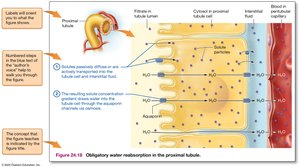
How to Read A&P Figures
Identify the main concept of the figure.
Break the figure into parts and understand each before integrating them.
Relate the figure to other figures for a comprehensive understanding.
Textbook Features and Study Tools
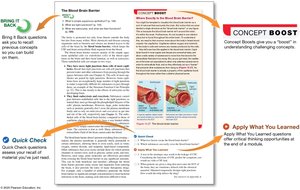
Modules: Chapters are divided into modules covering core concepts.
Learning Outcomes: List the main principles to be understood.
Concept Boosts & Study Boosts: Provide additional explanations and study hints.
Questions: Include various types of questions for self-assessment.
Time Management and Growth Mindset
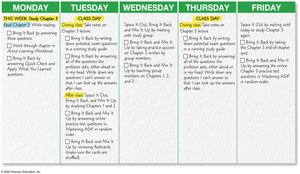
Make a study schedule and start early.
Focus on learning goals rather than performance goals.
View failure as a result of strategy, not ability.
Characteristics of Living Organisms
Properties Shared by Living Organisms
Cellular Composition: Cells are the smallest units of life.
Metabolism: Chemical processes in the body, including Anabolism (building up) and Catabolism (breaking down).
Growth: Increase in size and/or number of cells.
Excretion: Removal of metabolic waste products.
Responsiveness (Irritability): Ability to sense and react to environmental changes.
Movement: Movement of the organism or its cells.
Reproduction: Production of new cells or organisms.
Levels of Structural Organization and Body Systems
Hierarchy of Structural Levels
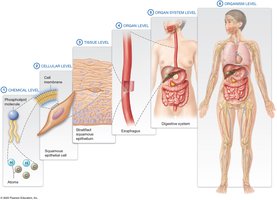
Chemical Level: Atoms and molecules form the basis of all matter.
Cellular Level: Molecules combine to form cells.
Tissue Level: Groups of similar cells and extracellular matrix perform common functions.
Organ Level: Two or more tissue types form organs with specialized tasks.
Organ System Level: Organs work together to perform broad functions; there are 11 organ systems in the human body.
Organism Level: All organ systems function together to form the complete human organism.
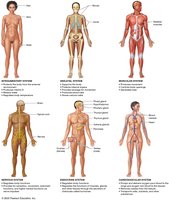
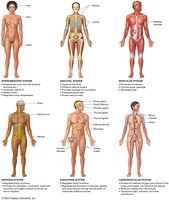
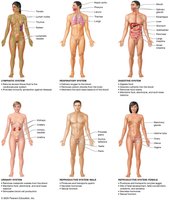
The 11 Organ Systems of the Human Body
Integumentary
Skeletal
Muscular
Nervous
Endocrine
Cardiovascular
Lymphatic
Respiratory
Digestive
Urinary
Reproductive
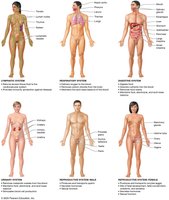
Types of Anatomy and Physiology
Approaches to Studying Anatomy
Systemic Anatomy: Study of individual organ systems.
Regional Anatomy: Study of specific regions of the body.
Surface Anatomy: Study of surface markings.
Gross Anatomy: Study of structures visible to the naked eye.
Microscopic Anatomy: Study of cells (Cytology) and tissues (Histology) using a microscope.
Subfields of Physiology
Classified by organ or system (e.g., neurophysiology, cardiophysiology).
Can also focus on chemical, cellular, or tissue levels.
Word Parts in Scientific Terminology
Building Scientific Terms
Word Roots: Core components with specific meanings.
Prefixes and Suffixes: Modify the meaning of the root.
Example: "Anencephalic" = an- (without) + encephala- (brain) + -ic (condition of) = condition of lacking a part of the brain.
The Anatomical Position and Directional Terms
Anatomical Position
The anatomical position is a standard reference for describing body parts and regions. The body stands upright, feet shoulder-width apart, upper limbs at the sides, and head and palms facing forward.

Directional Terms
Anterior/Posterior: Front/back of the body.
Superior/Inferior: Toward the head/toward the tail (used for head, neck, trunk).
Proximal/Distal: Closer to/farther from the point of origin (used for limbs).
Medial/Lateral: Closer to/farther from the midline.
Superficial/Deep: Closer to/farther from the body surface.
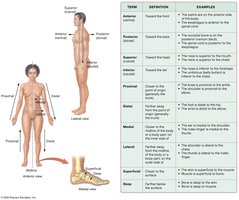
Importance of Precise Terminology
Accurate use of anatomical terms is critical to prevent medical errors, such as wrong-site surgeries or medication errors.

Regional Terms
Body Regions
The body is divided into the axial region (head, neck, trunk) and the appendicular region (upper and lower limbs). Each region can be further subdivided and named as nouns (e.g., brachium) or adjectives (e.g., brachial region).
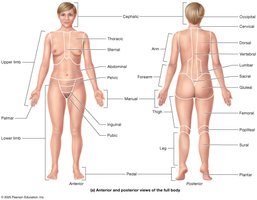
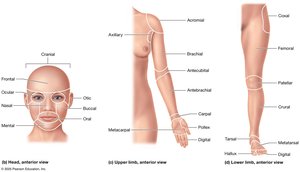
Applying Anatomical Terms
Describing Locations and Incisions
Combine region names, directional terms, and depth to describe locations or procedures.
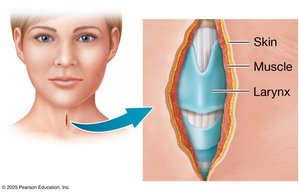
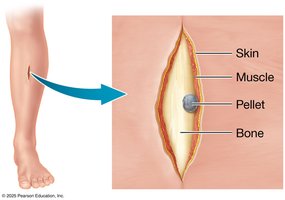
Example: "Incision on anterior cervical region lateral to midline; extended vertically 1 cm inferior to mental region to 2 cm superior to thoracic region; deep to skin and muscle, but superficial to larynx."
Planes of Section
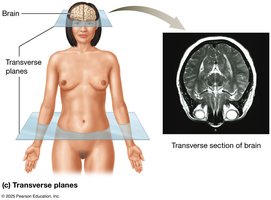
Body Planes
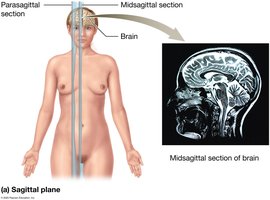
Sagittal Plane: Divides body into right and left sections. Midsagittal is equal, parasagittal is unequal.
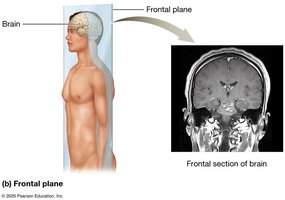
Frontal (Coronal) Plane: Divides body into anterior and posterior sections.
Transverse (Horizontal) Plane: Divides body into superior and inferior sections.
Oblique Plane: Taken at an angle; less common.
Body Cavities
Posterior Body Cavity
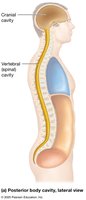
Cranial Cavity: Contains the brain.
Spinal Cavity: Contains the spinal cord.
Both are filled with cerebrospinal fluid for protection.
Anterior Body Cavity
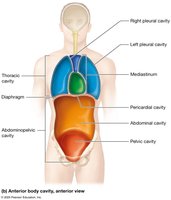
Thoracic Cavity: Superior to the diaphragm; contains pleural cavities (lungs), mediastinum (heart, trachea, esophagus), and pericardial cavity (heart).
Abdominopelvic Cavity: Inferior to the diaphragm; subdivided into abdominal and pelvic cavities, containing digestive, urinary, and reproductive organs.
Peritoneal Cavity: Subcavity within the abdominal cavity, lined by serous membranes.
Abdominopelvic Quadrants and Regions
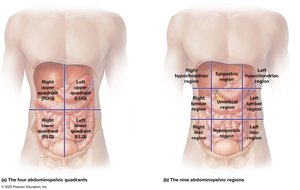
Four-quadrant system: RUQ, LUQ, RLQ, LLQ.
Nine-region system: right/left hypochondriac, lumbar, iliac; epigastric, umbilical, hypogastric.
Serous Membranes
Thin sheets of tissue forming double layers around organs, filled with serous fluid for lubrication.
Visceral Layer: Contacts the organ.
Parietal Layer: Attaches to surrounding structures.
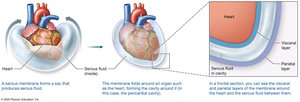
Types of Serous Membranes
Pleural Membranes: Surround the lungs.
Pericardial Membranes: Surround the heart.
Peritoneal Membranes: Surround some abdominal organs; organs behind the parietal peritoneum are retroperitoneal.
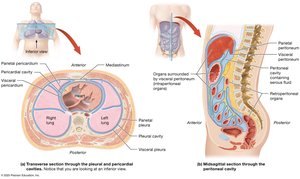
Medical Imaging
Noninvasive Internal Imaging Techniques
X-Ray: Uses ionizing radiation for imaging bones and dense structures.
CT Scan: Uses ionizing radiation and computer processing for 3D images, especially of soft tissues.
MRI: Uses magnetic fields and radio waves for detailed images of soft tissues.

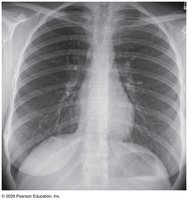

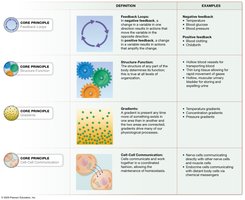
Core Principles in Anatomy and Physiology
Homeostasis
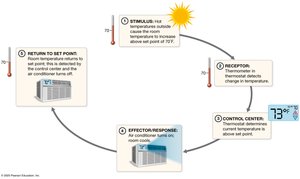
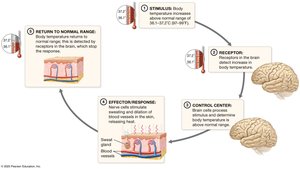
Homeostasis is the maintenance of a relatively stable internal environment. Disturbances in homeostasis (homeostatic imbalances) can lead to disease or death. Regulated variables (e.g., temperature, blood sugar) are kept within a normal range by physiological processes.
Feedback Loops
Negative Feedback Loops: Oppose changes and promote stability by returning variables to their set point.
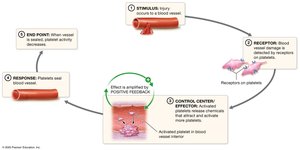
Positive Feedback Loops: Reinforce changes and amplify responses, often within a negative feedback context.
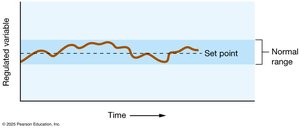
Structure and Function
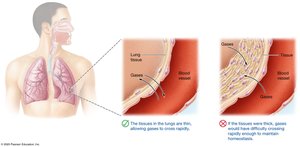
The Principle of Complementarity states that the form of a structure is suited to its function at all levels of organization.
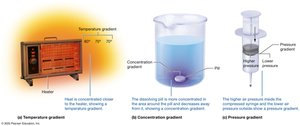
Gradients
A gradient exists when more of something is present in one area than another, and the two areas are connected. Gradients drive many physiological processes, such as diffusion and osmosis.
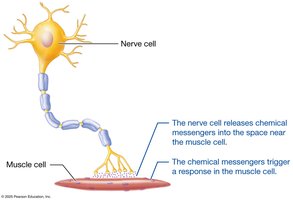
Cell-Cell Communication
Cells communicate via electrical signals (e.g., nerve impulses) and chemical messengers (e.g., hormones) to coordinate body functions and maintain homeostasis.
Summary Table: Core Principles
Core Principle | Definition | Examples |
|---|---|---|
Feedback Loops | Negative feedback opposes change; positive feedback amplifies change | Body temperature, blood clotting |
Structure-Function | Form of a structure suits its function | Thin lung tissue for gas exchange |
Gradients | Difference in concentration, pressure, or temperature between two areas | Oxygen diffusion, blood pressure |
Cell-Cell Communication | Cells communicate via electrical or chemical signals | Nerve impulses, hormone signaling |