 뒤로
뒤로Chapter 1: The Human Body – An Orientation (Anatomy & Physiology Study Guide)
스터디 가이드 - 스마트 노트
 자료에 맞춘 맞춤형 노트, 핵심 정의, 예시, 맥락을 확장해 제공합니다.
What is Anatomy and Physiology?
Definitions and Distinctions
Anatomy and physiology are foundational sciences for understanding the human body. Anatomy is the study of the body's structure, while physiology is the study of the body's function. These disciplines are closely related, as the structure of a body part often determines its function.
Anatomy: Examines the physical structure of organs, tissues, and systems.
Physiology: Investigates how those structures work and interact to sustain life.
Principle of Complementarity: Structure exists to perform a function; function is determined by structure.
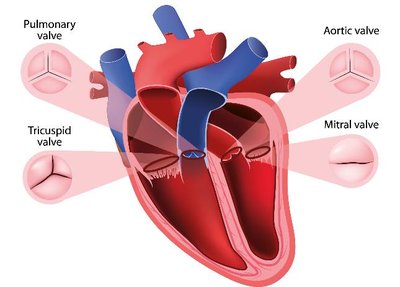
Example: The heart's anatomy (chambers, valves) enables its function (pumping blood).
Example: The heart contains four valves (pulmonary, aortic, tricuspid, mitral) that ensure blood flows in one direction during each heartbeat.
Levels of Organization
Hierarchy of Structural Complexity
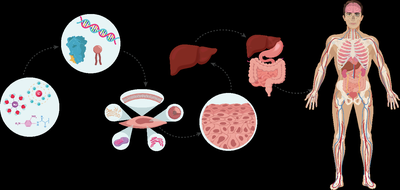
The human body is organized into a hierarchy of levels, from the simplest chemical components to the entire organism. Each level builds upon the previous, and changes at one level can affect others.
Atomic and Molecular Level: Atoms and molecules form the basis of all biological structures.
Macromolecule Level: Large molecules such as proteins and DNA.
Cellular Level: Cells are the basic units of life.
Tissue Level: Groups of similar cells performing a common function.
Organ Level: Structures composed of multiple tissue types.
Organism Level: The complete living individual.
Example: Statins inhibit an enzyme at the molecular level, affecting cholesterol production at the organ level (liver), and ultimately impacting the organism's health.
Variation in Anatomy and Physiology
Normal and Abnormal Variation
There is significant variation in human anatomy and physiology. Reference bodies are used to standardize learning, but real individuals may differ in size, shape, and internal structure.
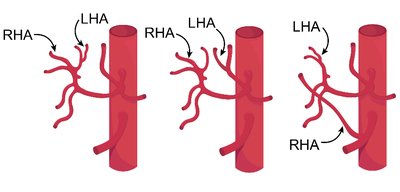
Anatomical Variation: Differences in the arrangement of blood vessels, organs, and tissues.
Reference Body: Typically a healthy young adult of average size.
Example: Variants in hepatic artery branching can cause surgical errors if not recognized.
Normal Variation: Most variations do not affect function; extreme variations may impact health.


Introduction to Organ Systems
Overview of Major Organ Systems
The human body is divided into organ systems, each responsible for specific functions. Systems are grouped by their primary roles: protection, support, communication, transport, exchange, and reproduction.
Protection & Support: Integumentary, skeletal, muscular systems.
Communication & Integration: Nervous and endocrine systems.
Transport & Immunity: Cardiovascular and lymphatic systems.
Exchange: Respiratory, digestive, urinary systems.
Reproduction: Male and female reproductive systems.
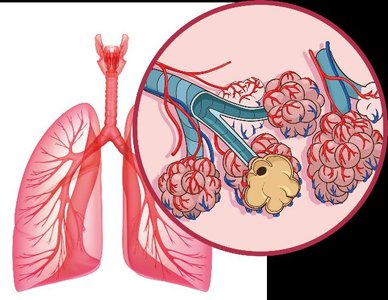
Example: The lungs' structure (alveoli, thin walls, capillaries) enables efficient gas exchange.
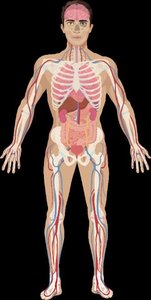
Anatomical Position
Standard Reference for Describing the Body
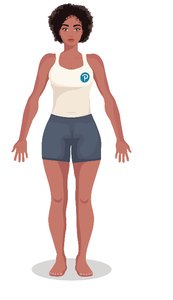
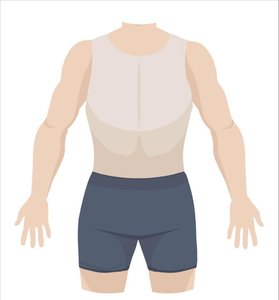
The anatomical position is a universally accepted reference for describing locations and directions in the body. The body is upright, facing forward, feet together, arms at the sides, and palms facing forward.
Importance: Provides a consistent frame for communication and minimizes errors.
Left and Right: Always refer to the subject's left and right.
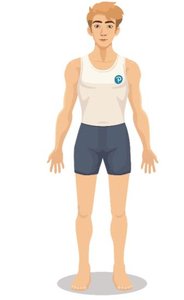
Directional Terms
Describing Locations and Relationships
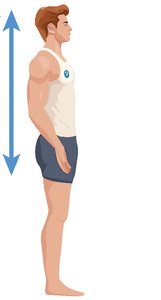
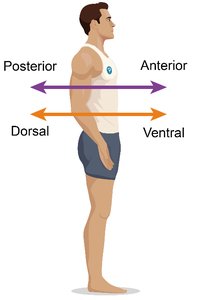
Directional terms are used to compare the locations of structures in the body. They are always referenced to the anatomical position.
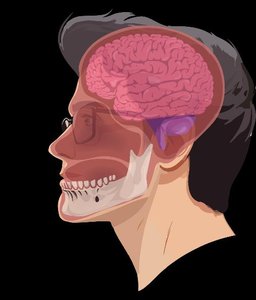
Superior: Toward the head.
Inferior: Toward the feet.
Anterior (Ventral): Toward the front.
Posterior (Dorsal): Toward the back.
Medial: Toward the midline.
Lateral: Away from the midline.
Proximal: Closer to the point of attachment (limbs).
Distal: Farther from the point of attachment (limbs).
Superficial: Closer to the surface.
Deep: Further from the surface.
Anatomical Terms for Body Regions
Regional Terminology
Anatomical terms are used to describe specific regions of the body, often derived from Greek or Latin.
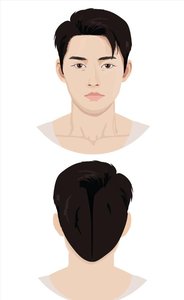
Head and Neck: Cephalic (head), cervical (neck), orbital (eye), buccal (cheek), otic (ear), mental (chin).
Trunk: Thoracic (chest), abdominal (abdomen), pelvic (pelvis), inguinal (groin), umbilical (navel).
Back: Scapular (shoulder blade), lumbar (lower back), sacral (base of spine), gluteal (buttocks).
Arm and Hand: Brachial (upper arm), antebrachial (forearm), carpal (wrist), digital (fingers), pollex (thumb).
Leg and Foot: Femoral (thigh), crural (leg), sural (calf), tarsal (ankle), hallux (big toe), plantar (sole).
Abdominopelvic Quadrants and Regions
Dividing the Abdomen for Clinical Reference
The abdomen is divided into quadrants and regions to aid in clinical diagnosis and communication.
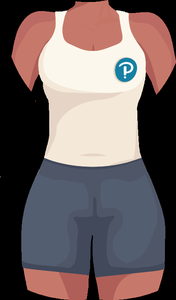
Quadrants: Right Upper (RUQ), Left Upper (LUQ), Right Lower (RLQ), Left Lower (LLQ).
Regions: Right/Left hypochondriac, epigastric, right/left lumbar, umbilical, right/left inguinal, hypogastric.
Example: Appendicitis often causes pain in the RLQ.


Anatomical Planes and Sections
Dividing the Body for Study and Imaging
Anatomical planes are imaginary lines used to divide the body for dissection and imaging.
Frontal (Coronal) Plane: Divides anterior and posterior.
Sagittal Plane: Divides left and right (midsagittal = midline, parasagittal = off midline).
Transverse Plane: Divides superior and inferior.
Oblique Plane: Divides at an angle.
Organization of the Body: Body Cavities
Major Body Cavities and Their Contents
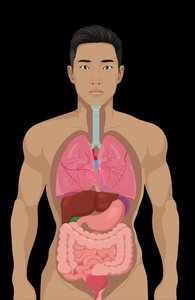
The body contains cavities that house organs and protect them. The two main cavities are the anterior (ventral) and posterior (dorsal) cavities.
Anterior (Ventral) Cavity: Thoracic cavity (heart, lungs), abdominopelvic cavity (digestive, urinary, reproductive organs).
Posterior (Dorsal) Cavity: Cranial cavity (brain), vertebral cavity (spinal cord).
Serous Membranes: Line cavities and reduce friction (pleura, pericardium, peritoneum).

Homeostasis
Maintaining Internal Stability
Homeostasis is the maintenance of a stable internal environment. It is achieved through feedback loops that regulate physiological variables within narrow ranges.
Examples: Blood pH, body temperature, blood glucose.
Dynamic Equilibrium: The body is always adjusting, not fixed.
Feedback Loops
Negative and Positive Feedback
Feedback loops are mechanisms that control homeostasis.
Negative Feedback: Opposes the direction of the stimulus, returning the body to a set point. Most common.
Positive Feedback: Amplifies the stimulus, moving the body away from the set point. Less common (e.g., blood clotting, labor).
Components: Receptor (detects change), control center (processes information), effector (carries out response).
Example: Thermoregulation is controlled by negative feedback. When body temperature rises, sweat glands and blood vessels respond to cool the body.
Summary Table: Levels of Organization
Level | Description | Example |
|---|---|---|
Atomic/Molecular | Atoms and molecules | H2O, DNA |
Macromolecule | Large biological molecules | Proteins, lipids |
Cellular | Basic unit of life | Neuron, muscle cell |
Tissue | Group of similar cells | Muscle tissue |
Organ | Structure with multiple tissues | Heart, liver |
Organism | Complete living individual | Human |
Summary Table: Major Organ Systems
System | Main Organs | Function |
|---|---|---|
Integumentary | Skin, hair, nails | Protection, temperature regulation |
Skeletal | Bones, cartilage | Support, protection |
Muscular | Muscles | Movement, heat production |
Nervous | Brain, spinal cord, nerves | Communication, integration |
Endocrine | Glands | Hormone production, regulation |
Cardiovascular | Heart, blood vessels | Transport of materials |
Lymphatic | Lymph nodes, vessels | Immunity, fluid balance |
Respiratory | Lungs, airways | Gas exchange |
Digestive | Stomach, intestines | Nutrient absorption |
Urinary | Kidneys, bladder | Waste removal |
Reproductive | Ovaries, testes | Production of offspring |
Key Equations (LaTeX Format)
