 뒤로
뒤로Chapter 1: The Human Body—An Orientation (Anatomy & Physiology Study Notes)
스터디 가이드 - 스마트 노트
 자료에 맞춘 맞춤형 노트, 핵심 정의, 예시, 맥락을 확장해 제공합니다.
Introduction to Anatomy & Physiology
Definition and Scope
Anatomy is the study of the structure of body parts and their relationships to one another, while physiology is the study of the function of body parts and how they carry out life-sustaining activities. These two disciplines are closely linked, as the function of a body part is dependent on its structure—a concept known as the principle of complementarity of structure and function.
Gross (macroscopic) anatomy: Study of large, visible structures.
Microscopic anatomy: Study of structures too small to be seen with the naked eye (e.g., cytology and histology).
Developmental anatomy: Study of anatomical and physiological development throughout life (including embryology).
To study anatomy, one must use anatomical terminology and be able to observe, manipulate, palpate, and auscultate body structures.
Subdivisions of Physiology
Based on organ systems (e.g., renal physiology, cardiovascular physiology).
Often focuses on cellular and molecular levels, emphasizing chemical reactions in cells.
Requires understanding of basic physical and chemical principles (e.g., electrical currents, pressure, movement).
Complementarity of Structure and Function
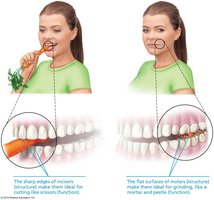
Structure and function are inseparable; what a structure can do depends on its specific form. For example, the sharp edges of incisors are ideal for cutting food, while the flat surfaces of molars are suited for grinding.
Levels of Structural Organization
Hierarchy of Organization
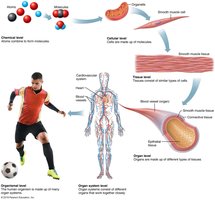
The human body is organized from the smallest chemical level to the entire organism:
Chemical level: Atoms, molecules, and organelles
Cellular level: Single cells
Tissue level: Groups of similar cells
Organ level: Two or more types of tissues
Organ system level: Organs that work closely together
Organismal level: All organ systems combined to make the whole organism
Necessary Life Functions
Basic Functions Required for Life
Maintaining boundaries: Separation between internal and external environments (e.g., plasma membranes, skin)
Movement: Muscular system allows movement of body parts and substances; contractility at the cellular level
Responsiveness: Ability to sense and respond to stimuli (e.g., withdrawal reflex, control of breathing rate)
Digestion: Breakdown of ingested food and absorption of nutrients
Metabolism: All chemical reactions in body cells, including catabolism (breakdown) and anabolism (synthesis)
Excretion: Removal of wastes (e.g., urea, carbon dioxide, feces)
Reproduction: Cellular division for growth/repair and production of offspring
Growth: Increase in size of a body part or organism
All organ systems work together to maintain these functions and support the survival of individual cells.
Interrelationships Among Body Organ Systems
Systemic Integration
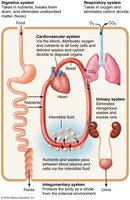
Organ systems interact to maintain homeostasis and support life. For example, the digestive, respiratory, cardiovascular, and urinary systems work together to provide nutrients, oxygen, and remove wastes.
The Body’s Organ Systems and Their Major Functions
Overview of the 11 Organ Systems
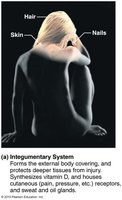
Integumentary System: Protects the body, synthesizes vitamin D, and houses receptors and glands.
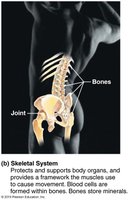
Skeletal System: Supports and protects organs, provides a framework for muscles, forms blood cells, stores minerals.
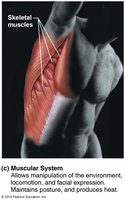
Muscular System: Allows movement, maintains posture, produces heat.
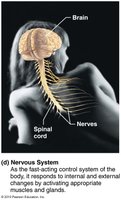
Nervous System: Fast-acting control system, responds to internal and external changes.
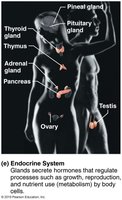
Endocrine System: Glands secrete hormones for regulation of growth, reproduction, and metabolism.
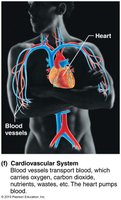
Cardiovascular System: Transports blood, oxygen, nutrients, wastes; heart pumps blood.
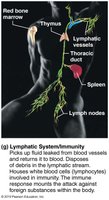
Lymphatic System/Immunity: Returns leaked fluid to blood, disposes of debris, houses white blood cells.
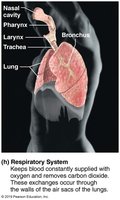
Respiratory System: Supplies blood with oxygen, removes carbon dioxide.
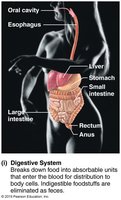
Digestive System: Breaks down food, absorbs nutrients, eliminates indigestible foodstuffs.
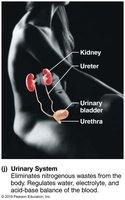
Urinary System: Eliminates nitrogenous wastes, regulates water, electrolytes, and acid-base balance.
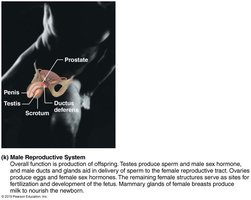
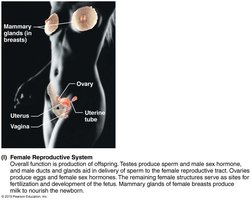
Reproductive System: Produces offspring; male and female systems have specialized structures.
Survival Needs
Essential Requirements for Human Life
Nutrients: Chemicals for energy and cell building (carbohydrates, proteins, fats, vitamins, minerals)
Oxygen: Required for energy release from food
Water: Most abundant chemical in the body; necessary for chemical reactions
Normal body temperature: Needed for proper metabolic reactions (about 37°C)
Appropriate atmospheric pressure: Required for adequate breathing and gas exchange
Homeostasis
Definition and Mechanisms
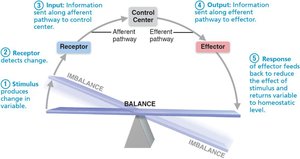
Homeostasis is the maintenance of relatively stable internal conditions despite continuous environmental changes. It is a dynamic state of equilibrium, maintained by all organ systems, especially the nervous and endocrine systems.
Variables: Factors that can change (e.g., blood sugar, body temperature, blood volume)
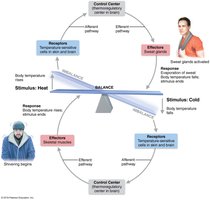
Homeostatic control involves three components: receptor (sensor), control center, and effector.
Negative Feedback
Most homeostatic control mechanisms are negative feedback loops, where the response reduces or shuts off the original stimulus. This keeps variables within a normal range.
Example: Regulation of body temperature and blood glucose levels.
Positive Feedback
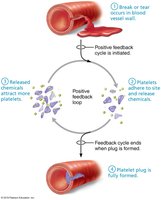
Positive feedback mechanisms enhance or amplify the original stimulus, usually controlling infrequent events that do not require continuous adjustment.
Examples: Enhancement of labor contractions by oxytocin, platelet plug formation and blood clotting.
Homeostatic Imbalance
Disturbance of homeostasis increases the risk of disease and contributes to aging. If negative feedback mechanisms are overwhelmed, destructive positive feedback mechanisms may take over (e.g., heart failure).
Anatomical Position and Directional Terms
Standard Anatomical Position
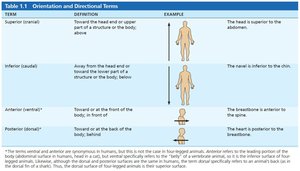
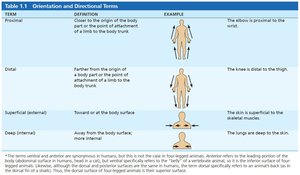
The standard anatomical position is the body erect, feet slightly apart, palms facing forward, and thumbs pointing away from the body. Directional terms describe the location of one body structure relative to another, always based on this position.
Orientation and Directional Terms
Term | Definition | Example |
|---|---|---|
Superior (cranial) | Toward the head end or upper part of a structure or the body; above | The head is superior to the abdomen. |
Inferior (caudal) | Away from the head end or toward the lower part of a structure or the body; below | The navel is inferior to the chin. |
Anterior (ventral) | Toward or at the front of the body; in front of | The breastbone is anterior to the spine. |
Posterior (dorsal) | Toward or at the back of the body; behind | The heart is posterior to the breastbone. |
Term | Definition | Example |
|---|---|---|
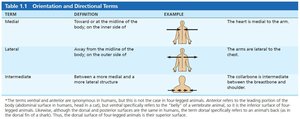
Medial | Toward or at the midline of the body; on the inner side of | The heart is medial to the arm. |
Lateral | Away from the midline of the body; on the outer side of | The arms are lateral to the chest. |
Intermediate | Between a more medial and a more lateral structure | The collarbone is intermediate between the breastbone and shoulder. |
Term | Definition | Example |
|---|---|---|
Proximal | Closer to the origin of the body part or the point of attachment of a limb to the body trunk | The elbow is proximal to the wrist. |
Distal | Farther from the origin of a body part or the point of attachment of a limb to the body trunk | The knee is distal to the thigh. |
Superficial (external) | Toward or at the body surface | The skin is superficial to the skeletal muscles. |
Deep (internal) | Away from the body surface; more internal | The lungs are deep to the skin. |
Regional Terms
Major Body Divisions
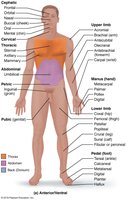
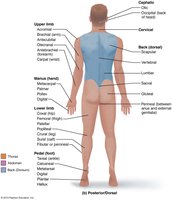
Axial: Head, neck, and trunk
Appendicular: Limbs (arms and legs)
Regional terms designate specific areas within these divisions.
Body Planes and Sections
Common Anatomical Planes
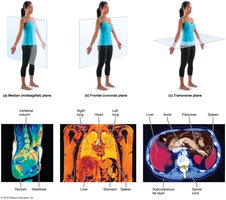
Sagittal plane: Divides body vertically into right and left parts (midsagittal = midline; parasagittal = off-center)
Frontal (coronal) plane: Divides body vertically into anterior and posterior parts
Transverse (horizontal) plane: Divides body horizontally into superior and inferior parts (cross section)
Oblique section: Cuts at angles other than 90° to vertical plane
Body Cavities and Membranes
Major Body Cavities
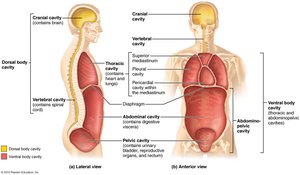
Dorsal body cavity: Protects nervous system; includes cranial cavity (brain) and vertebral cavity (spinal cord)
Ventral body cavity: Houses internal organs (viscera); includes thoracic cavity (pleural, pericardial, mediastinum) and abdominopelvic cavity (abdominal and pelvic cavities)
Membranes in the Ventral Body Cavity
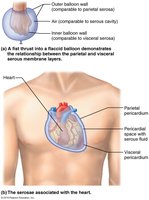
Serosa (serous membrane) is a thin, double-layered membrane covering surfaces in the ventral body cavity. The parietal serosa lines cavity walls, while the visceral serosa covers organs. The layers are separated by serous fluid, reducing friction.
Pericardium: Heart
Pleurae: Lungs
Peritoneum: Abdominopelvic cavity
Abdominopelvic Quadrants and Regions
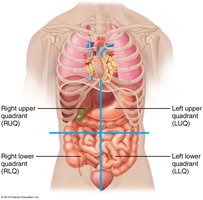
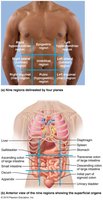
The abdominopelvic cavity is divided into quadrants (RUQ, LUQ, RLQ, LLQ) for clinical reference and nine regions for anatomical study.
Other Body Cavities
Exposed to environment: Oral/digestive, nasal, orbital, middle ear cavities
Not exposed: Synovial (joint) cavities
