 뒤로
뒤로Chapter 1: The Human Body—An Orientation (Anatomy & Physiology Study Notes)
스터디 가이드 - 스마트 노트
 자료에 맞춘 맞춤형 노트, 핵심 정의, 예시, 맥락을 확장해 제공합니다.
Introduction to Anatomy & Physiology
Overview
Anatomy and physiology are foundational sciences for understanding the structure and function of the human body. Anatomy focuses on the form and relationships of body parts, while physiology explores how these parts work to sustain life. Together, they provide a comprehensive framework for studying the human organism.
Form (Anatomy) Determines Function (Physiology)
Definitions and Principles
Anatomy: The study of the structure of body parts and their relationships to one another.
Physiology: The study of the function of body parts; how they carry out life-sustaining activities.
Principle of Complementarity: Structure and function are inseparable; what a structure can do depends on its specific form.
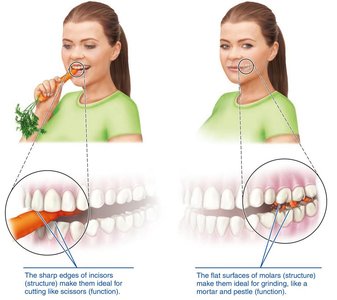
Example: The sharp edges of incisors are ideal for cutting food, while the flat surfaces of molars are suited for grinding.
Reference Standards and Variability
Reference values are based on a healthy young male (70 kg) or female (57 kg).
Over 90% of anatomical structures match textbook descriptions, but minor variations exist (e.g., nerve or vessel placement).
Extreme anatomical variations are rare and usually incompatible with life.
Sex and Biological Attributes
Sex: Determined by chromosomes, gene expression, and hormone action; reflected in reproductive anatomy and physiology (male or female).
Subdivisions of Anatomy
Major Branches
Gross (Macroscopic) Anatomy: Study of large structures visible to the naked eye.
Regional Anatomy: All structures in a specific area.
System Anatomy: Structures of a single organ system.
Surface Anatomy: Internal structures as related to the overlying skin.
Microscopic Anatomy: Structures too small to be seen without magnification.
Cytology: Study of cells.
Histology: Study of tissues.
Developmental Anatomy: Structural changes throughout the lifespan.
Embryology: Developmental changes before birth.
Studying Anatomy
Requires understanding terminology, observation, manipulation, palpation (feeling organs), and auscultation (listening to organs).
Medical imaging (e.g., X-ray, MRI, CT, ultrasound) allows noninvasive internal visualization.
Topics of Physiology
Subdivisions
Based on organ systems (e.g., renal, neurophysiology, cardiovascular physiology).
Often focuses on cellular and molecular events, such as chemical reactions in cells.
Requires understanding of basic chemical and physical principles (e.g., electrical currents, pressure, levers).
Levels of Structural Organization
Hierarchy from Atoms to Organism
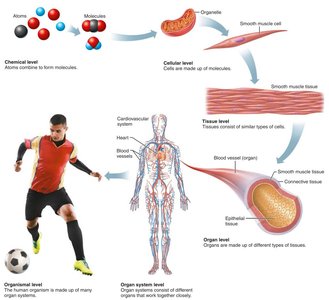
The human body is organized into a hierarchy of structural levels, each building on the previous one:
Chemical Level: Atoms combine to form molecules.
Cellular Level: Cells are made up of molecules and organelles.
Tissue Level: Tissues consist of groups of similar cells.
Organ Level: Organs are made up of different types of tissues.
Organ System Level: Organ systems consist of different organs that work together closely.
Organismal Level: The human organism is made up of many organ systems.
The Body’s Organ Systems and Their Major Functions
Overview of the 11 Organ Systems
System | Main Functions |
|---|---|
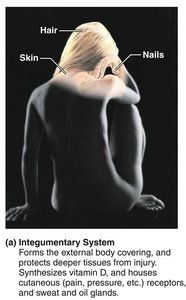
Integumentary | Protects body, synthesizes vitamin D, houses receptors and glands |
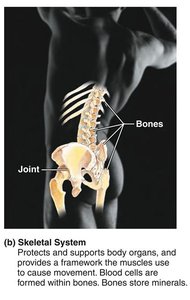
Skeletal | Supports and protects organs, provides framework, forms blood cells, stores minerals |
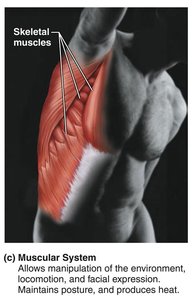
Muscular | Movement, posture, heat production |
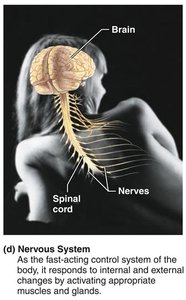
Nervous | Fast-acting control, responds to stimuli |
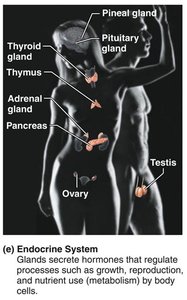
Endocrine | Hormone secretion, regulates growth, metabolism, reproduction |
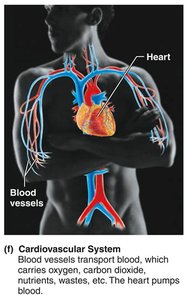
Cardiovascular | Transports blood, nutrients, wastes, gases |
Lymphatic/Immunity | Returns leaked fluids, immune response |
Respiratory | Gas exchange (O2/CO2) |
Digestive | Breaks down food, absorbs nutrients, eliminates waste |
Urinary | Eliminates nitrogenous wastes, regulates water, electrolytes, acid-base balance |
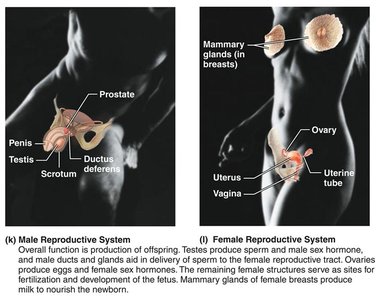
Reproductive | Produces offspring, sex hormones |
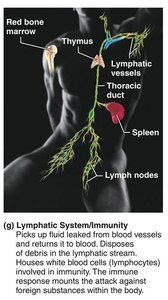
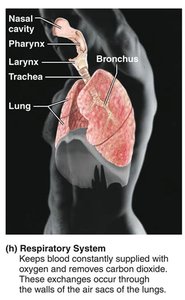
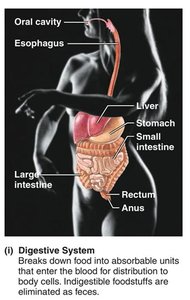
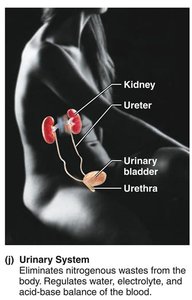
Necessary Life Functions
Vital Functions for Survival
Maintaining Boundaries: Separation between internal and external environments (e.g., plasma membranes, skin).
Movement: Of body parts (skeletal muscles), substances (cardiac muscle, smooth muscle), and cells.
Responsiveness (Excitability): Ability to sense and respond to stimuli (e.g., withdrawal reflex, breathing rate).
Digestion: Breakdown of food and absorption of nutrients.
Metabolism: All chemical reactions in the body, including catabolism (breakdown), anabolism (synthesis), and cellular respiration (ATP production).
Excretion: Removal of wastes (e.g., urea, CO2, feces).
Reproduction: Cellular division for growth/repair; production of offspring.
Growth: Increase in size of a body part or organism.
Survival Needs
Essential Requirements
Nutrients: Chemicals for energy and cell building (carbohydrates, proteins, fats, vitamins, minerals).
Oxygen: Required for metabolic reactions; survival without oxygen is limited to a few minutes.
Water: Most abundant chemical in the body; solvent for reactions, base for secretions/excretions.
Normal Body Temperature: Necessary for proper metabolic reaction rates (about 37°C or 98.6°F).
Appropriate Atmospheric Pressure: Required for adequate breathing and gas exchange in the lungs.
Interrelationships Among Body Organ Systems
System Cooperation
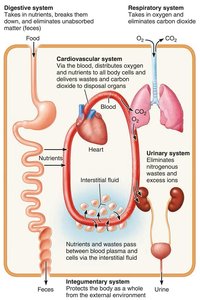
Organ systems work cooperatively to maintain life. For example, the digestive, respiratory, cardiovascular, and urinary systems interact to provide nutrients, oxygen, and remove wastes.
Homeostasis
Definition and Importance
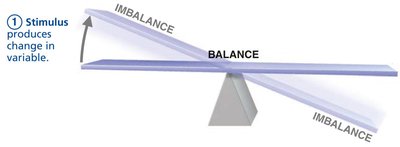
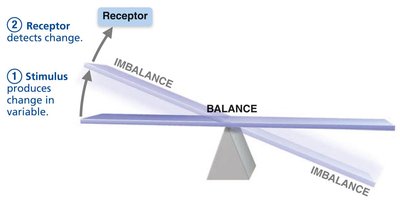
Homeostasis: Maintenance of relatively stable internal conditions despite external changes; a dynamic equilibrium.
Law of Mass Balance: The amount of a substance taken in must equal the amount lost to maintain a steady state.
All organ systems contribute to homeostasis.
Homeostatic Control Mechanisms
Regulated by the nervous and endocrine systems.
Involves three components:
Receptor (Sensor): Monitors environment, responds to stimuli, sends input to control center.
Control Center: Determines set point, analyzes input, sends output to effector.
Effector: Carries out response to restore homeostasis.
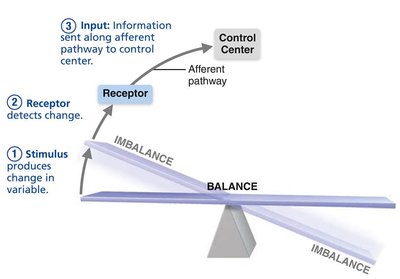
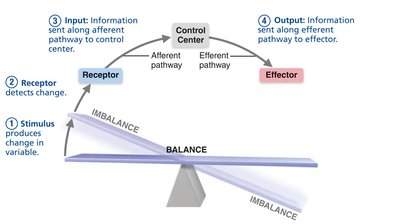
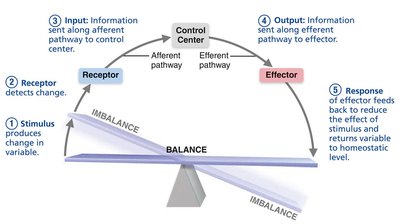
Negative Feedback
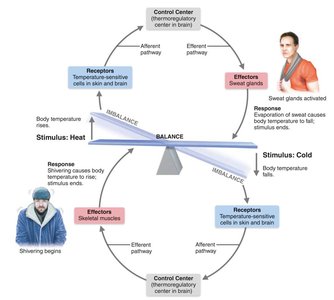
Most common homeostatic mechanism.
Response reduces or shuts off the original stimulus, returning the variable to its set point.
Examples: Regulation of body temperature, blood glucose by insulin.
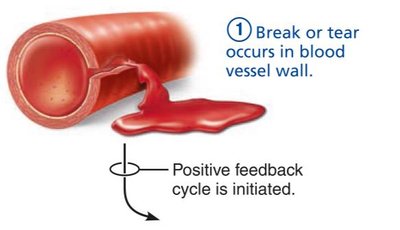
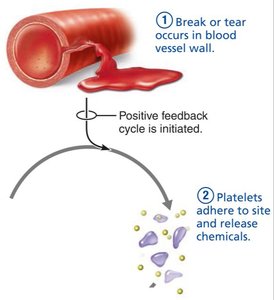
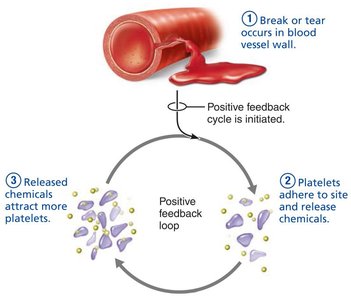
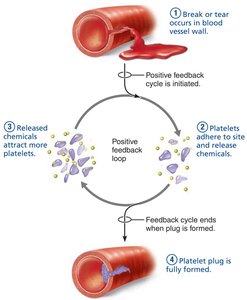
Positive Feedback
Response enhances or exaggerates the original stimulus; variable changes in the same direction.
Usually controls infrequent events (e.g., labor contractions, blood clotting).
Feedforward (Anticipatory) Response
Occurs in anticipation of a change (e.g., salivation and digestive juice release before eating).
Homeostatic Imbalance
Disturbance of homeostasis increases risk of disease and contributes to aging.
If negative feedback is overwhelmed, destructive positive feedback may occur (e.g., heart failure).
