 뒤로
뒤로Chapter 2: Chemistry Comes Alive – Foundations for Anatomy & Physiology
스터디 가이드 - 스마트 노트
 자료에 맞춘 맞춤형 노트, 핵심 정의, 예시, 맥락을 확장해 제공합니다.
Chapter 2: Chemistry Comes Alive
2.1 Matter and Energy
This section introduces the basic concepts of matter and energy, which are foundational to understanding the chemical basis of life and physiological processes.
Matter: Anything that has mass and occupies space. It can be seen, smelled, or felt. Weight is mass plus the effects of gravity.
States of Matter:
Solid: Definite shape and volume.
Liquid: Changeable shape, definite volume.
Gas: Changeable shape and volume.
Energy: The capacity to do work or put matter into motion.
Kinetic Energy: Energy in action.
Potential Energy: Stored (inactive) energy.
Energy can be transformed from potential to kinetic.
Forms of Energy:
Chemical Energy: Stored in bonds of chemical substances.
Electrical Energy: Results from movement of charged particles.
Mechanical Energy: Directly involved in moving matter.
Radiant/Electromagnetic Energy: Travels in waves (e.g., heat, visible light, ultraviolet light, X-rays).
Energy Conversion: Energy may be converted from one form to another, but conversion is inefficient—some energy is "lost" as heat.
2.2 Atoms and Elements
All matter is composed of elements, which are substances that cannot be broken down into simpler substances by ordinary chemical methods. Elements are made up of atoms, the smallest particles with the properties of that element.
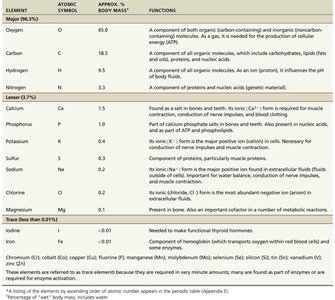
Major Elements of the Human Body: Oxygen, carbon, hydrogen, and nitrogen make up 96% of body mass.
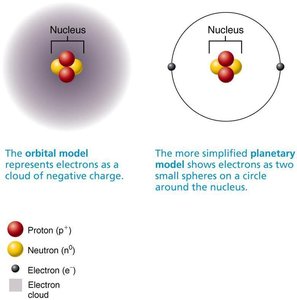
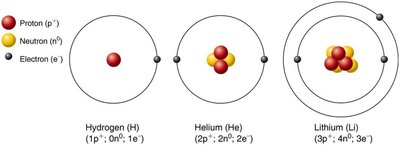
Atomic Structure: Atoms consist of protons (positive charge), neutrons (no charge), and electrons (negative charge).
Protons: 1 atomic mass unit (amu), positive charge.
Neutrons: 1 amu, no charge.
Electrons: Virtually no mass (1/1800 amu), negative charge.
Atomic Number: Number of protons in the nucleus.
Mass Number: Sum of protons and neutrons.
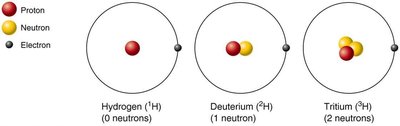
Isotopes: Atoms with the same number of protons but different numbers of neutrons.
Atomic Weight: Average of the mass numbers of all isotopes.
Radioisotopes
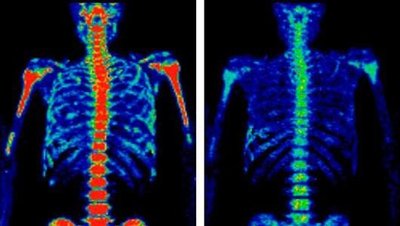
Radioisotopes are unstable isotopes that decompose to more stable forms, emitting radiation. They are used in medical diagnosis and treatment but can also damage living tissue.
2.3 Mixtures and Compounds
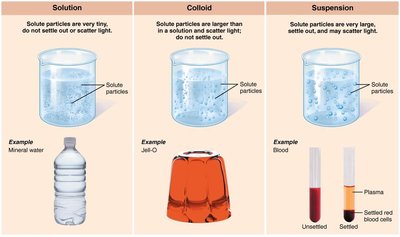
Mixtures are substances composed of two or more components physically intermixed. They can be solutions, colloids, or suspensions.
Solution: Homogeneous mixture; solute particles are very tiny and do not settle out or scatter light (e.g., mineral water).
Colloid: Heterogeneous mixture; solute particles are larger than in a solution and scatter light but do not settle out (e.g., Jell-O).
Suspension: Heterogeneous mixture; solute particles are very large, settle out, and may scatter light (e.g., blood).
2.4 Chemical Bonds
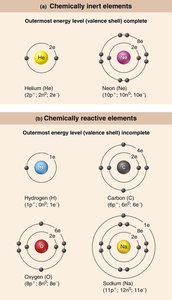
Chemical bonds are energy relationships between electrons of reacting atoms. Electrons occupy electron shells, and the outermost shell (valence shell) determines chemical reactivity.
Octet Rule: Atoms are most stable when they have 8 electrons in their valence shell (except H and He, which are stable with 2).
Types of Chemical Bonds:
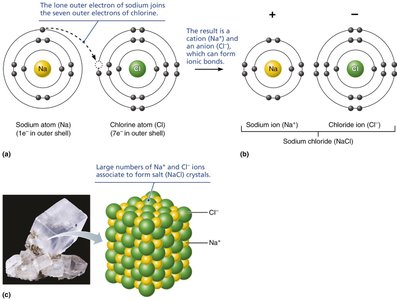
Ionic Bonds: Involve the transfer of electrons from one atom to another, forming ions (cations and anions).
Covalent Bonds: Formed by sharing electrons between atoms. Can be single, double, or triple bonds. Two types:
Nonpolar Covalent: Equal sharing of electrons.
Polar Covalent: Unequal sharing, resulting in partial charges.
Hydrogen Bonds: Weak attractions between a hydrogen atom and an electronegative atom (e.g., between water molecules).
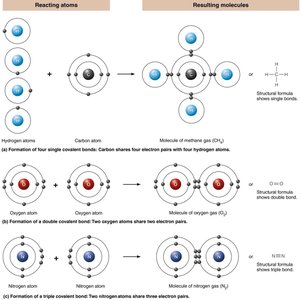
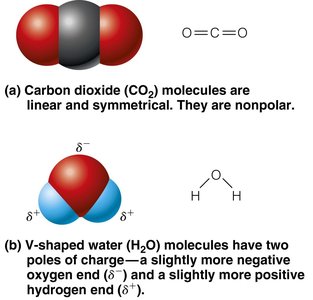
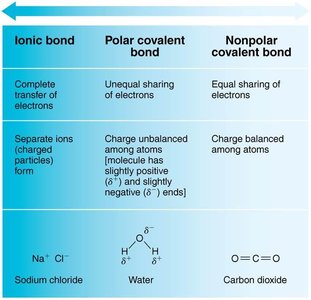
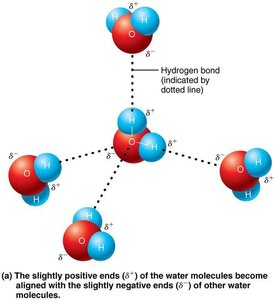
2.5 Chemical Reactions
Chemical reactions involve the formation, rearrangement, or breaking of chemical bonds. They can be represented by chemical equations showing reactants and products.
Types of Chemical Reactions:
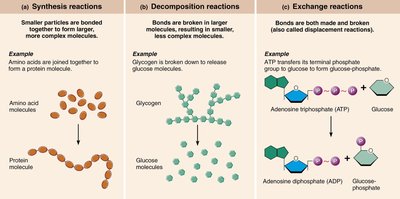
Synthesis (Combination): Atoms or molecules combine to form a larger, more complex molecule.
Decomposition: Molecule is broken down into smaller molecules or atoms.
Exchange (Displacement): Bonds are both made and broken; atoms are exchanged between reactants.
Energy Flow:
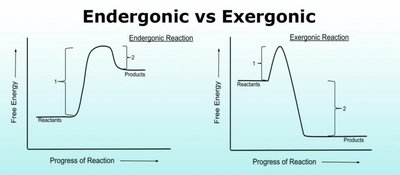
Exergonic Reactions: Release energy; products have less potential energy than reactants.
Endergonic Reactions: Absorb energy; products have more potential energy than reactants.
Catalysts: Substances that increase the rate of a reaction without being consumed (e.g., enzymes).
2.6 Inorganic Compounds
Inorganic compounds do not contain carbon (with exceptions like CO2 and CO). Water, salts, acids, and bases are key inorganic compounds in the body.
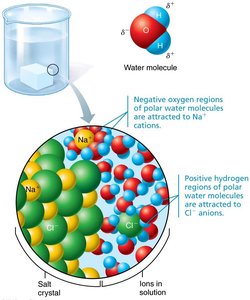
Water: Most abundant inorganic compound; high heat capacity, high heat of vaporization, polar solvent properties, reactivity, and cushioning.
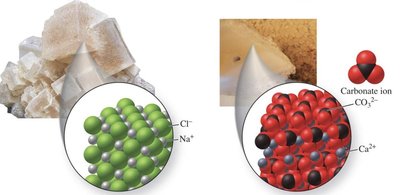
Salts: Ionic compounds that dissociate in water to form electrolytes (e.g., NaCl, CaCO3, KCl).
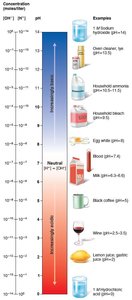
Acids and Bases: Acids are proton donors (release H+), bases are proton acceptors (release OH–). The pH scale measures hydrogen ion concentration.
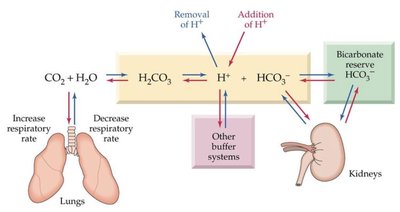
Buffers: Compounds that resist changes in pH by releasing or binding H+ ions.
2.7 Organic Compounds: Synthesis and Hydrolysis
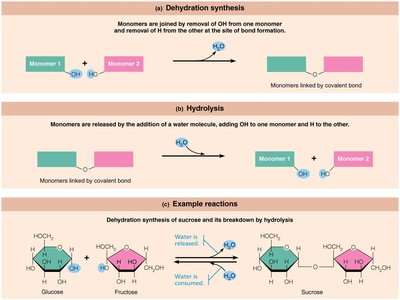
Organic molecules contain carbon and are unique to living systems. Major classes include carbohydrates, lipids, proteins, and nucleic acids. Many are polymers formed by dehydration synthesis and broken down by hydrolysis.
Dehydration Synthesis: Removal of water to join monomers.
Hydrolysis: Addition of water to break polymers into monomers.
2.8 Carbohydrates
Carbohydrates are sugars and starches containing C, H, and O. They are classified as monosaccharides, disaccharides, or polysaccharides.
Monosaccharides: Single sugar units (e.g., glucose, fructose).
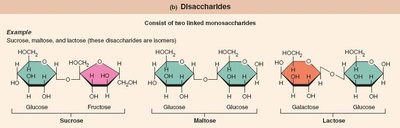
Disaccharides: Two monosaccharides joined together (e.g., sucrose, maltose, lactose).
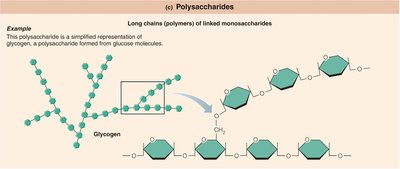
Polysaccharides: Long chains of monosaccharides (e.g., glycogen).
2.9 Lipids
Lipids are hydrophobic molecules containing C, H, and O (sometimes P). Main types include triglycerides, phospholipids, and steroids.
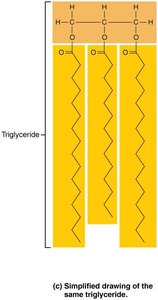
Triglycerides: Composed of glycerol and three fatty acids; function in energy storage, insulation, and protection.
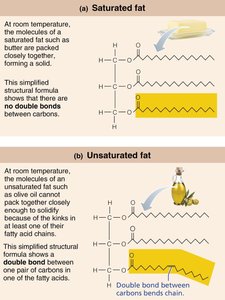
Saturated Fatty Acids: No double bonds; solid at room temperature (e.g., animal fats).
Unsaturated Fatty Acids: One or more double bonds; liquid at room temperature (e.g., plant oils).
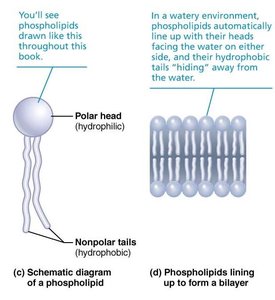
Phospholipids: Modified triglycerides with a polar head and nonpolar tails; major component of cell membranes.
Steroids: Four interlocking hydrocarbon rings; cholesterol is the most important steroid, serving as a precursor for vitamin D, steroid hormones, and bile salts.
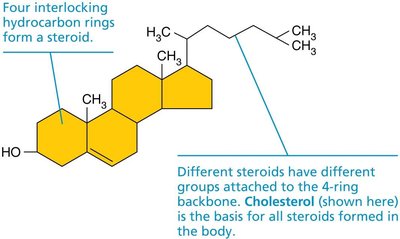 *Additional info: Lipids are essential for cell membrane structure, energy storage, and signaling molecules in the body.*
