 뒤로
뒤로Chapter 2: Chemistry Comes Alive – Study Notes for Anatomy & Physiology
스터디 가이드 - 스마트 노트
 자료에 맞춘 맞춤형 노트, 핵심 정의, 예시, 맥락을 확장해 제공합니다.
Elements and Atoms: The Building Blocks of Matter
Basic Chemistry and Matter
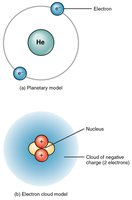
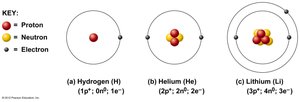
Chemistry is fundamental to understanding the structure and function of the human body. Matter is anything that occupies space and has mass, while energy is the ability to do work. The human body is composed primarily of four elements: carbon (C), oxygen (O), hydrogen (H), and nitrogen (N). Atoms are the smallest units of elements and consist of subatomic particles: protons, neutrons, and electrons.
Protons (p+): Positively charged, found in the nucleus.
Neutrons (n0): Neutral, found in the nucleus.
Electrons (e–): Negatively charged, orbit the nucleus.
Number of protons equals number of electrons in a neutral atom.
Identifying Elements and Isotopes
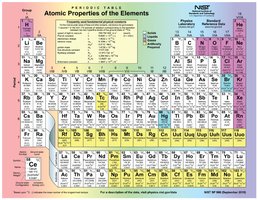
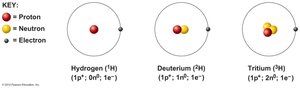
Each element is identified by its atomic number (number of protons) and atomic mass number (sum of protons and neutrons). Isotopes are atoms of the same element with different numbers of neutrons, resulting in varying atomic weights. Some isotopes are radioactive and undergo spontaneous decay.
Atomic number: Number of protons in the nucleus.
Atomic mass number: Protons + neutrons.
Isotopes: Same element, different neutron count.
Radioisotopes: Unstable isotopes that decay.
Chemical Bonds and Reactions
Molecules, Compounds, and Chemical Bonds
Molecules are formed when two or more atoms combine chemically. Compounds are molecules composed of different elements. Chemical bonds unite atoms, and breaking these bonds releases energy.
Molecule: Two or more atoms of the same element.
Compound: Two or more atoms of different elements.
Chemical bonds: Ionic, covalent, and hydrogen bonds.
Electrons and Bonding
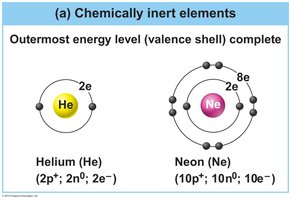
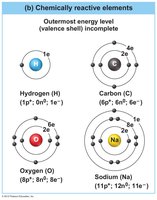
Electrons occupy energy levels called shells. The outermost shell (valence shell) determines chemical reactivity. Atoms are stable when their valence shell is full (rule of eights). Inert elements have complete valence shells, while reactive elements do not and tend to gain, lose, or share electrons.
Shell 1: Max 2 electrons
Shell 2: Max 8 electrons
Shell 3: Max 18 electrons
Inert elements: Stable, do not form bonds
Reactive elements: Unstable, form bonds
Ionic Bonds
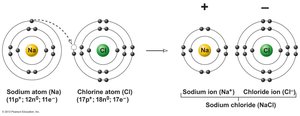
Ionic bonds form when electrons are transferred from one atom to another, resulting in ions. Anions are negatively charged (gain electrons), and cations are positively charged (lose electrons).
Ionic bond: Electron transfer between atoms
Anion: Negative ion
Cation: Positive ion
Covalent Bonds
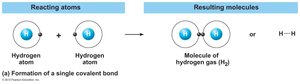
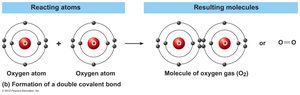
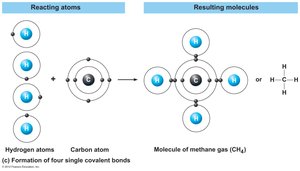
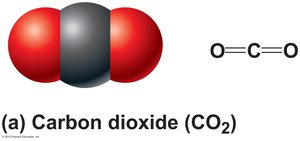
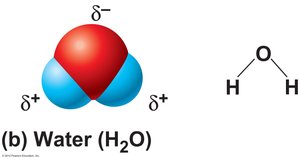
Covalent bonds form when atoms share electrons. Single covalent bonds share one pair, while double covalent bonds share two pairs. Covalent bonds can be nonpolar (equal sharing) or polar (unequal sharing).
Single covalent bond: One pair of shared electrons
Double covalent bond: Two pairs of shared electrons
Nonpolar: Equal sharing, electrically neutral
Polar: Unequal sharing, positive and negative poles
Hydrogen Bonds
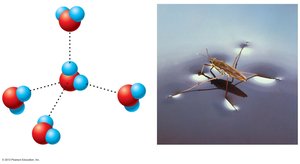
Hydrogen bonds are weak attractions between hydrogen and the negative portion of a polar molecule. They are important for the structure of water and biological molecules.
Hydrogen bond: Weak attraction, important in water and DNA
Patterns of Chemical Reactions
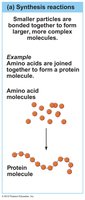
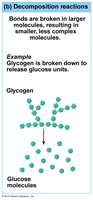
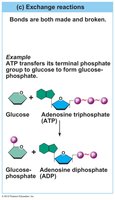
Chemical reactions involve the making and breaking of bonds. Three main types are synthesis, decomposition, and exchange reactions.
Synthesis (A + B → AB): Atoms/molecules combine, energy absorbed
Decomposition (AB → A + B): Molecule breaks down, energy released
Exchange (AB + C → AC + B): Bonds made and broken, parts switched
Inorganic Compounds Essential to Human Functioning
Water
Water is the most abundant inorganic compound in the body. It has high heat capacity, solvent properties, chemical reactivity, and provides cushioning.
High heat capacity: Absorbs and releases heat slowly
Solvent properties: Dissolves many substances
Chemical reactivity: Participates in reactions
Cushioning: Protects organs
Salts
Salts dissociate into ions in water and are vital for body functions. Electrolytes conduct electrical currents.
Electrolytes: Conduct electricity, essential for nerve and muscle function
Acids and Bases
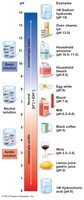
Acids release hydrogen ions (H+), while bases release hydroxyl ions (OH–). Neutralization occurs when acids and bases react to form water and a salt. The pH scale measures hydrogen ion concentration.
Acid: Proton donor
Base: Proton acceptor
pH 7: Neutral
pH < 7: Acidic
pH > 7: Basic
Buffers: Regulate pH changes
Hydrolysis and Dehydration Synthesis
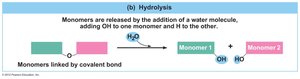
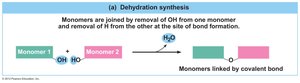
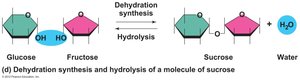
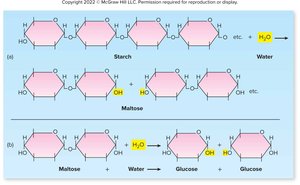
Hydrolysis breaks polymers into monomers by adding water, while dehydration synthesis joins monomers to form polymers by removing water.
Hydrolysis: Addition of water breaks bonds
Dehydration synthesis: Removal of water forms bonds
Organic Compounds Essential to Human Functioning
Carbohydrates
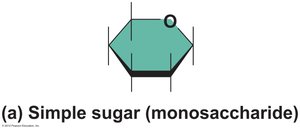
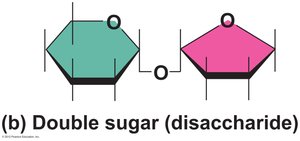
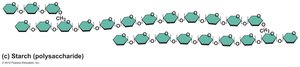
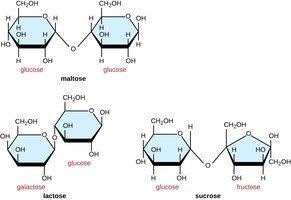
Carbohydrates contain carbon, hydrogen, and oxygen. They are classified by size: monosaccharides (simple sugars), disaccharides (two sugars), and polysaccharides (long chains).
Monosaccharides: Glucose, fructose, galactose
Disaccharides: Sucrose, maltose, lactose
Polysaccharides: Starch, glycogen
General formula for monosaccharides:
Dehydration Synthesis and Hydrolysis in Carbohydrates
Dehydration synthesis builds disaccharides and polysaccharides, while hydrolysis breaks them down.
Dehydration synthesis: Forms water as a byproduct
Hydrolysis: Requires water to break bonds
Lipids
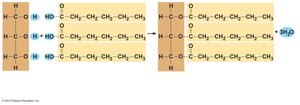
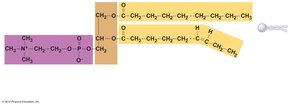
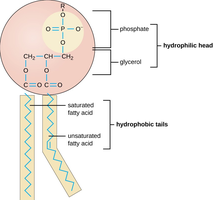
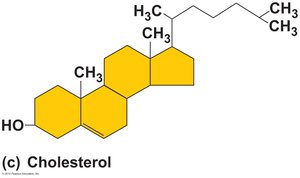
Lipids are hydrophobic molecules containing carbon, hydrogen, and oxygen. Types include neutral fats (triglycerides), phospholipids, and steroids.
Triglycerides: Three fatty acids + one glycerol
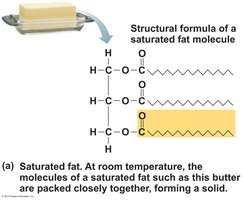
Saturated fats: Only single bonds, solid at room temperature
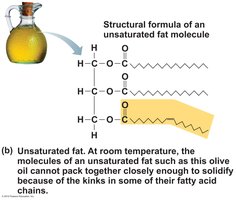
Unsaturated fats: One or more double bonds, liquid at room temperature
Phospholipids: Two fatty acids, form cell membranes
Steroids: Four ring structure, includes cholesterol
Proteins
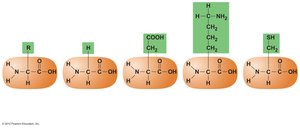
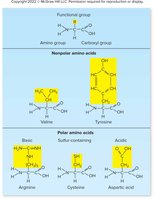
Proteins are polymers of amino acids and are essential for structure and function in the body. Each amino acid has an amine group, acid group, and a variable R group. Proteins have four levels of structure: primary, secondary, tertiary, and quaternary.
Primary: Sequence of amino acids
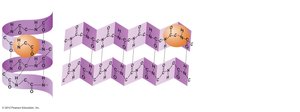
Secondary: Alpha-helix or beta-pleated sheet, stabilized by hydrogen bonds
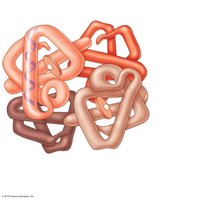
Tertiary: Three-dimensional shape, reinforced by chemical bonds
Quaternary: Multiple polypeptide chains
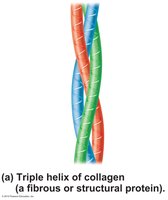
Fibrous proteins: Structural, e.g., collagen
Globular proteins: Functional, e.g., enzymes, antibodies

Enzymes
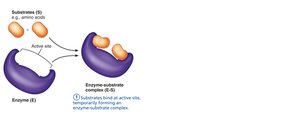
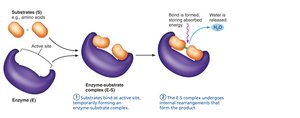
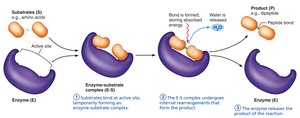
Enzymes are globular proteins that act as biological catalysts, speeding up chemical reactions without being consumed. They function by binding substrates at their active site, forming an enzyme-substrate complex, and facilitating the reaction.
Enzyme: Biological catalyst
Active site: Region where substrate binds
Enzyme-substrate complex: Temporary association
Nucleic Acids
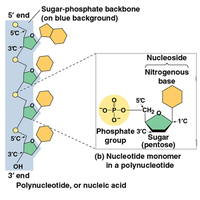
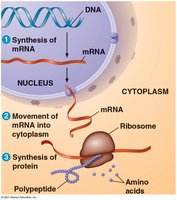
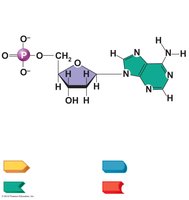
Nucleic acids are polymers of nucleotides, each consisting of a pentose sugar, phosphate group, and nitrogenous base. Two types are DNA and RNA. DNA is double-stranded and contains deoxyribose, while RNA is single-stranded and contains ribose.
DNA: Deoxyribonucleic acid, genetic material, double helix
RNA: Ribonucleic acid, protein synthesis, single strand
Nucleotide: Sugar, phosphate, base (A, G, C, T, U)
Law of Complementary Base Pairs: A-T, C-G in DNA; A-U, C-G in RNA
Adenosine Triphosphate (ATP)
ATP is the primary energy carrier in cells, composed of ribose, adenine, and three phosphate groups. Energy is released by breaking the high-energy phosphate bond, and ATP is replenished by oxidation of food fuels.
ATP: Adenosine triphosphate, cellular energy currency
ADP: Adenosine diphosphate, formed after ATP hydrolysis
Energy release:
Type of Bond | Formation | Example |
|---|---|---|
Ionic | Transfer of electrons | NaCl (sodium chloride) |
Covalent | Sharing of electrons | H2O (water), CO2 (carbon dioxide) |
Hydrogen | Weak attraction between H and negative portion of polar molecule | DNA, water |
Macromolecule | Monomer | Function |
|---|---|---|
Carbohydrate | Monosaccharide | Energy, structure |
Lipid | Fatty acid, glycerol | Energy storage, membranes |
Protein | Amino acid | Structure, enzymes, hormones |
Nucleic acid | Nucleotide | Genetic information |
Additional info: Academic context was added to clarify the structure and function of macromolecules, chemical bonds, and reactions, as well as to provide self-contained explanations suitable for exam preparation.
