 뒤로
뒤로Chapter 2: Chemistry Comes Alive – Study Notes for Anatomy & Physiology
스터디 가이드 - 스마트 노트
 자료에 맞춘 맞춤형 노트, 핵심 정의, 예시, 맥락을 확장해 제공합니다.
Chemistry and Physiological Reactions
Introduction to Chemistry in Physiology
Chemistry forms the foundation of all physiological processes in the human body, including movement, digestion, heart function, and nervous system activity. Understanding basic chemistry and biochemistry is essential for comprehending how the body operates at the molecular level.
Basic Chemistry: Focuses on the properties and interactions of matter and energy.
Biochemistry: Examines the chemical composition and reactions of living matter.
2.1 Matter and Energy
States of Matter
Matter is anything that has mass and occupies space. It can exist in three states: solid, liquid, and gas, each with distinct properties.
Solid: Definite shape and volume.
Liquid: Changeable shape, definite volume.
Gas: Changeable shape and volume.

Energy
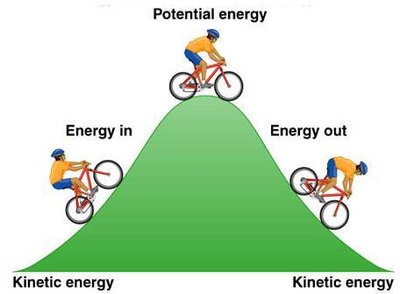
Energy is the capacity to do work or put matter into motion. It exists in two main forms: kinetic (in action) and potential (stored).
Kinetic Energy: Energy of movement.
Potential Energy: Stored energy, available for use.
Energy can be transformed between kinetic and potential forms.
2.2 Atoms and Elements
Elements and Their Importance
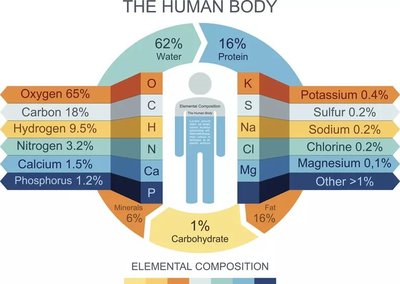
All matter is composed of elements, which are substances that cannot be broken down by ordinary chemical methods. Four elements—carbon, oxygen, hydrogen, and nitrogen—make up 96% of the human body.
Major Elements: C, O, H, N
Minor Elements: Nine elements make up 3.9% of the body.
Trace Elements: Eleven elements make up less than 0.01%.
Structure of Atoms
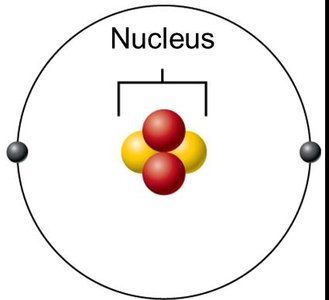
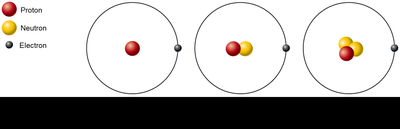
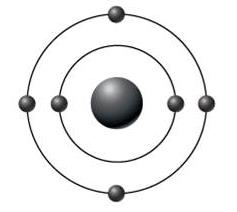
Atoms are the smallest units of elements and consist of three subatomic particles: protons, neutrons, and electrons.
Protons: Positive charge, 1 amu.
Neutrons: No charge, 1 amu.
Electrons: Negative charge, virtually no weight.
Identifying Elements
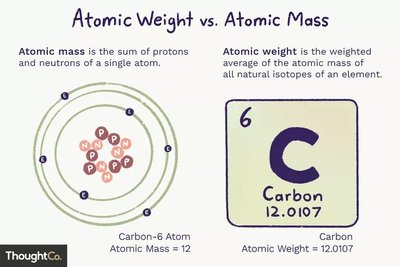
Elements are identified by their atomic number (number of protons), mass number (protons + neutrons), isotopes (same protons, different neutrons), and atomic weight (average mass of isotopes).
Atomic Number: Number of protons.
Mass Number: Protons + neutrons.
Isotopes: Variations with different neutron numbers.
Atomic Weight: Average mass of all isotopes.
Radioisotopes
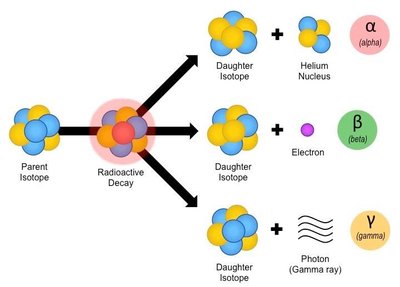
Radioisotopes are unstable isotopes that decay to more stable forms, emitting energy as radioactivity. They are useful in biological research and medicine but can damage living tissue.
Radioactive Decay: Loss of subatomic particles, sometimes changing the element.
Applications: Medical imaging, cancer treatment.
2.3 Combining Matter
Molecules and Compounds
Atoms combine to form molecules (two or more atoms bonded together) and compounds (molecules with two or more different atoms).
Molecule: H2, O2
Compound: H2O, NaCl, C6H12O6
Mixtures
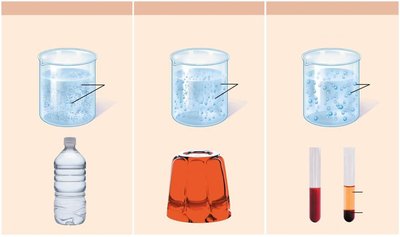
Mixtures are combinations of two or more components physically intermixed. There are three basic types: solutions, colloids, and suspensions.
Type | Particle Size | Properties | Example |
|---|---|---|---|
Solution | Tiny | Do not settle out or scatter light | Mineral water |
Colloid | Larger | Scatter light, do not settle out | Jell-O |
Suspension | Very large | Settle out, may scatter light | Blood |
Solutions and Concentrations
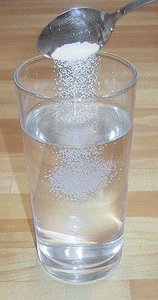
Solutions are homogeneous mixtures with a solvent (major component) and solute (minor component). Concentrations can be expressed as percent, mg/dl, or molarity.
Percent: Ratio of solute to total solution.
mg/dl: Milligrams per deciliter.
Molarity: Moles of solute per liter.
2.4 Chemical Bonds
Types of Chemical Bonds
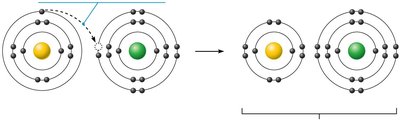
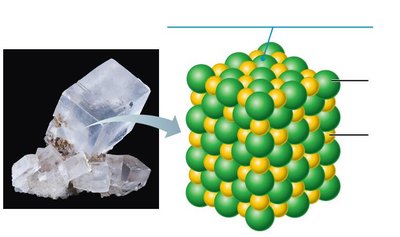
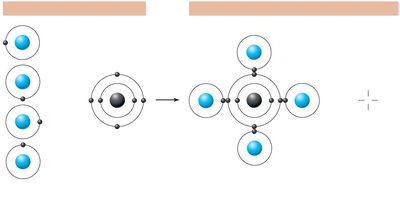
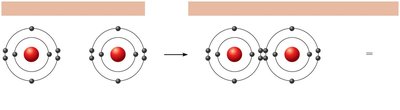
Atoms form chemical bonds to achieve stability. The three major types are ionic, covalent, and hydrogen bonds.
Ionic Bonds: Transfer of electrons, forming cations and anions.
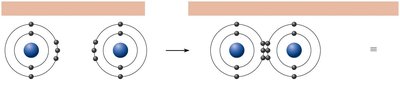
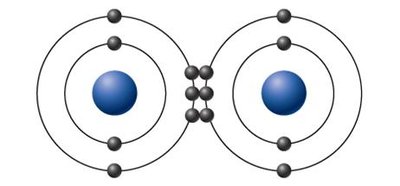
Covalent Bonds: Sharing of electrons; can be single, double, or triple bonds.
Hydrogen Bonds: Weak attractions between polar molecules.
Polar and Nonpolar Covalent Bonds
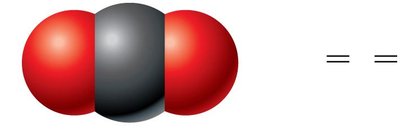
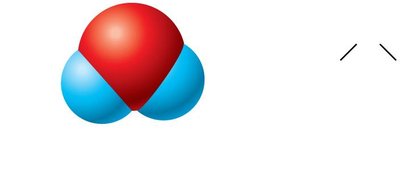
Covalent bonds can be nonpolar (equal sharing) or polar (unequal sharing). Polar molecules have regions of partial charge.
Nonpolar: N2, O2
Polar: H2O, CO2
Hydrogen Bonds
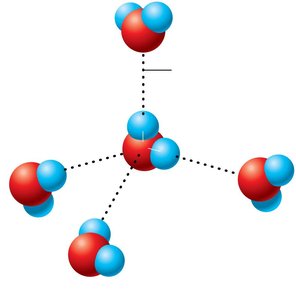
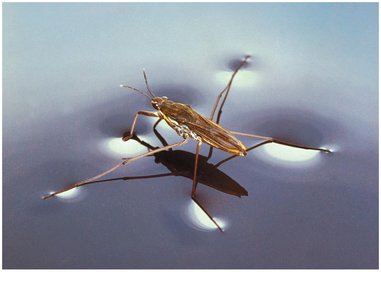
Hydrogen bonds are weak attractions between the slightly positive hydrogen of one molecule and the slightly negative oxygen or nitrogen of another. They are crucial for water's properties and biological molecules.
Not true bonds: Weak magnetic attraction.
Importance: Makes water liquid, stabilizes DNA and proteins.
Bond Strength Comparison
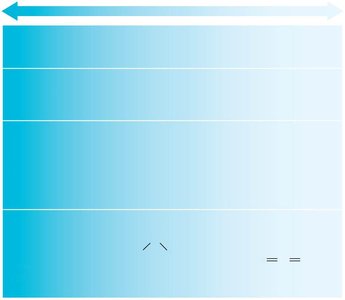
Bond Type | Strength |
|---|---|
Ionic | Strongest |
Covalent | Strong |
Hydrogen | Weakest |
2.5 Chemical Reactions
Chemical Equations
Chemical reactions involve the formation, rearrangement, or breaking of chemical bonds. They are represented by chemical equations showing reactants and products.
Reactants: Substances entering the reaction.
Products: Resulting substances.
Balanced Equations: Show amounts of reactants and products.
Example:
Types of Chemical Reactions
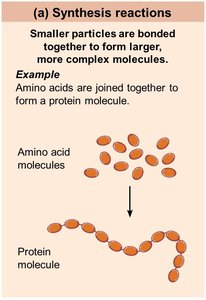
Synthesis: Smaller particles combine to form larger molecules.
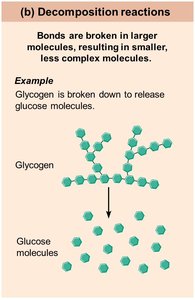
Decomposition: Bonds in larger molecules are broken to form smaller molecules.
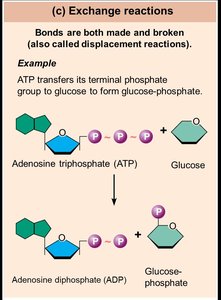
Exchange: Bonds are both made and broken; atoms are exchanged between molecules.
Energy Flow in Reactions
Reactions are classified as exergonic (release energy) or endergonic (absorb energy). All reactions are theoretically reversible.
Exergonic: Release energy.
Endergonic: Absorb energy.
Example:
Rate of Chemical Reactions
The speed of reactions is influenced by temperature, concentration, particle size, and catalysts. Enzymes are biological catalysts that increase reaction rates without being consumed.
Temperature: Higher temperature increases rate.
Concentration: Higher concentration increases rate.
Particle Size: Smaller particles increase rate.
Catalysts: Increase rate without being changed.
2.6 Inorganic Compounds
Water
Water is the most abundant inorganic compound in living cells, accounting for 60–80% of cell volume. Its properties are essential for life.
High heat capacity
High heat of vaporization
Polar solvent properties
Reactivity
Cushioning
Salts
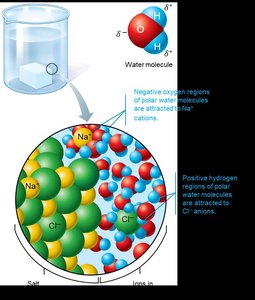
Salts are ionic compounds that dissociate into ions in water. All ions are called electrolytes because they conduct electrical currents in solution.
Examples: NaCl, KCl, CaCO3
Acids and Bases
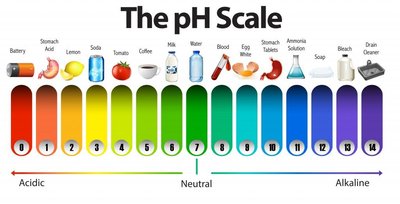
Acids are proton donors (release H+), while bases are proton acceptors (pick up H+). The pH scale measures the concentration of hydrogen ions.
Acid Example: HCl → H+ + Cl-
Base Example: NaOH → Na+ + OH-
pH Formula:
Neutralization and Buffers
Neutralization occurs when acids and bases mix to form water and a salt. Buffers resist changes in pH by releasing or binding hydrogen ions.
Example:
Buffer System: Carbonic acid–bicarbonate system in blood.
2.7 Organic Compounds: Synthesis and Hydrolysis
Organic Molecules
Organic molecules contain carbon (except CO2 and CO). Carbon forms four covalent bonds and is unique to living systems. Major organic compounds include carbohydrates, lipids, proteins, and nucleic acids.
Synthesis and Hydrolysis
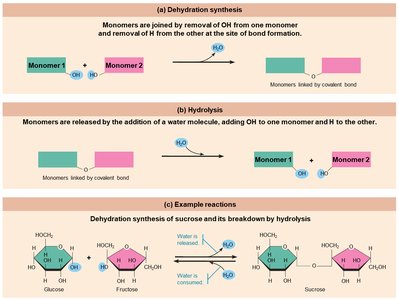
Many organic molecules are polymers, chains of monomers. They are synthesized by dehydration synthesis and broken down by hydrolysis.
Dehydration Synthesis: Removal of water to join monomers.
Hydrolysis: Addition of water to break polymers into monomers.
2.8 Carbohydrates
Structure and Function
Carbohydrates include sugars and starches, containing C, H, and O in a 2:1 ratio. They serve as energy sources and structural components.
General Formula:
2.9 Lipids
Types and Functions
Lipids contain C, H, O (less O than carbohydrates) and sometimes P. They are insoluble in water and include triglycerides, phospholipids, and steroids.
Triglycerides: Energy storage, insulation, protection.
Phospholipids: Major component of cell membranes.
Steroids: Cholesterol, hormones, vitamin D, bile salts.
2.10 Proteins
Structure and Function
Proteins comprise 20–30% of cell mass and have diverse functions: structural, enzymatic, transport, contractile, communication, and defense. They are polymers of amino acids joined by peptide bonds.
Structural Levels: Primary, secondary, tertiary, quaternary.
Fibrous Proteins: Structural, stable, insoluble.
Globular Proteins: Functional, compact, soluble.
Protein Denaturation
Denaturation is the loss of a protein's functional shape due to changes in pH or temperature. It is usually reversible unless conditions are extreme.
Enzymes
Enzymes are biological catalysts that lower activation energy and increase reaction speed. They are specific to their substrates.
Mechanism: Substrate binds to enzyme, forms enzyme-substrate complex, product is released.
2.11 Nucleic Acids
Structure and Function
Nucleic acids (DNA and RNA) are polymers of nucleotides, composed of a nitrogen base, pentose sugar, and phosphate group. DNA stores genetic information; RNA is involved in protein synthesis.
DNA: Double helix, located in nucleus.
RNA: Single-stranded, mostly outside nucleus.
2.12 ATP (Adenosine Triphosphate)
Structure and Function
ATP is the cell's energy currency, capturing energy from glucose breakdown and powering cellular work. It consists of adenine, ribose, and three phosphate groups.
ATP → ADP + Pi: Energy released for cellular processes.
Cellular Work: Transport, mechanical, and chemical work.
