 뒤로
뒤로Chapter 2: Chemistry of Life – Foundations for Anatomy & Physiology
스터디 가이드 - 스마트 노트
 자료에 맞춘 맞춤형 노트, 핵심 정의, 예시, 맥락을 확장해 제공합니다.
Introduction to Chemistry for Anatomy & Physiology
Overview
Chemistry is the study of matter and the changes it undergoes, which is fundamental to understanding biological processes in Anatomy & Physiology. All living organisms are composed of matter, which cycles through the environment and is transformed but not created or destroyed.
Basic Chemical Concepts
Elements, Compounds, and Molecules
Element: A substance that cannot be broken down into simpler substances by chemical reactions. Examples include hydrogen (H), oxygen (O), carbon (C), and nitrogen (N).
Compound: A substance formed from two or more different elements in a fixed ratio (e.g., H2O, NaCl).
Molecule: Two or more atoms held together by chemical bonds. All compounds are molecules, but not all molecules are compounds (e.g., O2 is a molecule but not a compound).
States of Matter
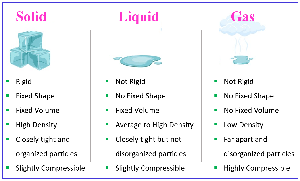
Solid: Atoms are tightly bound, fixed shape and volume (e.g., ice).
Liquid: Atoms are close but not rigid, no fixed shape, fixed volume (e.g., water).
Gas: Atoms are far apart, no fixed shape or volume, easily compressed (e.g., water vapor).
Elements Essential for Life
Main Elements in the Human Body
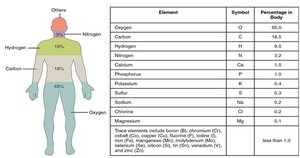
Top 4 Elements: Carbon (C), Hydrogen (H), Oxygen (O), Nitrogen (N) – make up 96% of living matter.
Other Important Elements: Phosphorus (P), Sulfur (S), Calcium (Ca), Potassium (K), Sodium (Na), Iron (Fe), Magnesium (Mg).
Trace Elements: Required in minute quantities (less than 0.01% of body mass), but essential for life (e.g., zinc, copper).
Element | Symbol | Percentage in Body |
|---|---|---|
Oxygen | O | 65.0 |
Carbon | C | 18.5 |
Hydrogen | H | 9.5 |
Nitrogen | N | 3.2 |
Calcium | Ca | 1.5 |
Phosphorus | P | 1.0 |
Potassium | K | 0.4 |
Sulfur | S | 0.3 |
Sodium | Na | 0.2 |
Chlorine | Cl | 0.2 |
Magnesium | Mg | 0.1 |
Atomic Structure
Subatomic Particles
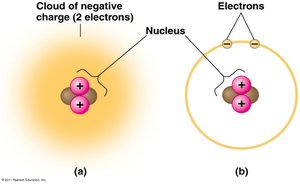
Protons: Positively charged, located in the nucleus, define the atomic number.
Neutrons: Neutral charge, located in the nucleus, contribute to atomic mass.
Electrons: Negatively charged, orbit the nucleus in electron shells, involved in chemical reactions.
Atomic Number, Mass Number, and Isotopes
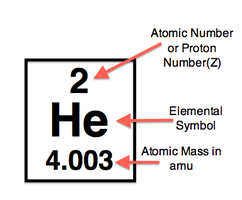
Atomic Number (Z): Number of protons in the nucleus; defines the element.
Mass Number (A): Number of protons plus neutrons.
Isotopes: Atoms of the same element with different numbers of neutrons.
Chemical Bonds and Interactions
Covalent Bonds
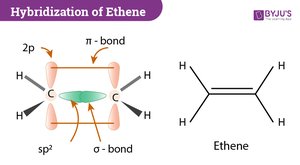
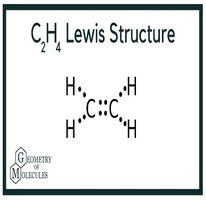
Covalent Bond: Atoms share electrons to fill their valence shells (octet rule).
Single, Double, Triple Bonds: Single (one pair shared), double (two pairs), triple (three pairs).
Non-Polar vs Polar Covalent Bonds
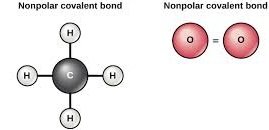
Non-Polar Covalent: Electrons shared equally (e.g., O2, CH4).
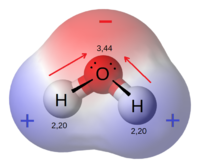
Polar Covalent: Electrons shared unequally due to differences in electronegativity (e.g., H2O).
Ionic Bonds
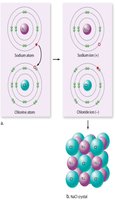
Ionic Bond: One atom donates an electron to another, forming ions (cations and anions) that attract each other.
Example: Sodium (Na) donates an electron to chlorine (Cl) to form NaCl (table salt).
Hydrogen Bonds
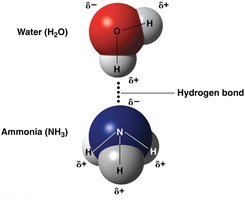
Hydrogen Bond: Weak attraction between a hydrogen atom (partial positive) and an electronegative atom (O or N) in another molecule.
Importance: Stabilizes structures of DNA and proteins, gives water its unique properties.
Molecular Shape and Function
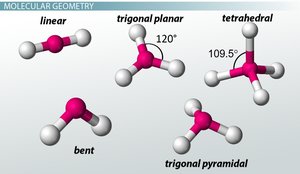
Molecular Shape: Determined by the positions of atoms and their bonds; crucial for biological function and molecular recognition.
Chemical Reactions
Definition and Examples
Chemical Reaction: Making and breaking of chemical bonds, rearranging atoms into new substances.
Reactants: Starting materials; Products: Ending materials.
Example: Photosynthesis and cellular respiration are key reactions in living organisms.
Chemical Equilibrium
Chemical Equilibrium: The point at which forward and reverse reactions occur at the same rate; concentrations of reactants and products remain constant.
Properties of Water
Chemistry of Water
Polar Molecule: Oxygen is more electronegative, creating partial charges and allowing hydrogen bonding.
Hydrogen Bonds: Allow water molecules to interact with each other and with other polar molecules.
Unique Properties of Water
Universal Solvent: Dissolves many substances, especially ionic and polar compounds.
High Heat Capacity: Absorbs and retains heat, moderating temperature changes.
High Reactivity: Participates in many chemical reactions in the body.
Lubrication: Reduces friction between body surfaces.
Solutions, Solvents, and Solutes
Solution: Homogeneous mixture of two or more substances.
Solvent: The dissolving agent (usually water in biological systems).
Solute: The substance dissolved in the solvent.
Hydrophilic vs Hydrophobic Substances
Hydrophilic: Substances that dissolve easily in water (polar or charged).
Hydrophobic: Substances that do not dissolve in water (non-polar).
Acids, Bases, and pH
pH Scale and Biological Importance
pH: A measure of hydrogen ion (H+) concentration in a solution.
Acid: Increases H+ concentration (pH < 7).
Base: Decreases H+ concentration (pH > 7).
Neutral: pH = 7 (pure water).
Blood pH: Normally 7.35–7.45 (slightly basic).
Buffers
Buffer: Substance that minimizes changes in pH by accepting or donating H+ ions.
Example: Carbonic acid–bicarbonate buffer system in blood.
Macromolecules: Carbohydrates and Lipids
Carbohydrates
Monosaccharides: Simple sugars (e.g., glucose, C6H12O6), main energy source for cells.
Polysaccharides: Polymers of monosaccharides; storage forms include glycogen (animals) and starch (plants).
Polysaccharide | Organism | Function |
|---|---|---|
Glycogen | Animals | Energy storage |
Starch | Plants | Energy storage |
Lipids
Fats (Triglycerides): Composed of glycerol and three fatty acids; used for long-term energy storage, insulation, and protection.
Phospholipids: Two fatty acids and a phosphate group attached to glycerol; form cell membranes due to hydrophilic heads and hydrophobic tails.
Steroids: Four fused carbon rings; include cholesterol and steroid hormones.
Macromolecules: Proteins and Nucleic Acids
Proteins
Monomer: Amino acids (20 types), linked by peptide bonds to form polypeptides.
Functions: Enzymes, structural support, transport, signaling, movement, defense.
Enzymes: Biological catalysts that speed up chemical reactions by lowering activation energy.
Levels of Protein Structure
Primary: Sequence of amino acids.
Secondary: Local folding into alpha-helices and beta-sheets.
Tertiary: Overall 3D shape of a single polypeptide.
Quaternary: Association of multiple polypeptide subunits (e.g., hemoglobin).
Protein Denaturation
Denaturation: Loss of protein structure (and function) due to changes in pH, temperature, or salt concentration.
Nucleic Acids
DNA (Deoxyribonucleic Acid): Stores genetic information; template for replication and transcription.
RNA (Ribonucleic Acid): Involved in protein synthesis (translation); mRNA carries instructions from DNA to ribosomes.
Central Dogma: DNA → RNA → Protein (gene expression).
Summary Table: Key Chemical Concepts for Anatomy & Physiology
Concept | Definition | Example/Application |
|---|---|---|
Element | Pure substance, cannot be broken down | Oxygen (O), Carbon (C) |
Compound | 2+ elements in fixed ratio | Water (H2O) |
Molecule | 2+ atoms bonded | O2, CO2 |
Covalent Bond | Electron sharing | H2O, CH4 |
Ionic Bond | Electron transfer | NaCl |
Hydrogen Bond | Weak attraction between molecules | DNA, water properties |
pH | Measure of H+ concentration | Blood pH 7.4 |
Buffer | Minimizes pH changes | Bicarbonate in blood |
