 뒤로
뒤로Chapter 2: The Chemical Level of Organization – Study Notes for Anatomy & Physiology
스터디 가이드 - 스마트 노트
 자료에 맞춘 맞춤형 노트, 핵심 정의, 예시, 맥락을 확장해 제공합니다.
Chapter 2: The Chemical Level of Organization
Atoms and Atomic Structure
Atom: the smallest stable unit of matter, composed of subatomic particles: protons, neutrons, and electrons. Understanding atomic structure is essential for grasping the chemical basis of physiological processes.
Protons (p+): Positively charged particles found in the nucleus.
Neutrons (n): Neutral particles also located in the nucleus.
Electrons (e-): Negatively charged particles that orbit the nucleus in an electron cloud.
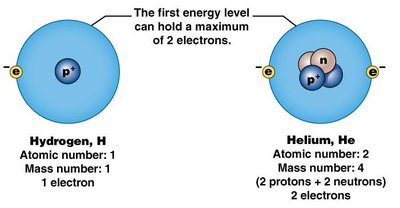
Atomic number: The number of protons in an atom, unique to each element.
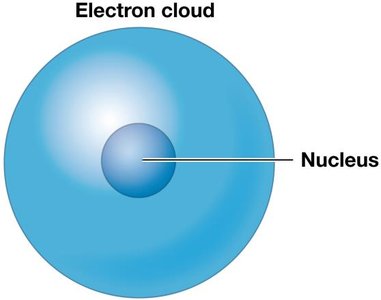
Electron cloud: The region around the nucleus where electrons are likely to be found.
protons and neutrons occur in the nucleus
electrons orbit the nucleus within an electron cloud
Electron shell: A two-dimensional representation of the electron cloud, indicating energy levels.
Elements and Isotopes
Elements: a pure substance composed of atoms of one type (all atoms have the same number of protons).
The atomic number (number of protons) is unique for each element
ex. all carbon atoms (no matter where they exist) have six protons (atomic number is six)
Chemical symbol: Abbreviations for elements, e.g., O for oxygen, Na for sodium.
Principal elements in the human body: Oxygen, carbon, hydrogen, nitrogen, calcium, phosphorus, potassium, sodium, chlorine, magnesium, sulfur, iron, iodine, and trace elements.
Isotopes: atoms of the same element with different numbers of neutrons; they have identical chemical properties but different masses.
Mass number: the number of protons plus the number of neutrons of an atom; unique for each isotope
Radioisotopes: Unstable isotopes that emit radiation as they decay (radioactive decay), measured by half-life.
Electrons and Energy Levels
Electrons occupy specific energy levels or shells around the nucleus. The arrangement of electrons determines an atom's chemical properties and reactivity.
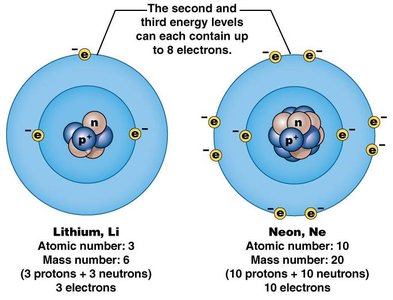
The first shell (closest to the nucleus) holds up to 2 electrons; the second and third shells can each hold up to 8 electrons.
Valence shell: The outermost electron shell; its occupancy determines chemical reactivity.
Atoms with unfilled valence shells are reactive; those with filled valence shells are stable (inert).
Molecules and Compounds
Atoms combine to form molecules and compounds through chemical bonds. The type of bond formed depends on how atoms achieve stable electron configurations.
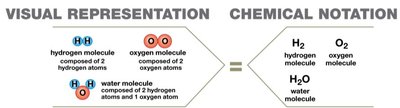
Molecule: Two or more atoms held together by shared electrons (e.g., H2, O2, H2O).
Compound: A chemical substance composed of atoms of two or more different elements (e.g., NaCl, C6H12O6).
Not all molecules are compounds (e.g., H2), and not all compounds are molecules (e.g., NaCl, which is ionic).
Ions and Ionic Bonds
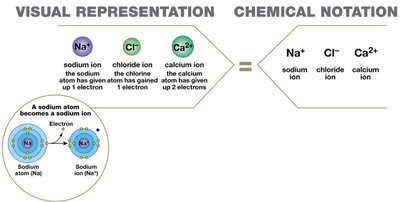
Ions are atoms or groups of atoms with an electrical charge, formed by gaining or losing electrons. Ionic bonds result from the attraction between oppositely charged ions.
Cation: Positively charged ion (loss of electrons).
Anion: Negatively charged ion (gain of electrons).
Ionic bond: The electrostatic attraction between cations and anions (e.g., Na+ and Cl- in NaCl).
Covalent Bonds
Covalent bonds are formed when atoms share electrons to fill their valence shells. These bonds can be single, double, or triple, depending on the number of shared electron pairs.
Nonpolar covalent bond: Equal sharing of electrons (e.g., H2, O2).
Polar covalent bond: Unequal sharing of electrons, resulting in partial charges (e.g., H2O).
Hydrogen Bonds
Hydrogen bonds are weak attractions between the partial positive charge of a hydrogen atom in a polar covalent bond and the partial negative charge of another atom (O, N, or F) in a different polar molecule. They are crucial in stabilizing the structures of proteins and nucleic acids.
Chemical Reactions
Chemical reactions involve the making or breaking of bonds between atoms. They are represented by chemical equations and are essential for physiological processes.
Decomposition reaction: AB → A + B
Hydrolysis: AB + H2O → AH + BOH
Synthesis reaction: A + B → AB
Dehydration synthesis: AH + BOH → AB + H2O
Exchange reaction: AB + CD → AD + CB
Reversible reaction: A + B \leftrightarrow AB
pH and Homeostasis
pH measures the concentration of hydrogen ions (H+) in a solution. Maintaining proper pH is vital for cellular function and overall homeostasis.
Neutral: pH = 7 (equal H+ and OH-).
Acidic: pH < 7 (more H+ than OH-).
Basic (alkaline): pH > 7 (less H+ than OH-).
Normal blood pH: 7.35–7.45; deviations can cause acidosis or alkalosis.
Regulation occurs via respiratory and renal mechanisms.
Macromolecules
Macromolecules are large, complex molecules essential for life. There are four main types: carbohydrates, lipids, proteins, and nucleic acids.
Monomer: The basic building block of a macromolecule.
Polymer: A molecule composed of repeating monomers.
Dehydration synthesis joins monomers; hydrolysis breaks polymers into monomers.
Carbohydrates
Composed of C, H, and O in a 1:2:1 ratio.
Monosaccharide: Simple sugar (e.g., glucose).
Disaccharide: Two monosaccharides joined (e.g., sucrose).
Polysaccharide: Many monosaccharides joined (e.g., starch, glycogen, cellulose).
Isomers: Molecules with the same formula but different structures (e.g., glucose and fructose).
Lipids
Composed mainly of C and H, with less O than carbohydrates.
Fatty acids: Long hydrocarbon chains; can be saturated (no double bonds) or unsaturated (one or more double bonds).
Glycerides: Fatty acids attached to glycerol (mono-, di-, triglycerides).
Steroids: Four-ring structures (e.g., cholesterol, hormones).
Phospholipids: Major component of cell membranes.
Proteins
Polymers of amino acids (20 types in humans).
Functions: support, movement, transport, buffering, metabolic regulation (enzymes), coordination, control, defense.
Peptide bond: Covalent bond between amino acids.
Structural levels: primary, secondary (alpha helix, beta sheet), tertiary, quaternary.
Denaturation: Loss of structure and function due to environmental changes.
Nucleic Acids
Store and process genetic information (DNA and RNA).
Nucleotide: Monomer with a pentose sugar, phosphate group, and nitrogenous base (A, G, C, T, U).
DNA: Double-stranded, contains A, T, C, G.
RNA: Single-stranded, contains A, U, C, G.
Complementary base pairing: A-T (DNA), A-U (RNA), C-G.
High-Energy Compounds
Cells use high-energy compounds, such as ATP, to store and transfer energy for cellular processes.
ATP (Adenosine triphosphate): Main energy currency of the cell; contains high-energy phosphate bonds.
ATP is synthesized from ADP and a phosphate group; ATPase catalyzes its breakdown to release energy.
Equation:
