 뒤로
뒤로Chapter 2B: Chemistry Comes Alive – Biochemistry Essentials for Anatomy & Physiology
스터디 가이드 - 스마트 노트
 자료에 맞춘 맞춤형 노트, 핵심 정의, 예시, 맥락을 확장해 제공합니다.
Biochemistry: The Chemistry of Life
Introduction to Biochemistry
Biochemistry is the study of the chemical processes and substances that occur within living organisms. It is foundational for understanding the structure and function of the human body at the molecular level.
Organic compounds contain carbon (and usually hydrogen) and are mostly covalently bonded. Example: C6H12O6 (glucose).
Inorganic compounds lack carbon and tend to be simpler. Example: H2O (water).
Important Inorganic Compounds
Acids, Bases, and Salts
Acids and bases are essential for maintaining the body's chemical balance. Their interactions are crucial for physiological processes.
Acids dissociate in water to release hydrogen ions (H+), e.g., hydrochloric acid:
Bases dissociate in water to release hydroxyl ions (OH-), e.g., sodium hydroxide:
Neutralization reaction: Acids and bases react to form water and a salt:
pH and Buffers
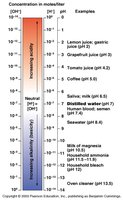
The pH scale measures the relative concentration of hydrogen ions in a solution, indicating its acidity or alkalinity. Buffers help maintain stable pH in body fluids.
pH 7 is neutral; below 7 is acidic, above 7 is basic.
The pH scale is logarithmic: each unit represents a tenfold change in H+ concentration.
Buffers are chemicals that regulate pH by neutralizing excess acids or bases.
Organic Compounds: Carbohydrates
Classification and Structure
Carbohydrates are organic molecules composed of carbon, hydrogen, and oxygen. They are classified by size and complexity, all containing one or more monosaccharide units.
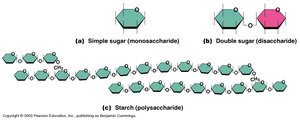
Monosaccharides: Single-ring structures; basic building blocks. Examples: glucose, fructose.
Disaccharides: Two monosaccharides bonded together. Examples: lactose, sucrose.
Polysaccharides: Long chains of monosaccharides. Examples: glycogen, starch, cellulose.
Organic Compounds: Lipids
Types and Functions
Lipids are hydrophobic organic molecules that serve as energy storage, structural components, and signaling molecules in the body.
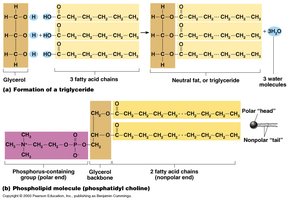
Triglycerides (fats): Composed of glycerol and three fatty acids; main energy storage form.
Phospholipids: Major component of cell membranes; contain a polar "head" and nonpolar "tails".
Steroids: Include cholesterol, estrogen, and testosterone; important for membrane structure and hormone synthesis.
Organic Compounds: Proteins
Structure and Function
Proteins are polymers of amino acids and are essential for structure, function, and regulation of the body's tissues and organs.
Amino acids: Contain carbon, hydrogen, oxygen, nitrogen, and sometimes sulfur.
Proteins serve as enzymes, hormones, antibodies, and structural elements.
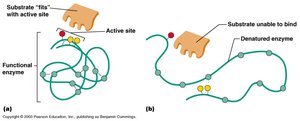
Enzymes are biological catalysts that speed up chemical reactions without being consumed.
Organic Compounds: Nucleic Acids
DNA, RNA, and ATP
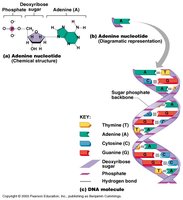
Nucleic acids store and transmit genetic information and provide energy for cellular processes. They are polymers of nucleotides, each containing a sugar, phosphate, and nitrogenous base.
DNA (deoxyribonucleic acid): Double-stranded; stores genetic information; bases: adenine (A), guanine (G), cytosine (C), thymine (T).
RNA (ribonucleic acid): Single-stranded; involved in protein synthesis; bases: adenine (A), guanine (G), cytosine (C), uracil (U).
ATP (adenosine triphosphate): A nucleotide with three phosphate groups; main energy carrier in cells. Energy is released when ATP is converted to ADP (adenosine diphosphate).
Chemical Reactions in the Body
Exergonic and Endergonic Reactions
Chemical reactions in the body are classified by their energy changes.
Exergonic reactions: Release energy; catabolic (breaking down) reactions. Example: protein breakdown into amino acids.
Endergonic reactions: Absorb energy; anabolic (building up) reactions. Example: linking amino acids to form proteins.
Properties of Water and Hydrogen Bonding
Hydrogen Bonds and Biological Importance
Hydrogen bonds are weak attractions between polar molecules, especially water, and are crucial for many biological properties.
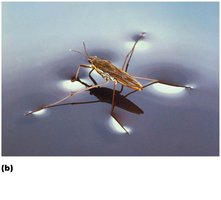
Responsible for water's high surface tension, allowing phenomena such as insects walking on water.
Stabilize the three-dimensional structure of proteins and nucleic acids.
Summary Table: Building Blocks of Major Biomolecules
The following table summarizes the basic building blocks of the four major classes of biomolecules:
Biomolecule | Building Block |
|---|---|
Proteins | Amino acids |
Nucleic acids | Nucleotides |
Carbohydrates | Monosaccharides |
Fats/Triglycerides | Glycerol, fatty acids |
