 뒤로
뒤로Chemical Composition of the Body: Biomolecules
스터디 가이드 - 스마트 노트
 자료에 맞춘 맞춤형 노트, 핵심 정의, 예시, 맥락을 확장해 제공합니다.
Biomolecules: Chemical Building Blocks of Life
Definition and Importance
Biomolecules are molecules produced by or found in living organisms. They are essential for the structure, function, growth, and survival of cells, serving as the fundamental chemical building blocks of life.
Key Point: Biomolecules are required for cellular structure and function.
Key Point: They participate in metabolic processes and genetic information storage.
Main Types of Biomolecules
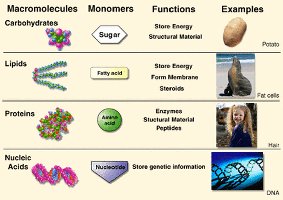
There are four main types of biomolecules, each with distinct monomers, functions, and examples:
Carbohydrates: Monomer is monosaccharide (sugar); functions include energy storage and structural material.
Lipids: Monomer is fatty acid; functions include energy storage, membrane formation, and hormone production.
Proteins: Monomer is amino acid; functions include enzymatic activity, structural support, and signaling.
Nucleic Acids: Monomer is nucleotide; function is storage and transmission of genetic information.
Monomers and Polymers
Concepts and Examples
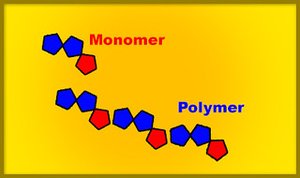
Monomers are small molecules that act as building blocks for larger biomolecules called polymers. Polymers are formed by joining many monomers together.
Carbohydrates: Monosaccharides form polysaccharides.
Proteins: Amino acids form polypeptides/proteins.
Nucleic Acids: Nucleotides form DNA/RNA.
Polymer Formation and Breakdown
Dehydration Synthesis (Condensation) Reactions
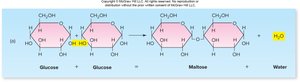
Dehydration synthesis reactions bond subunits of polymers together by removing a hydrogen atom from one monomer and a hydroxyl group (OH) from another, forming water. This process is anabolic and is used to create carbohydrates, lipids, and proteins.
Key Point: Dehydration synthesis builds larger molecules from smaller subunits.
Example: Formation of maltose from two glucose molecules.
Hydrolysis Reactions
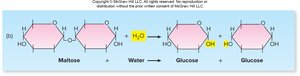
Hydrolysis reactions break bonds in polymers to produce smaller molecules by splitting a water molecule and adding its components to the breakdown products. This process is catabolic and is used in digestion.
Key Point: Hydrolysis breaks down polymers into monomers.
Example: Breakdown of maltose into two glucose molecules.
Carbohydrates
Structure and Types
Carbohydrates contain carbon, hydrogen, and oxygen, typically in a ratio reflecting their name (H2O). Their monomers are monosaccharides (simple sugars), which usually have 3-6 carbons. Disaccharides are formed from two monosaccharides, and polysaccharides are formed from multiple monosaccharides.
Key Point: Saccharide refers to a sugar molecule.
Example: Glucose is a common monosaccharide.
Functions and Storage
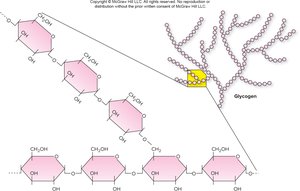
Sugars are used for energy and structural components in the body. Polysaccharides, such as glycogen, are chains of glucose stored in skeletal muscle and the liver for energy use.
Lipids
Types and Functions
Lipids are a diverse group of biomolecules with various structures and functions:
Triglycerides: Store energy and provide insulation.
Ketone bodies: Provide energy when glucose is limited.
Phospholipids: Form the bulk of cell membranes.
Steroids: Act as hormones and regulate body functions.
Eicosanoids: Prostaglandins regulate inflammation, pain, and other processes.
Lipid Solubility
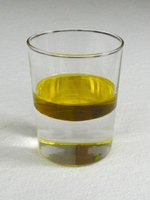
Lipids are generally insoluble in polar solvents (such as water) and are hydrophobic, but are soluble in nonpolar solvents.
Fatty Acids: Structure and Saturation
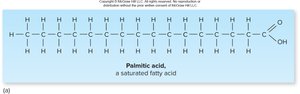
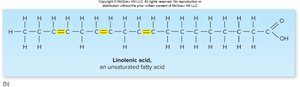
Fatty acids have a nonpolar hydrocarbon chain with a carboxyl group (COOH) at one end. Saturated fatty acids have only single covalent bonds between carbons and are usually solid at room temperature. Unsaturated fatty acids have at least one double covalent bond and are usually liquid at room temperature.
Triglycerides
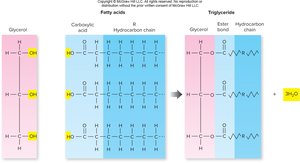
Triglycerides are formed by condensation of one molecule of glycerol and three molecules of fatty acids. They are stored in adipose tissue and are also called triacylglycerol molecules.
Ketone Bodies and Lipid Metabolism
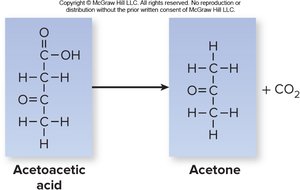
Hydrolysis of triglycerides in adipose tissue releases free fatty acids into the blood, which can be used for energy or converted by the liver into ketone bodies. Elevated ketone body levels (ketosis) can occur in low-carbohydrate diets or uncontrolled diabetes, and excessive levels can cause ketoacidosis.
Phospholipids
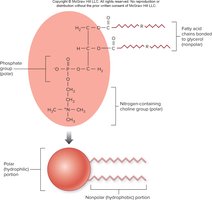
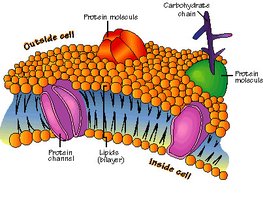
Phospholipids are amphipathic molecules, meaning they have both polar (hydrophilic) and nonpolar (hydrophobic) regions. They are the major component of the plasma membrane.
Micelles
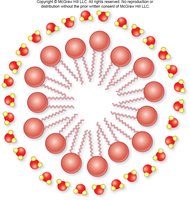
Phospholipids can form micelles, where the hydrophilic portions face outward toward water and the hydrophobic portions aggregate together.
Steroids
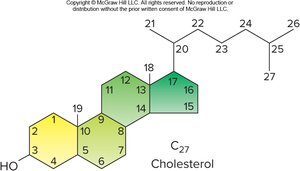
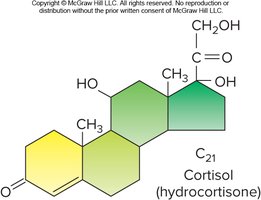
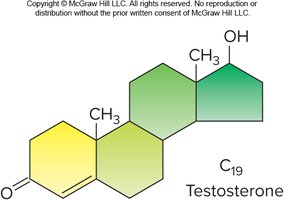
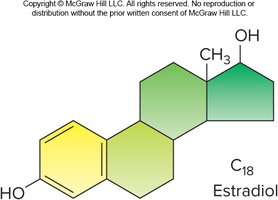
Steroids have a basic ring structure consisting of three six-carbon rings joined to one five-carbon ring. Cholesterol is the precursor for other steroids and is important in cell membrane structure and as a precursor for bile salts and vitamin D3. Different functional groups attached to the rings give rise to different steroid hormones.
Eicosanoids
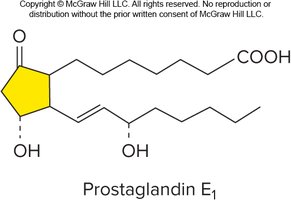
Eicosanoids are lipid-based signaling molecules made from fatty acids, with a 20-carbon backbone and a cyclic hydrocarbon ring. Prostaglandins are eicosanoids involved in inflammation, pain, fever, blood vessel changes, and blood clotting.
Proteins
Structure and Building Blocks
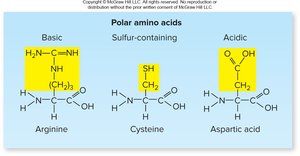
Proteins are chains of amino acids, of which there are 20 different types. Each amino acid has an amino group (NH2), a carboxyl group (COOH), and a unique functional group (R).
Peptide Bonds and Protein Structure
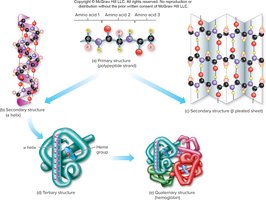
Amino acids are joined together by peptide bonds in dehydration synthesis reactions. Peptide bonds are covalent bonds between two adjacent amino acids. Two amino acids form a dipeptide, three form a tripeptide, multiple form a polypeptide, and 100+ form a protein. Some proteins are composed of multiple polypeptides.
Levels of Protein Structure
The structure of a protein can be described at four levels:
Primary structure: Sequence of amino acids.
Secondary structure: Initial folding/shape (alpha helix or beta sheet).
Tertiary structure: Complex 3-D shape.
Quaternary structure: Multiple polypeptides forming one functional protein (not all proteins have this).
Protein Function and Denaturation
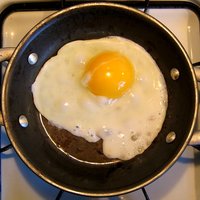
The 3-D shape of a protein is critical for its function. Tertiary structure is held together primarily by weak bonds, making protein shape susceptible to pH and temperature changes. Denaturation occurs when these weak bonds are broken, causing the protein to lose its shape and function. For example, frying an egg denatures the protein albumin in egg white.
Protein Diversity and Functions
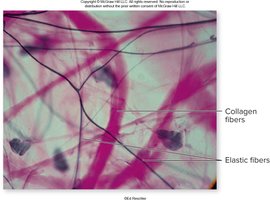
Proteins combine with other biomolecules to form glycoproteins (proteins with carbohydrates) and lipoproteins (proteins with lipids). They serve a wide variety of functions, including structural support, enzymatic activity, immune defense, receptor signaling, transport, and hormonal regulation.
Nucleic Acids
Structure and Components
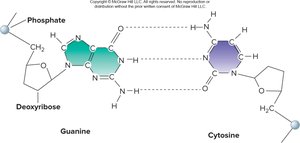
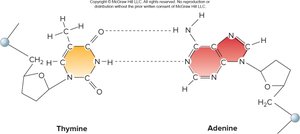
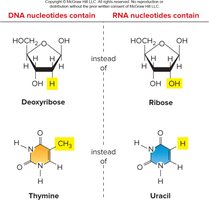
Nucleic acids are composed of subunits called nucleotides, each consisting of a phosphate group, a five-carbon sugar (deoxyribose or ribose), and a base.
DNA: Genetic Code
Deoxyribonucleic acid (DNA) is the basis for the genetic code. Its sugar is deoxyribose, and it contains four bases: guanine, adenine (purines), cytosine, and thymine (pyrimidines). DNA is double-stranded, forming a double helix, with hydrogen bonds connecting the two strands via complementary base pairing (A-T, G-C).
RNA: Information Usage
Ribonucleic acid (RNA) helps the cell use the information in DNA. RNA is single-stranded, its sugar is ribose, and it contains uracil instead of thymine. There are four major types: precursor messenger RNA (pre-mRNA), messenger RNA (mRNA), transfer RNA (tRNA), and ribosomal RNA (rRNA).
Summary Table: Biomolecules
Biomolecule | Monomer | Polymer | Main Function | Example |
|---|---|---|---|---|
Carbohydrate | Monosaccharide | Polysaccharide | Energy storage, structure | Glycogen |
Lipid | Fatty acid | Triglyceride, phospholipid | Energy storage, membrane, hormones | Triglyceride |
Protein | Amino acid | Polypeptide/protein | Enzymes, structure, signaling | Collagen |
Nucleic Acid | Nucleotide | DNA/RNA | Genetic information | DNA |
Additional info: This summary expands on the original notes by providing definitions, examples, and academic context for each biomolecule type, their structure, and their function in the human body.
