 뒤로
뒤로Chemistry Comes Alive: Essential Concepts for Anatomy & Physiology
스터디 가이드 - 스마트 노트
 자료에 맞춘 맞춤형 노트, 핵심 정의, 예시, 맥락을 확장해 제공합니다.
Chemistry Comes Alive
Energy and Its Forms
Energy is fundamental to all biological processes, enabling work and change within living systems. It exists in various forms and can be converted, though some energy is always lost as heat.
Potential energy: Stored, inactive energy.
Kinetic energy: Energy of motion.
Chemical energy: Released or absorbed during chemical bond formation or breakage.
Electrical energy: Movement of charged particles.
Mechanical energy: Movement of matter.
Radiant energy: Electromagnetic radiation, including light.
Matter, Mass, and Elements
Matter is anything that occupies space and has mass. It exists in three phases: solid, liquid, and gas. Elements are pure substances composed of specific types of atoms and cannot be broken down by ordinary chemical reactions.
Mass: Actual amount of matter in an object; constant everywhere.
Weight: Force of gravity acting on mass; varies with location.
Atomic Structure
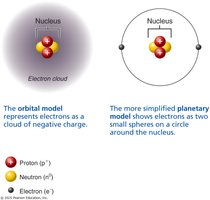
Atoms are the basic units of matter, consisting of protons, neutrons, and electrons. The arrangement of these subatomic particles determines the atom's properties.
Protons: Positively charged, found in the nucleus.
Neutrons: Neutral, found in the nucleus.
Electrons: Negatively charged, orbit the nucleus.
Electrical neutrality: Number of protons equals number of electrons.
Identifying Elements and Isotopes
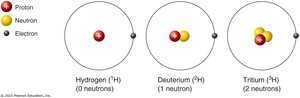
The number of protons in the nucleus (atomic number) distinguishes one element from another. Isotopes are variants of elements with different numbers of neutrons.
Atomic number: Number of protons.
Isotopes: Same number of protons, different number of neutrons; may be stable or radioactive.
Molecules, Compounds, and Mixtures
Atoms combine to form molecules and compounds, which exhibit new properties. Mixtures are physical combinations of substances.
Molecule: Two or more atoms bonded together.
Compound: Molecule composed of different elements (e.g., H2O).
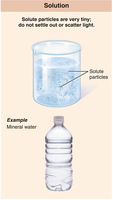
Mixtures: Substances physically intermixed; can be solutions, colloids, or suspensions.
Solutions
Solvent: Medium doing the dissolving.
Solute: Substance being dissolved.
Homogeneous: Uniform composition.
Concentration: Amount of solute per volume (mg/dl, Molarity).
Colloids
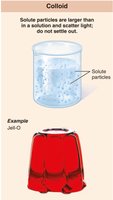
Heterogeneous: Translucent or milky appearance.
Sol-gel transformations: Can change between fluid and solid states.
Chemical Bonds and Electron Roles
Chemical bonds are forces holding atoms together. The type and strength of bonds depend on electron arrangements, especially in the valence shell.
Covalent bonds: Electrons are shared.
Ionic bonds: Electrons are transferred, forming ions.
Hydrogen bonds: Weak attractions between polar molecules.
van der Waals: Weakest, due to temporary charge fluctuations.
Valence shell: Outermost electron shell; stability depends on being full.
Electron shell capacities: 2, 8, 18, 32 electrons in the first four shells.
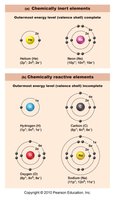
Covalent Bonds
Covalent bonds involve sharing electrons between atoms. The number of shared pairs determines whether the bond is single, double, or triple.
Single bond: One pair of electrons shared.
Double bond: Two pairs shared.
Triple bond: Three pairs shared.
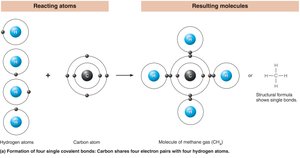
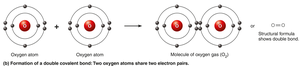
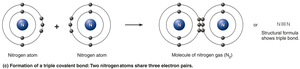
Types of Covalent Bonds
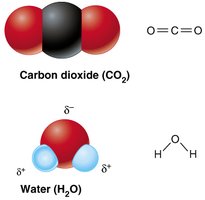
Nonpolar covalent: Electrons shared equally (e.g., CO2).
Polar covalent: Electrons shared unequally, creating dipoles (e.g., H2O).
Ionic Bonds
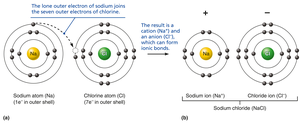
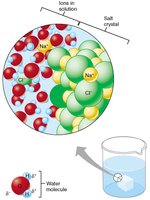
Ionic bonds form when electrons are transferred, creating charged ions that attract each other. Cations are positive, anions are negative.
Example: Sodium chloride (NaCl) formation.
Hydrogen Bonds
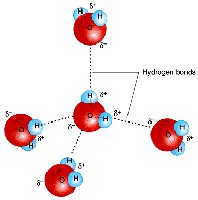
Hydrogen bonds are weak attractions between molecules containing polar covalent bonds, especially involving hydrogen. They are crucial for water's properties and biological molecules.
Surface tension: Water forms many hydrogen bonds, supporting life.
Comparing Chemical Bonds
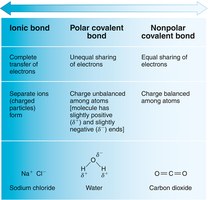
Chemical bonds differ in strength and electron sharing or transfer. The table below summarizes key differences:
Bond Type | Electron Behavior | Example |
|---|---|---|
Ionic | Complete transfer | NaCl |
Polar Covalent | Unequal sharing | H2O |
Nonpolar Covalent | Equal sharing | CO2 |
Chemical Reactions
Chemical reactions involve the formation, rearrangement, or breakage of chemical bonds, transferring energy and often producing waste heat. Reactions are written as equations, with reactants and products.
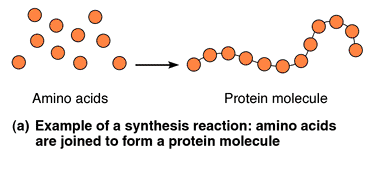
Synthesis (Anabolic): Building larger molecules from smaller ones; requires energy input.
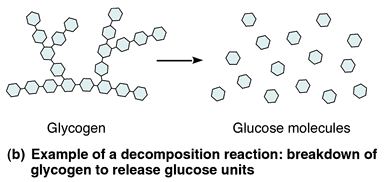
Decomposition (Catabolic): Breaking down molecules; releases energy.
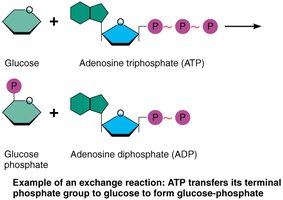
Exchange: Both synthesis and decomposition; parts are exchanged.
Reversibility and Rate of Chemical Reactions
All chemical reactions are theoretically reversible, but energy release can make reversal difficult. Reactions tend toward equilibrium, and rates depend on temperature, particle size, concentration, and catalysts.
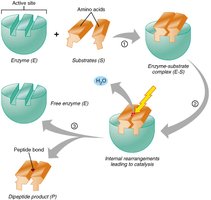
Catalysts: Speed up reactions without being consumed.
Organic and Inorganic Compounds
Biological molecules are classified as organic (containing carbon) or inorganic (usually lacking carbon). Both are essential for life.
Inorganic Compounds
Water: High heat capacity, heat of vaporization, polarity, solvent properties, reactivity, lubrication, and cushioning.
Salts: Dissociate into ions (electrolytes) in water.
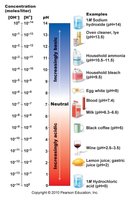
Acids and Bases: Alter hydrogen ion concentration; measured by pH.
pH Scale and Acid-Base Balance
pH: Measures [H+] concentration; ranges from 0 (acidic) to 14 (basic).
Neutral: pH 7; [H+] = [OH-].
Buffers: Resist changes in pH; crucial for homeostasis.
Organic Compounds
Organic molecules always contain carbon, hydrogen, and usually oxygen. They may be large polymers formed from smaller monomers and serve structural and functional roles.
Four major classes: Carbohydrates, lipids, proteins, nucleic acids.
Carbohydrates
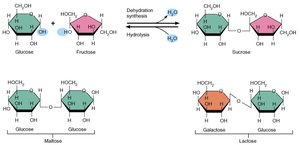
Monosaccharides: Simple sugars (glucose, fructose, galactose, deoxyribose, ribose).
Disaccharides: Two monosaccharides joined (sucrose, maltose, lactose).
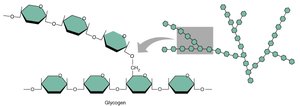
Polysaccharides: Large polymers (glycogen, starch, cellulose, chitin).

Lipids
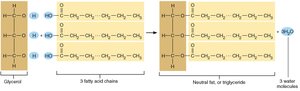
Triglycerides: Glycerol + 3 fatty acids; energy storage.
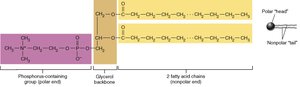
Phospholipids: Modified triglycerides; amphipathic, major cell membrane component.
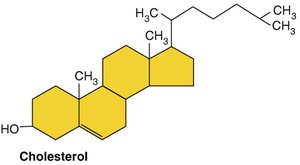
Steroids: Four carbon rings; cholesterol, hormones.
Eicosanoids: Local hormones (prostaglandins, leukotrienes).
Proteins
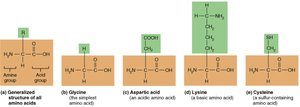
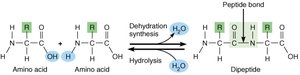
Amino acids: Building blocks; 20 types.
Peptide bonds: Link amino acids; dehydration synthesis.
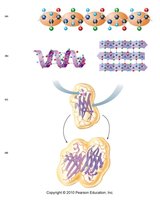
Structural hierarchy: Primary, secondary, tertiary, quaternary.
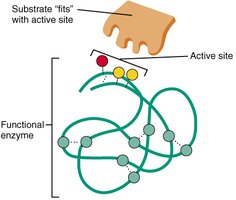
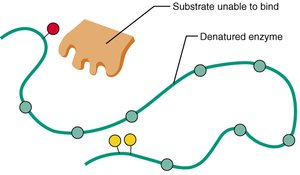
Enzymes: Globular proteins; organic catalysts.
Denaturation: Loss of structure and function due to extreme conditions.
Nucleic Acids
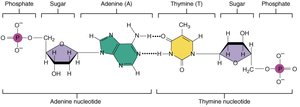
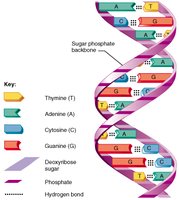
DNA: Genetic material; double helix; nucleotides (A, T, C, G).
RNA: Single-stranded; carries genetic information; nucleotides (A, U, C, G).
Nucleotide structure: Nitrogenous base, pentose sugar, phosphate group.
Adenosine Triphosphate (ATP)
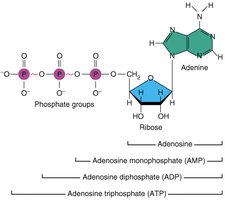
ATP is the primary energy transfer molecule in cells, composed of adenine, ribose, and three phosphate groups. Hydrolysis releases energy for cellular work.
ATP hydrolysis:
Additional info: These notes expand on brief points with academic context, definitions, and examples to provide a comprehensive, self-contained study guide for college-level Anatomy & Physiology students.
