 뒤로
뒤로Chemistry Comes Alive: Foundations for Anatomy & Physiology
스터디 가이드 - 스마트 노트
 자료에 맞춘 맞춤형 노트, 핵심 정의, 예시, 맥락을 확장해 제공합니다.
Chemical Reactions & Metabolism
Introduction to Chemical Reactions
Chemical reactions are fundamental to all physiological processes, as they transform substances and drive metabolism within cells. Understanding these reactions is essential for grasping how the human body functions at the molecular level.
Chemical Reaction: A process in which the identity of at least one substance changes, resulting in the formation of new products.
Requirements: Reactants (substances reacting together), a permissible environment (suitable conditions), and time (rate of reaction).
Metabolism: The sum of all chemical reactions occurring in the body, including both anabolic (building up) and catabolic (breaking down) processes.
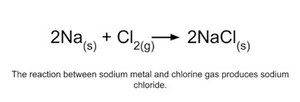
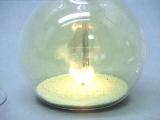
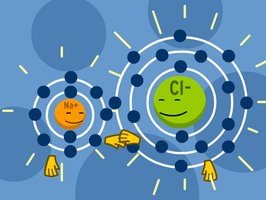
Example: The reaction between sodium metal and chlorine gas produces sodium chloride:
Matter, Space, & Mass
Properties of Matter
Matter is a physical substance that occupies space and has mass. These properties are foundational for understanding the structure and function of the human body.
Matter: Anything that occupies space and has mass.
Space: The measurable three-dimensional area occupied by an object.
Mass: The amount of matter in an object; remains constant regardless of gravity or shape.
States of Matter: Solid, liquid, and gas; each state differs in shape and volume.
Weight: Occurs when mass is subjected to gravitational force.


Energy & Energy Conversion
Types and Forms of Energy
Energy is the capacity to do work and is essential for physiological processes. It exists in various forms and can be converted from one type to another, often with some loss as heat.
Potential Energy: Stored energy due to position.
Kinetic Energy: Energy in action, moving objects.
Forms of Energy:
Chemical: Stored in chemical bonds.
Electrical: Results from movement of charged particles.
Mechanical: Directly involved in moving matter.
Radiant (Electromagnetic): Energy traveling in waves (e.g., visible light, X-rays).
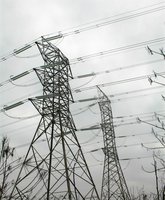
Energy Conversion: Energy can be transformed from one form to another, but conversions are often inefficient and generate heat. Example: Electrical energy heating a bulb filament produces radiant energy (light).
Law of Conservation of Energy: Energy is neither created nor destroyed, only transformed.
Elements & Atoms
Basic Building Blocks of Matter
Elements are unique substances that cannot be broken down further by ordinary chemical means. Atoms are the smallest units of elements, retaining all their properties.
Element: A pure substance made of only one kind of atom.
Atom: The smallest unit of an element, consisting of protons, neutrons, and electrons.
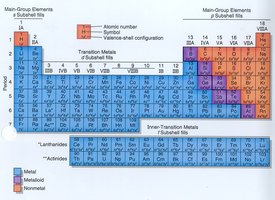
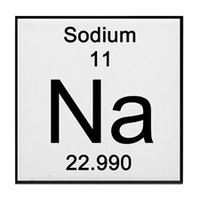
Atomic Symbol: One or two letter chemical shorthand for each element (e.g., Na for sodium).
Major Elements: Carbon (C), hydrogen (H), oxygen (O), nitrogen (N) – make up 96% of body weight.
Minor Elements: Minerals and trace elements (e.g., calcium, phosphorus, potassium, iron).
Element Properties
Chemical and Physical Properties
Each element has unique chemical and physical properties, which determine how it interacts with other elements and how it can be detected.
Chemical Properties: Ways atoms interact with one another.
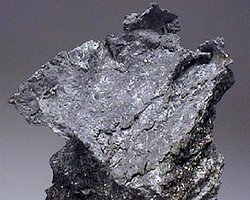
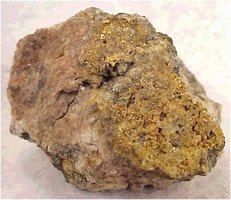
Physical Properties: Detected with special senses (e.g., appearance of metal crystals).
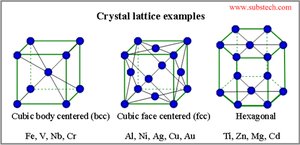
Metal Elements: Have an orderly arrangement of atoms in crystal lattices.
Atomic Structure
Subatomic Particles and Atomic Models
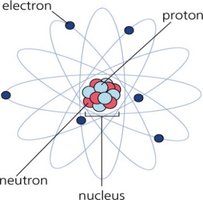
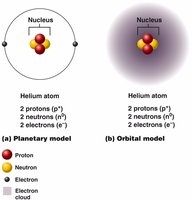
Atoms are composed of a nucleus containing protons and neutrons, surrounded by electrons in various models of movement.
Nucleus: Central part of an atom, contains protons (positive charge) and neutrons (no charge).
Electrons: Negatively charged particles moving around the nucleus.
Planetary Model: Electrons move in fixed, circular orbits (2D).
Orbital Model: Electrons are most likely found in regions around the nucleus (3D).
Element Identification
Atomic Number, Mass Number, and Isotopes
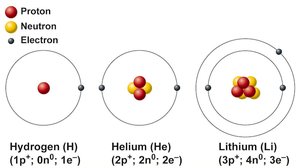
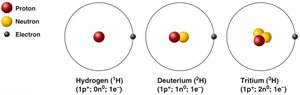
Elements are identified by their number of protons, neutrons, and electrons. Isotopes are atoms of the same element with different numbers of neutrons.
Atomic Number: Number of protons in the nucleus.
Mass Number: Sum of protons and neutrons.
Isotopes: Atoms with the same number of protons and electrons but different numbers of neutrons.
Radioisotopes: Unstable isotopes that undergo radioactive decay, emitting energy.
Example: Carbon isotopes:
Molecules & Compounds
Formation and Types of Molecules
Molecules are combinations of two or more atoms held together by chemical bonds. They can be composed of the same or different types of atoms.
Molecule: Combination of two or more atoms by means of a chemical bond.
Elemental Molecule: Two or more of the same atoms combine (e.g., O2).
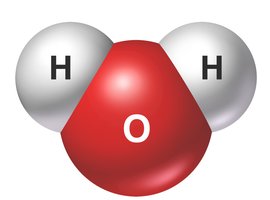
Compound Molecule: Combination of two or more different atoms (e.g., H2O).
Example: Water (H2O) is a compound molecule; oxygen (O2) is an elemental molecule.

Additional info:
Understanding chemical principles is essential for comprehending physiological processes, as human biochemistry relies on a series of metabolic reactions occurring in cells.
Periodic table organization and atomic structure are foundational for studying the elements that compose the human body.
