 뒤로
뒤로Chemistry Comes Alive: Mixtures, Chemical Bonds, and Reactions in Anatomy & Physiology
스터디 가이드 - 스마트 노트
 자료에 맞춘 맞춤형 노트, 핵심 정의, 예시, 맥락을 확장해 제공합니다.
Chemistry Comes Alive
Introduction
Chemistry is fundamental to understanding Anatomy & Physiology, as all physiological processes are based on chemical interactions. This chapter explores the nature of mixtures, chemical bonds, and chemical reactions, providing a foundation for later study of biological molecules and cellular processes.
Mixtures
Definition and Types of Mixtures
Mixtures are combinations of two or more substances that are physically blended but not chemically bonded. They can be composed of gases, liquids, or solids in any combination. Mixtures are classified based on the uniformity and particle size of their components.
Homogeneous mixtures (solutions): Uniform composition throughout; no visible separation between components; transparent.
Heterogeneous mixtures: Non-uniform composition; visible differences between components; can be translucent or opaque.
Types of Mixtures
Solutions: Homogeneous mixtures with very small particles that do not settle out or scatter light. Example: saline solution (NaCl in water).
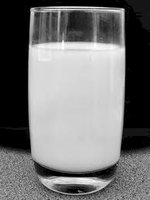
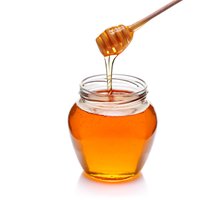
Colloids (emulsions, gels): Heterogeneous mixtures with intermediate-sized particles that do not settle easily and scatter light. Examples: milk, honey.
Suspensions: Heterogeneous mixtures with large particles that tend to settle out over time and may scatter light. Examples: sand in water, blood.
Solutions: Solvent, Solute, and Concentration
Solutions consist of a solvent (the substance present in the greatest amount, usually water in biological systems) and one or more solutes (substances dissolved in the solvent).
Concentration (%): Grams of solute per 100 mL of solution.
Molarity (M): Number of moles of solute per liter of solution. One mole contains particles (Avogadro’s number).
Example: 0.9 g NaCl per 100 mL H2O is a 0.9% saline solution.

Chemical Bonds
Electron Shells and Energy Levels
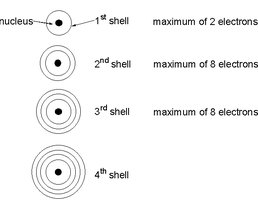
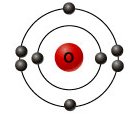
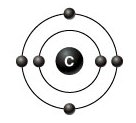
Atoms consist of a nucleus surrounded by electrons arranged in shells or energy levels. Each shell can hold a specific maximum number of electrons, and shells are filled from the innermost to the outermost.
1st shell: up to 2 electrons
2nd shell: up to 8 electrons
3rd shell: up to 8 electrons
4th shell: more than 8 electrons
Electrons in the outermost shell (valence shell) determine an atom’s chemical reactivity.
The Octet Rule and Reactivity
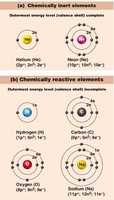
The octet rule states that atoms are most stable when they have eight electrons in their valence shell (except for the first shell, which is stable with two electrons). Atoms with incomplete valence shells are reactive, while those with complete shells (noble gases) are inert.
Inert elements: Full valence shell, nonreactive (e.g., helium, neon).
Reactive elements: Incomplete valence shell, tend to gain, lose, or share electrons to achieve stability.
Ionic Bonds
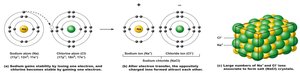
Ionic bonds form when electrons are transferred from one atom to another, resulting in the formation of oppositely charged ions that attract each other.
Cation: Atom that loses electrons, becoming positively charged (e.g., Na+).
Anion: Atom that gains electrons, becoming negatively charged (e.g., Cl-).
Example: Sodium (Na) donates an electron to chlorine (Cl), forming NaCl (table salt).
Covalent Bonds
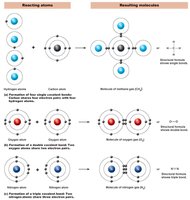
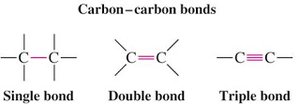
Covalent bonds involve the sharing of electrons between atoms to achieve stability. The number of shared electron pairs determines whether the bond is single, double, or triple.
Single bond: One pair of electrons shared
Double bond: Two pairs of electrons shared
Triple bond: Three pairs of electrons shared
Electronegativity and Bond Polarity
The ability of an atom to attract shared electrons is called electronegativity. Atoms with high electronegativity (e.g., oxygen) attract electrons more strongly, while those with low electronegativity (e.g., hydrogen) tend to lose electrons. Carbon is considered electroneutral because it neither strongly attracts nor loses electrons.
Polar and Nonpolar Covalent Molecules
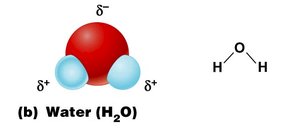
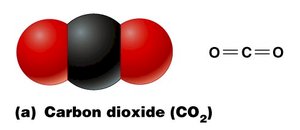
Nonpolar molecules have equal sharing of electrons, resulting in a balanced charge distribution (e.g., O2, CO2). Polar molecules have unequal sharing, creating partial positive (δ+) and negative (δ-) charges (e.g., H2O).
Nonpolar: Linear, electrically balanced
Polar: Bent or nonlinear, electrically unbalanced
Hydrogen Bonds
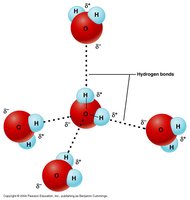
Hydrogen bonds are weak attractions between the positive (δ+) region of one polar molecule and the negative (δ-) region of another. They are important in maintaining the structure of water, proteins, and nucleic acids.
Responsible for water’s surface tension
Stabilize the 3D structure of large biological molecules
Bond Strength and Energy
The strength of a chemical bond is determined by the energy required to break it. In general:
Hydrogen bonds: weakest
Ionic bonds: intermediate
Covalent bonds: strongest (triple > double > single)
Water’s polar nature allows for extensive hydrogen bonding, making it a unique and vital molecule in biological systems.
Chemical Reactions
Types of Chemical Reactions
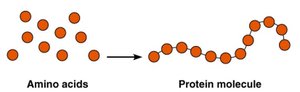
Chemical reactions involve the formation, rearrangement, or breaking of chemical bonds. They are represented by chemical equations that show the reactants and products.
Synthesis (combination) reactions: Two or more substances combine to form a larger, more complex molecule. Example: (anabolic)
Decomposition reactions: A complex molecule is broken down into smaller components. Example: (catabolic)
Exchange (displacement) reactions: Bonds are both broken and formed, resulting in new substances. Example:
Oxidation-reduction (redox) reactions: Special exchange reactions involving the transfer of electrons between reactants.

Stoichiometry and Chemical Equations
Stoichiometry refers to the quantitative relationships between reactants and products in a chemical reaction. Chemical equations must be balanced to reflect the conservation of mass.
Example:
Energy Flow in Chemical Reactions
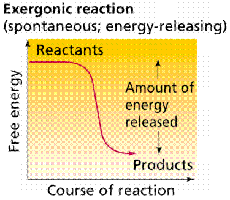
Chemical reactions can either release or absorb energy:
Exergonic reactions: Release energy; products have less potential energy than reactants; usually catabolic or oxidative.
Endergonic reactions: Absorb energy; products have more potential energy than reactants; usually anabolic.
Summary Table: Types of Mixtures
Type | Appearance | Particle Size | Separation | Examples |
|---|---|---|---|---|
Solution | Homogeneous, transparent | Small | Does not settle | Saline, air |
Colloid | Heterogeneous, translucent | Intermediate | Does not settle easily | Milk, honey |
Suspension | Heterogeneous, opaque | Large | Settles out | Blood, sand in water |
Key Terms
Mixture
Solution
Colloid
Suspension
Solvent
Solute
Molarity
Avogadro’s number
Chemical bond
Ionic bond
Covalent bond
Hydrogen bond
Electronegativity
Polar molecule
Nonpolar molecule
Exergonic reaction
Endergonic reaction
