 뒤로
뒤로Connective Tissues: Structure, Types, and Functions
스터디 가이드 - 스마트 노트
 자료에 맞춘 맞춤형 노트, 핵심 정의, 예시, 맥락을 확장해 제공합니다.
Connective Tissue Overview
Definition and Importance
Connective tissue is the most abundant and widely distributed of the primary tissues in the human body. It plays a crucial role in supporting, protecting, and binding other tissues together. The diversity of connective tissues allows them to fulfill a variety of functions, from structural support to nutrient transport.
Four main classes: Connective tissue proper, Cartilage, Bone, Blood
Key functions: Support, protection, insulation, and transportation of substances
Main Classes of Connective Tissue
Connective tissues are classified based on their structure and function. Each class contains several subclasses with unique features.
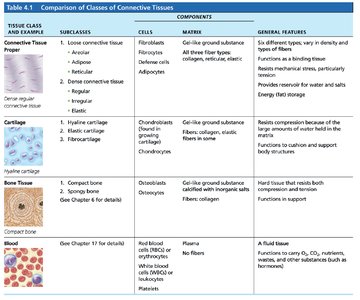
Connective tissue proper: Includes loose (areolar, adipose, reticular) and dense (regular, irregular, elastic) types
Cartilage: Hyaline, elastic, and fibrocartilage
Bone: Compact and spongy bone
Blood: Fluid tissue for transport
Characteristics of Connective Tissue
Structural Features
Connective tissues share several structural characteristics that distinguish them from other tissue types.
Vascularity: Varies from highly vascular (bone) to avascular (cartilage)
Extracellular matrix: Composed of ground substance and fibers, separates cells and allows tissues to bear weight and withstand tension
Three main elements: Ground substance, fibers, and cells
Extracellular Matrix Components
The extracellular matrix is a defining feature of connective tissue, providing structural and biochemical support.
Ground substance: Unstructured material that fills space between cells; contains water, proteins, and polysaccharides
Fibers: Collagen, elastic, and reticular fibers provide support and flexibility
Cells: Vary depending on tissue type (e.g., fibroblasts, chondrocytes, osteocytes, adipocytes)
Connective Tissue Fibers
Types of Fibers
Three types of fibers are found in connective tissues, each with distinct properties and functions.
Collagen fibers: Strongest and most abundant; provide high tensile strength
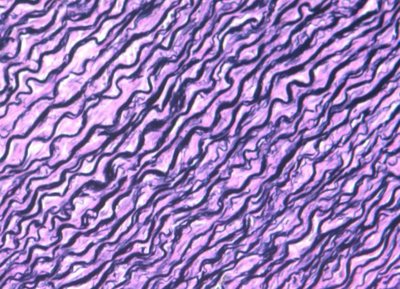
Elastic fibers: Networks of long, thin elastin fibers; allow for stretch and recoil
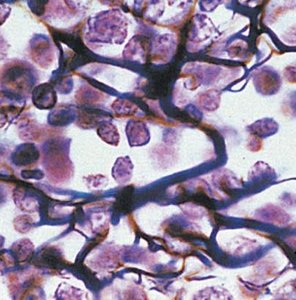
Reticular fibers: Short, fine, highly branched collagenous fibers; form networks that offer more "give"

Connective Tissue Cells
Cell Types by Tissue
Each connective tissue type contains specialized cells responsible for producing and maintaining the matrix.
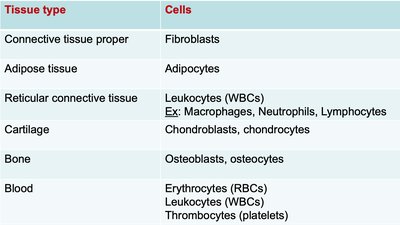
Fibroblasts: Produce fibers and ground substance in connective tissue proper
Adipocytes: Store fat in adipose tissue
Chondroblasts and chondrocytes: Form and maintain cartilage
Osteoblasts and osteocytes: Form and maintain bone
Blood cells: Erythrocytes (RBCs), leukocytes (WBCs), thrombocytes (platelets)
Connective Tissue Proper
Loose Connective Tissue
Loose connective tissue is characterized by a loosely arranged matrix and serves as a packing material in the body.
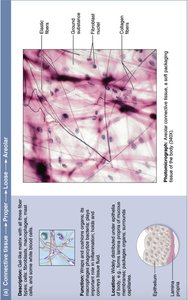
Areolar: Supports and binds other tissues; holds body fluids; defends against infection
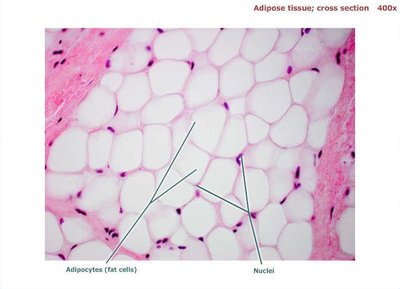
Adipose: Stores fat; insulates and protects organs
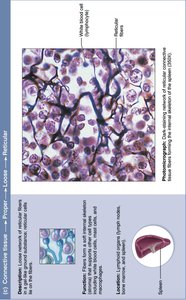
Reticular: Forms a soft internal skeleton for lymphoid organs
Dense Connective Tissue
Dense connective tissue contains closely packed fibers and provides strong support and resistance to tension.
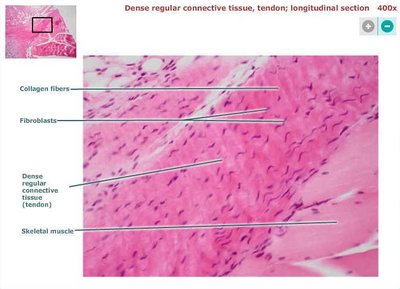
Dense regular: Parallel collagen fibers; found in tendons and ligaments
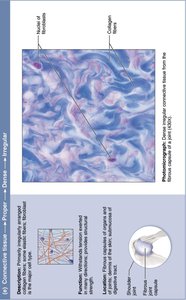
Dense irregular: Irregularly arranged fibers; found in dermis and organ capsules
Elastic: High proportion of elastic fibers; found in large arteries
Cartilage
Structure and Function
Cartilage is a tough yet flexible tissue that provides support and cushioning in joints and other structures.
Cell types: Chondroblasts (produce matrix), chondrocytes (maintain matrix)
Features: Avascular, lacks nerve fibers, up to 80% water, receives nutrients from perichondrium
Types: Hyaline, elastic, fibrocartilage
Bone Connective Tissue
Microscopic Anatomy and Function
Bone tissue supports and protects body structures, stores fat, and synthesizes blood cells. It is highly vascularized and contains more collagen than cartilage.
Osteoblasts: Produce matrix
Osteocytes: Maintain matrix
Osteons: Structural units of compact bone
Features: Richly vascularized, contains inorganic calcium salts
Blood Connective Tissue
Structure and Function
Blood is a fluid connective tissue responsible for transporting nutrients, gases, wastes, and other substances throughout the body.
Components: Red blood cells (erythrocytes), white blood cells (leukocytes), platelets (thrombocytes)
Matrix: Plasma
Functions: Transport, immune defense, clotting
Summary Table: Comparison of Connective Tissue Classes
The following table summarizes the main features of each connective tissue class, including cell types, matrix components, and general functions.
Examples and Applications
Connective Tissue in the Body
Connective tissues are found throughout the body, each fulfilling specific roles in structure and function.
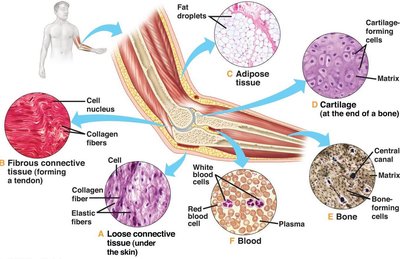
Fibrous connective tissue: Forms tendons
Loose connective tissue: Under the skin
Adipose tissue: Stores fat
Cartilage: At the end of bones
Bone: Forms the skeleton
Blood: Circulates in vessels
Key Terms and Definitions
Extracellular matrix: Nonliving material that separates cells in connective tissue
Ground substance: Unstructured material filling space between cells
Collagen fibers: Strong, rope-like fibers providing tensile strength
Elastic fibers: Stretchable fibers allowing recoil
Reticular fibers: Fine, branched fibers forming supportive networks
Fibroblasts: Cells that produce fibers and ground substance
Adipocytes: Fat-storing cells
Chondrocytes: Cartilage-maintaining cells
Osteocytes: Bone-maintaining cells
Erythrocytes: Red blood cells
Leukocytes: White blood cells
Thrombocytes: Platelets
Formulas and Equations
Extracellular Matrix Formula:
Short Comparison Table: Connective Tissue Cell Types
Tissue type | Cells |
|---|---|
Connective tissue proper | Fibroblasts |
Adipose tissue | Adipocytes |
Reticular connective tissue | Leukocytes (WBCs) |
Cartilage | Chondroblasts, chondrocytes |
Bone | Osteoblasts, osteocytes |
Blood | Erythrocytes (RBCs), Leukocytes (WBCs), Thrombocytes (platelets) |
