뒤로
뒤로Developmental Aspects of the Special Senses
스터디 가이드 - 스마트 노트
 자료에 맞춘 맞춤형 노트, 핵심 정의, 예시, 맥락을 확장해 제공합니다.
Developmental Aspects of the Special Senses
Development of Vision
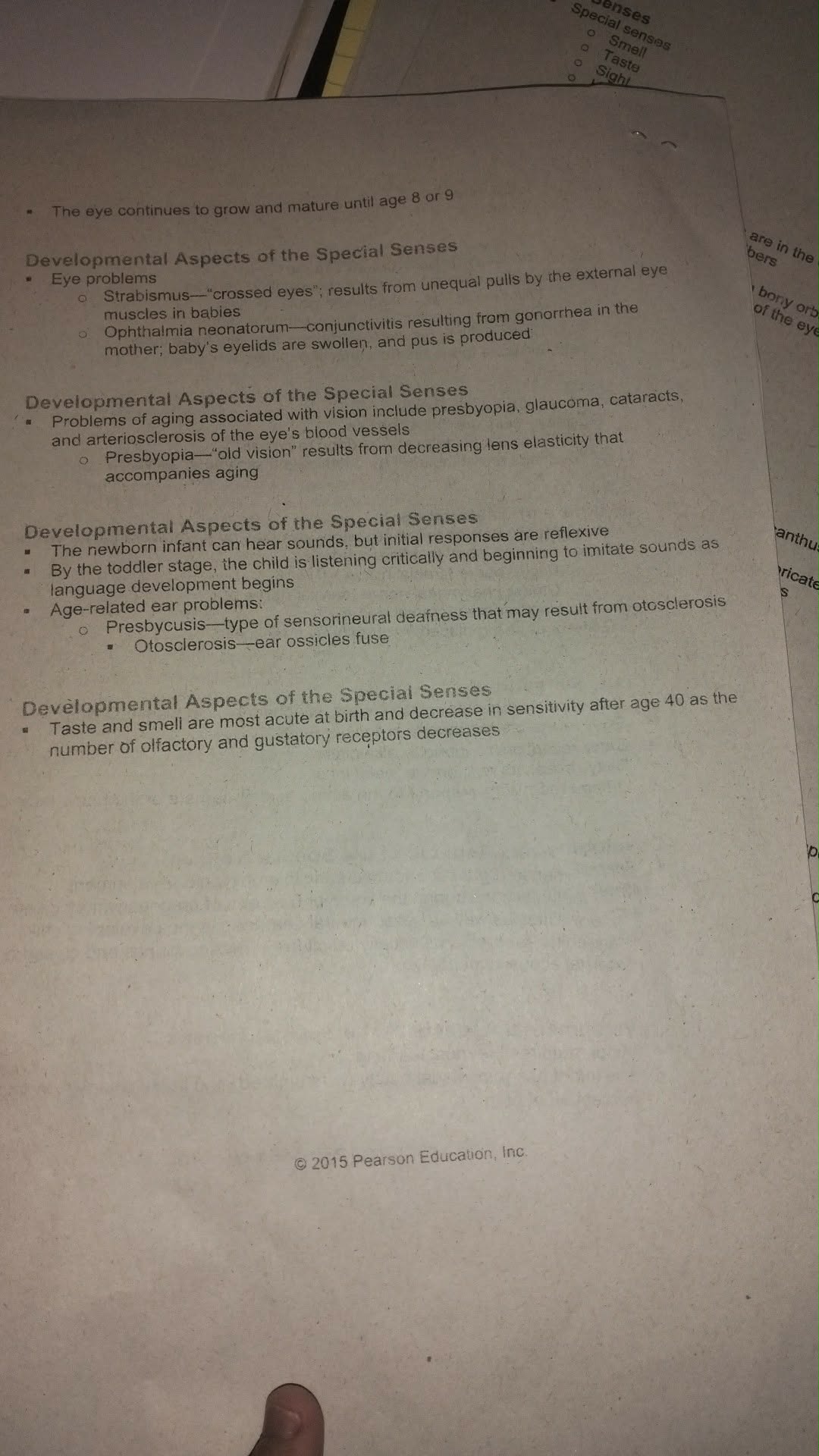
The human eye continues to grow and mature until approximately age 8 or 9. Several developmental and age-related problems can affect vision throughout life.
Strabismus: Also known as "crossed eyes," this condition results from unequal pulls by the external eye muscles in babies, leading to misalignment of the eyes.
Ophthalmia neonatorum: A form of conjunctivitis in newborns, often resulting from gonorrhea infection in the mother. Symptoms include swollen eyelids and pus production.
Age-Related Vision Problems
Presbyopia: Commonly referred to as "old vision," presbyopia is caused by decreased elasticity of the lens, making it difficult to focus on close objects. This condition typically accompanies aging.
Other age-related vision problems include presbyopia, glaucoma, cataracts, and arteriosclerosis of the eye's blood vessels.
Development of Hearing
Hearing ability also changes throughout the lifespan, with distinct developmental milestones and age-related changes.
Newborns: Can hear sounds, but their initial responses are primarily reflexive.
Toddlers: Begin to listen critically and start to imitate sounds, marking the onset of language development.
Age-Related Ear Problems
Presbycusis: A type of sensorineural deafness that may result from age-related changes or otosclerosis. It is characterized by a gradual loss of hearing, especially for higher frequencies.
Otosclerosis: A condition where the ear ossicles (tiny bones in the middle ear) fuse, leading to hearing impairment.
Development of Taste and Smell
Taste and smell are most acute at birth and gradually decrease in sensitivity after age 40. This decline is due to a reduction in the number of olfactory (smell) and gustatory (taste) receptors.
Olfactory receptors: Specialized cells responsible for detecting odors.
Gustatory receptors: Specialized cells responsible for detecting taste stimuli.
Example: An older adult may notice a diminished ability to taste or smell foods, which can affect appetite and nutrition.