 뒤로
뒤로Energy and Cellular Metabolism: Study Notes for Anatomy & Physiology
스터디 가이드 - 스마트 노트
 자료에 맞춘 맞춤형 노트, 핵심 정의, 예시, 맥락을 확장해 제공합니다.
Energy and Cellular Metabolism
Introduction to Energy
Energy is defined as the capacity to do work, which is essential for all cellular processes. In biological systems, energy is required for chemical work (making and breaking chemical bonds), transport work (moving molecules), and mechanical work (movement and changing shape).
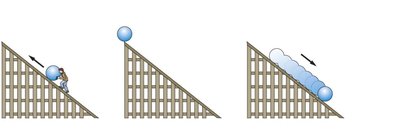
Kinetic energy: Energy associated with motion, such as thermal, radiant, electromagnetic, and electrical energy.
Potential energy: Stored energy, including chemical, mechanical, nuclear, and gravitational forms.

Laws of Thermodynamics
The laws of thermodynamics govern energy transformations in biological systems.
First Law: Energy in the universe is constant; it can neither be created nor destroyed, only transformed.
Second Law: Processes proceed in the direction that spreads out energy, such as breaking large molecules into smaller ones or diffusion from high to low concentration.
Free Energy, Activation Energy, and Reaction Types
Chemical reactions involve the transfer of energy between molecules.
Free energy: The potential energy stored in chemical bonds.
Reaction rate: The change in concentration of products over time (M/sec).
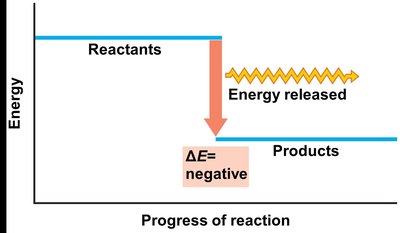
Exergonic reactions: Release energy; free energy in reactants is greater than in products. These reactions proceed spontaneously and are often catabolic.
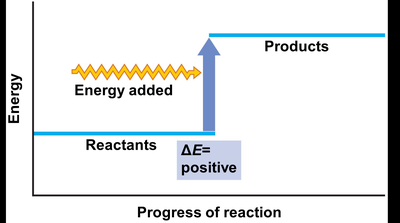
Endergonic reactions: Require energy input; free energy in products is greater than in reactants. These reactions do not proceed spontaneously and are often anabolic.
Activation Energy and Transition State
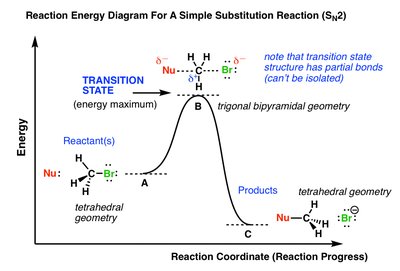
Every chemical reaction must overcome an energy barrier called activation energy, which corresponds to the transition state—a high-energy intermediate between reactants and products.
Activation energy limits how fast a reaction proceeds.
Enzymes lower activation energy, increasing reaction rates.
Coupling of Endergonic and Exergonic Reactions
Cells couple endergonic and exergonic reactions to drive essential metabolic processes. Energy released from exergonic reactions is used to power endergonic reactions, often by trapping energy in molecules like ATP, NADH, and FADH2.
Enzymes and Their Functions
Enzymes are protein catalysts that speed up chemical reactions by lowering activation energy. They are not consumed in the reaction and are classified into four major categories:
Redox reactions: Involve electron transfer (oxidation and reduction).
Hydrolysis-dehydration reactions: Involve breaking or forming bonds with water.
Addition-subtraction-exchange reactions: Include phosphorylation and dephosphorylation.
Ligation reactions: Join molecules together using synthetases and ATP.
Oxidation-Reduction Reactions
Oxidation: Loss of electrons.
Reduction: Gain of electrons.
Always occur together; tracked by changes in oxidation numbers.
Hydrolysis and Condensation
Hydrolysis: Splitting molecules using water.
Condensation: Joining molecules and releasing water.
Addition-Subtraction-Exchange Reactions
Phosphorylation: Addition of a phosphate group.
Dephosphorylation: Removal of a phosphate group.
Ligation Reactions
Join two molecules together, often requiring ATP.
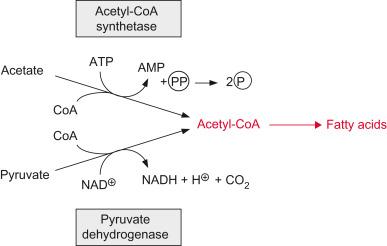
Metabolism: Catabolic and Anabolic Reactions
Metabolism is the sum of all chemical reactions in cells.
Catabolic reactions: Break down large molecules into smaller ones, releasing energy.
Anabolic reactions: Build large molecules from smaller ones, requiring energy input.
Metabolic pathways: Series of linked reactions where the product of one reaction becomes the reactant for the next.
Regulation of Metabolic Pathways
Cells regulate metabolism in five main ways:
Controlling enzyme concentrations.
Producing modulators that change reaction rates.
Using different enzymes for reversible reactions.
Compartmentalizing enzymes within organelles.
Maintaining an optimal ATP to ADP ratio.
Enzyme Modulation
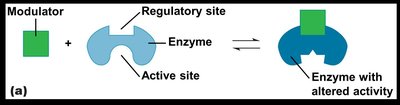
Allosteric regulation: Modulator molecules bind to regulatory sites, altering enzyme activity.
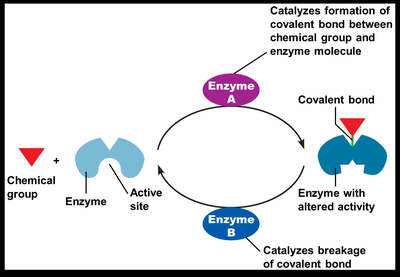
Covalent regulation: Formation or breaking of covalent bonds (often phosphorylation) changes enzyme activity.
Feedback Inhibition
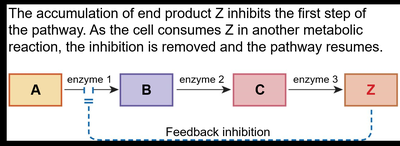
End product of a pathway inhibits an earlier step, preventing overproduction.
Reversible Reactions and Compartmentalization
Cells use different enzymes for forward and reverse reactions.
Enzymes are compartmentalized in organelles for regulation.
ATP and Energy Transfer
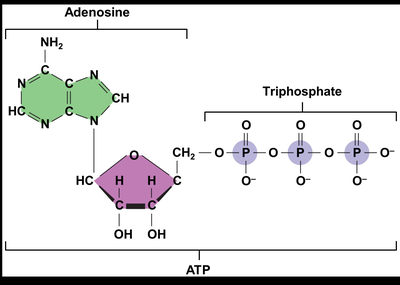
ATP transfers energy between reactions.
High ATP concentration inhibits its synthesis; low ATP stimulates synthesis.
Glucose Oxidation and ATP Synthesis
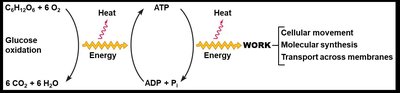
Glucose oxidation is the central reaction of energy metabolism:
Efficiency of Glucose Oxidation
Energy in 38 ATP = 266 kcal
Energy released during glucose oxidation = 686 kcal
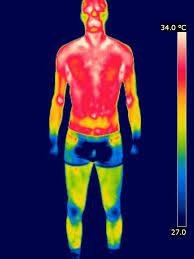
Efficiency = 38.8%; remainder lost as heat
Stages of Glucose Oxidation
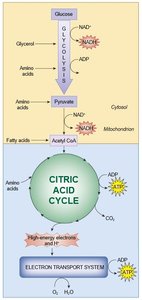
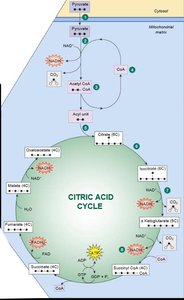
Glycolysis: Splits glucose into two pyruvate molecules; occurs in cytosol.
Linking step: Converts pyruvate to Acetyl CoA; occurs in mitochondrial matrix.
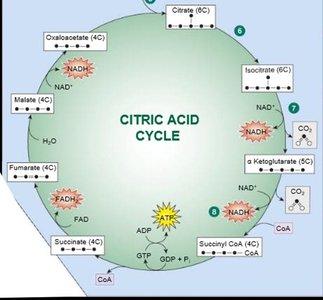
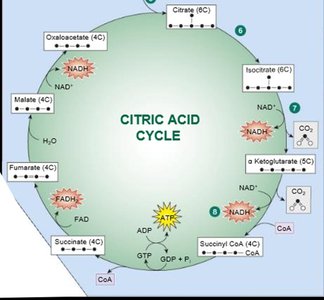
Krebs Cycle (Citric Acid Cycle): Acetyl CoA is converted to citrate and broken down, releasing energy and reducing coenzymes.
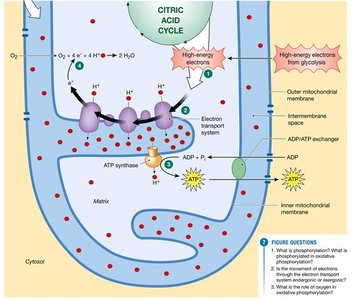
Oxidative phosphorylation (Electron Transport Chain): Uses redox reactions to move electrons and generate ATP.
Electron Transport Chain (ETC) and Chemiosmosis
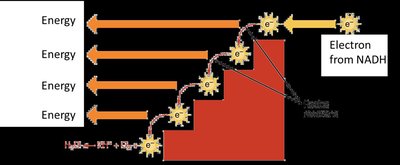
ETC uses NADH and FADH2 to move electrons down a gradient, releasing energy.
Final electron acceptor is O2.
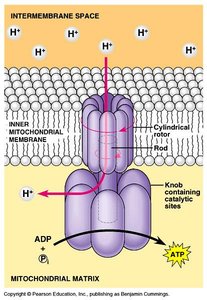
Energy released is used to pump H+ across the membrane, creating an electrochemical gradient.
ATP synthase uses chemiosmosis (flow of H+) to phosphorylate ADP to ATP.
Anaerobic Metabolism
Occurs when oxygen is low.
Electron transport chain backs up; Krebs cycle stops.
Glycolysis continues if NADH is oxidized; lactate is synthesized.
Only 2 ATP are produced per glucose.
Summary Table: Types of Enzymatic Reactions
Category | Description | Example |
|---|---|---|
Redox | Electron transfer | Glucose oxidation |
Hydrolysis-Dehydration | Bond breaking/forming with water | Sucrose hydrolysis |
Addition-Subtraction-Exchange | Phosphate group transfer | ATP synthesis |
Ligation | Molecule joining | Acetyl-CoA synthesis |
Key Equations
Glucose oxidation:
ATP synthesis:
Additional info:
Metabolism of fats, proteins, and glycogen also contributes to cellular energy, but glucose is the primary substrate in most cells.
