뒤로
뒤로Foundations of Human Anatomy: Organs, Systems, and Body Organization
스터디 가이드 - 스마트 노트
 자료에 맞춘 맞춤형 노트, 핵심 정의, 예시, 맥락을 확장해 제공합니다.
Introductory Definitions in Human Anatomy
Overview of Anatomy
Human anatomy is the scientific study of the structure of the human body. It encompasses various subfields that focus on different levels and approaches to understanding bodily structure.
Gross Anatomy: The study of structures visible to the naked eye, such as organs and organ systems.
Regional Anatomy: Focuses on specific areas of the body (e.g., head, leg, abdomen).
Systemic Anatomy: Examines the body by organ systems (e.g., skeletal, nervous, reproductive systems).
Levels of Organization in the Human Body
Hierarchical Structure
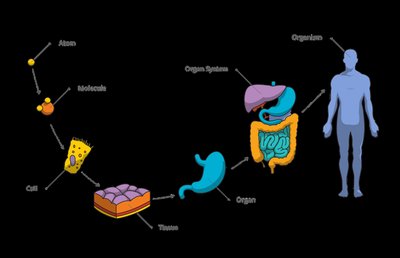
The human body is organized into a hierarchy of structural levels, each building upon the previous one. Understanding these levels is fundamental to the study of anatomy and physiology.
Atom: The smallest unit of matter.
Molecule: Two or more atoms bonded together.
Macromolecule: Large, complex molecules (e.g., proteins, nucleic acids).
Organelle: Specialized structures within cells that perform specific functions.
Cell: The basic unit of life.
Tissue: Groups of similar cells performing a common function.
Organ: Structures composed of two or more tissue types working together.
Organ System: Groups of organs that perform related functions.
Organism: The complete living individual.
Major Organ Systems of the Human Body
Overview of the 11 Organ Systems
The human body is composed of eleven major organ systems, each with distinct functions essential for survival and homeostasis.
Respiratory System
Urinary System
Nervous System
Muscular System
Reproductive System
Skeletal System
Lymphatic System
Integumentary System
Digestive System
Endocrine System
Circulatory System
Example: The digestive system includes organs such as the stomach, intestines, and liver, which work together to process food and absorb nutrients.
Anatomical Position and Reference
Standard Anatomical Position
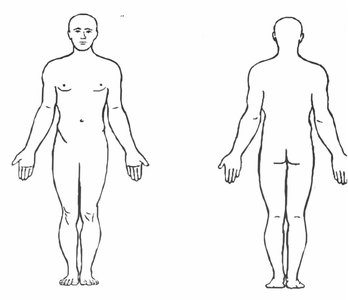
The anatomical position is a standardized posture used as a reference in anatomical descriptions. The body stands erect, facing forward, with palms facing forward and feet together. All directional terms are based on this position.
Directional Terms in Anatomy
Understanding Body Orientation
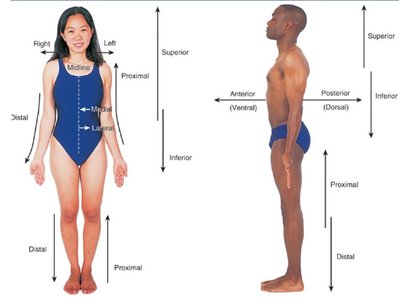
Directional terms are used to describe the locations of structures relative to other structures or locations in the body. These terms are always used in reference to the anatomical position.
Superior vs. Inferior: Above vs. below
Anterior (Ventral) vs. Posterior (Dorsal): Front vs. back
Medial vs. Lateral: Toward the midline vs. away from the midline
Proximal vs. Distal: Closer to the point of attachment vs. farther from the point of attachment
Superficial vs. Deep: Toward the surface vs. away from the surface
Rostral vs. Caudal: Toward the nose/head vs. toward the tail/end
Body Planes
Dividing the Body for Study
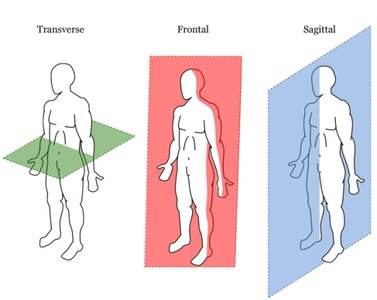
Body planes are imaginary lines used to divide the body into sections for anatomical study and medical imaging.
Transverse (Horizontal) Plane: Divides the body into superior and inferior portions.
Coronal (Frontal) Plane: Divides the body into anterior and posterior portions.
Sagittal Plane: Divides the body into left and right sides.
Midsagittal Plane: Divides the body into equal right and left halves.
Body Cavities
Major Cavities and Their Functions
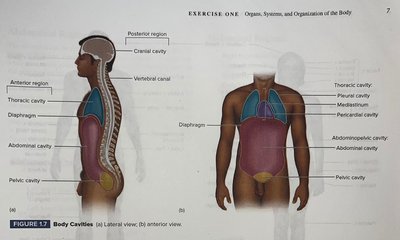
Body cavities are enclosed spaces within the body that house organs and provide protection, support, and compartmentalization.
Posterior Cavities:
Cranial Cavity: Contains the brain.
Vertebral Canal: Contains the spinal cord.
Anterior Cavities:
Thoracic Cavity: Contains the lungs and heart.
Mediastinum: Central compartment of the thoracic cavity.
Pericardial Cavity: Contains the heart.
Pleural Cavity: Contains the lungs.
Abdominal Cavity: Contains digestive organs.
Pelvic Cavity: Contains urinary and reproductive organs.
Serous Membranes and Organ Protection
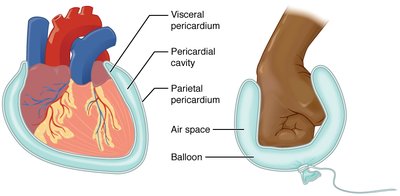
Serous membranes are protective sheets of connective tissue that line body cavities and cover organs. They consist of two layers:
Visceral Layer: The inner layer, directly covering the organ.
Parietal Layer: The outer layer, lining the cavity wall.
The space between these layers is filled with serous fluid, reducing friction between moving organs.
Regions of the Human Body
Regional Terminology
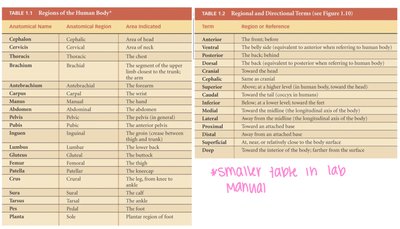
Specific anatomical terms are used to describe regions of the human body. These terms help in accurately locating and describing structures.
Anatomical Name | Anatomical Region | Area Included |
|---|---|---|
Cephalon | Cephalic | Area of head |
Cervicis | Cervical | Neck |
Thoracis | Thoracic | Chest |
Brachium | Brachial | Upper arm |
Abdomen | Abdominal | Abdomen |
Pelvis | Pelvic | Pelvis |
Manus | Manual | Hand |
Inguen | Inguinal | Groin |
Femur | Femoral | Thigh |
Crus | Crural | Leg |
Tarsus | Tarsal | Ankle |
Pes | Pedal | Foot |
Planta | Plantar | Sole of foot |
Additional info: This table is a summary; refer to your lab manual for a more comprehensive list.
Abdominal Regions and Quadrants
Divisions of the Abdomen
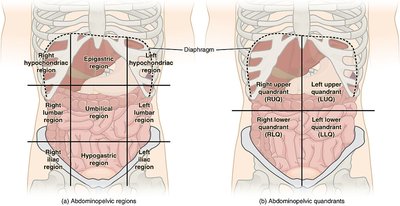
The abdomen is divided into regions and quadrants to help locate organs and describe pain or injury.
Nine Regions: Right hypochondriac, epigastric, left hypochondriac, right lumbar, umbilical, left lumbar, right iliac, hypogastric, left iliac.
Four Quadrants: Right upper quadrant (RUQ), left upper quadrant (LUQ), right lower quadrant (RLQ), left lower quadrant (LLQ).