 뒤로
뒤로Homeostasis and Feedback Mechanisms in Human Anatomy & Physiology
스터디 가이드 - 스마트 노트
 자료에 맞춘 맞춤형 노트, 핵심 정의, 예시, 맥락을 확장해 제공합니다.
Homeostasis and Feedback Mechanisms
Introduction to Homeostasis
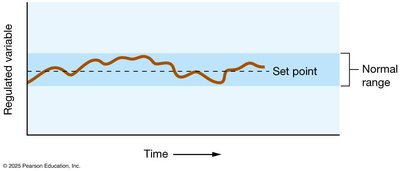
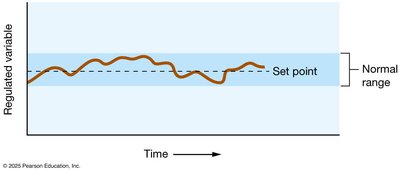
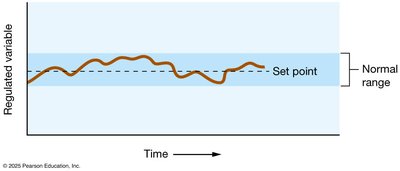
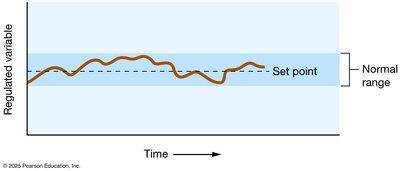
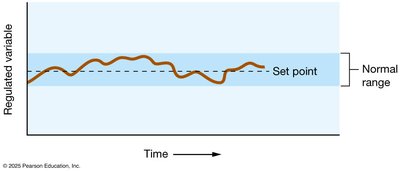
Homeostasis is the process by which the body maintains a stable internal environment despite changes in external conditions. This stability is essential for the proper functioning of cells, tissues, organs, and organ systems. Homeostatic mechanisms regulate variables such as temperature, pH, and the chemical composition of body fluids.
Homeostatic Imbalance: Disruption of homeostasis can lead to disease or dysfunction.
Examples of Regulated Variables: Body temperature, blood glucose, blood pressure, and electrolyte balance.
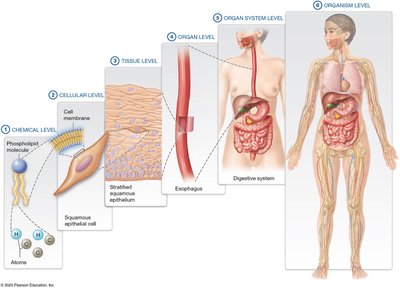
Levels of Organization in the Human Body
The human body is organized into hierarchical levels, each building upon the previous one. Understanding these levels is fundamental to the study of anatomy and physiology.
Chemical Level: Atoms and molecules form the chemical basis of life.
Cellular Level: Cells are the basic structural and functional units of life.
Tissue Level: Groups of similar cells that perform a common function (e.g., epithelial, nervous, connective, muscular).
Organ Level: Structures composed of two or more tissue types that perform specific functions.
Organ System Level: Groups of organs that work together to perform complex functions.
Organism Level: The complete living being.
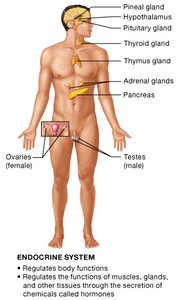
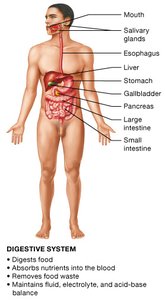
Directional Terms and Organ Systems
Directional terms are used to describe the locations of structures relative to other structures or locations in the body. Understanding the location and function of organ systems is essential for relating anatomy to physiology.
Endocrine System: Regulates body functions through hormones.
Digestive System: Breaks down food, absorbs nutrients, and eliminates waste.
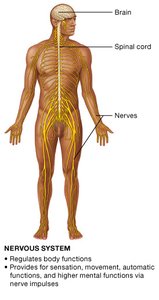
Nervous System: Controls body functions and enables sensation, movement, and cognition.
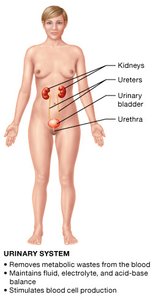
Urinary System: Removes metabolic wastes and maintains fluid and electrolyte balance.
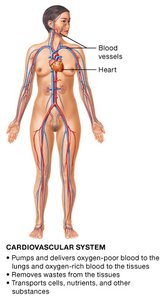
Cardiovascular System: Transports blood, nutrients, gases, and wastes.
Homeostatic Feedback Loops
Feedback loops are the primary mechanisms by which homeostasis is maintained. They involve a series of events that detect and respond to changes in regulated variables.
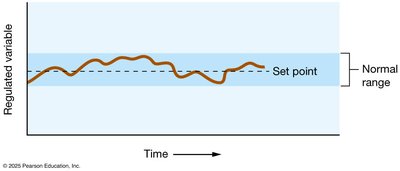
Negative Feedback: The most common type; opposes the initial change and returns the variable to the normal range.
Positive Feedback: Less common; reinforces the initial change and moves the system further from the set point until an endpoint is reached.
Components of a Feedback Loop
Set Point: The normal value or range for a regulated variable.
Stimulus: A change in the regulated variable.
Receptor (Sensor): Detects the change and sends information to the control center.
Control Center: Processes the information and determines the response.
Effector: Carries out the response to restore homeostasis.
Negative Feedback Example: Body Temperature Regulation
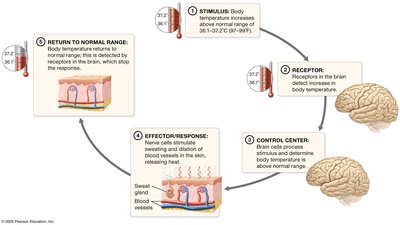
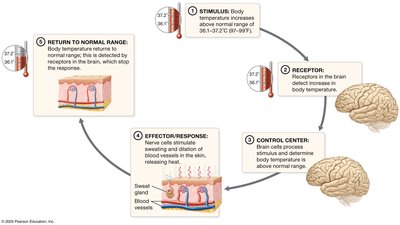
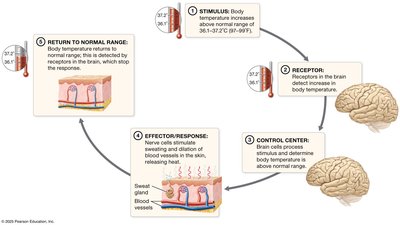
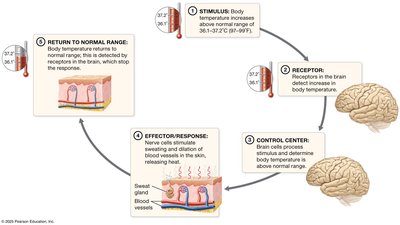
When body temperature rises above the normal range, receptors in the skin and brain detect the change. The control center in the brain processes this information and signals effectors (sweat glands and blood vessels) to initiate cooling mechanisms. Once temperature returns to normal, the response stops.
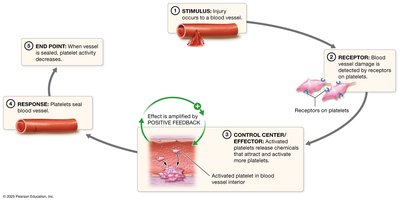
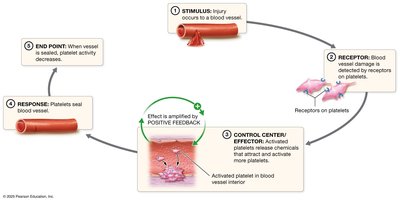
Positive Feedback Example: Blood Clotting
In positive feedback, the response amplifies the original stimulus. For example, when a blood vessel is injured, platelets adhere to the site and release chemicals that attract more platelets, rapidly forming a clot. The process continues until the vessel is sealed.
Pathophysiology and Homeostasis
Pathophysiology is the study of functional changes that occur in the body as a result of disease or abnormal states. Understanding how homeostasis is disrupted in disease helps explain symptoms and guides treatment.
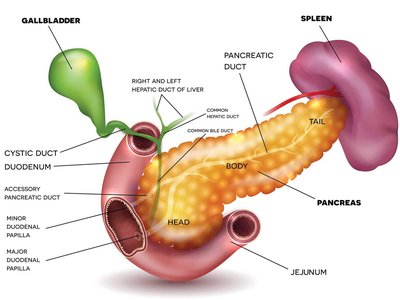
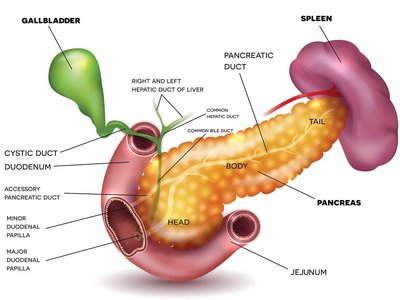
Example: In pancreatic cancer, tumors often arise from ductal cells lined with acinar cells, affecting digestion and leading to symptoms such as jaundice.
Summary Table: Negative vs. Positive Feedback
Feedback Type | Mechanism | Outcome | Example |
|---|---|---|---|
Negative Feedback | Opposes initial change | Returns variable to set point | Body temperature regulation |
Positive Feedback | Amplifies initial change | Moves variable away from set point until endpoint | Blood clotting |
Key Terms
Homeostasis: Maintenance of a stable internal environment.
Feedback Loop: Mechanism for regulating variables in the body.
Pathophysiology: Study of functional changes in disease.
Set Point: Normal value for a regulated variable.
Effector: Structure that carries out the response to restore homeostasis.
Further Study Recommendations
Read Chapter 2: Chemistry of Life
Read Chapter 3: The Cell
Read Chapter 4: Histology
