 뒤로
뒤로Homeostasis: Mechanisms and Feedback in Human Anatomy & Physiology
스터디 가이드 - 스마트 노트
 자료에 맞춘 맞춤형 노트, 핵심 정의, 예시, 맥락을 확장해 제공합니다.
Homeostasis
Introduction to Homeostasis
Homeostasis is the process by which the human body maintains a relatively stable internal environment, despite constant changes in the external and internal surroundings. This stability is essential for the proper functioning of cells, tissues, organs, and organ systems. The concept can be compared to maintaining balance, much like a tightrope walker must constantly adjust to avoid falling.

Definition: Homeostasis is the maintenance of the internal environment within ranges suitable for cellular activities.
Importance: Trillions of cells in the body are highly sensitive to changes in temperature, pH, blood pressure, and concentrations of molecules such as glucose, salts, and oxygen.
Disruptions: Both external (e.g., heat, cold, toxins) and internal (e.g., blood pressure, psychological stress) stimuli can disrupt homeostasis. Severe disruptions can lead to illness or death.
Levels of Organization and Homeostasis
Proper cellular function is foundational for the health of tissues, organs, organ systems, and the entire organism. Disruption at the cellular level affects all higher levels of organization.
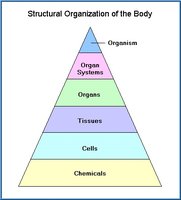
Hierarchy: Chemicals → Cells → Tissues → Organs → Organ Systems → Organism
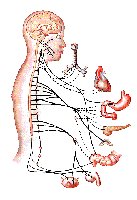
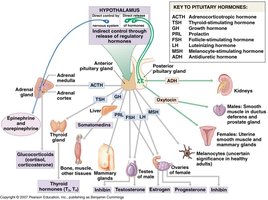
Coordination: Body systems coordinate activities to maintain homeostasis through homeostatic mechanisms (e.g., the pancreas regulating blood sugar).
Components of Homeostatic Control Systems
Three Essential Components
Homeostatic regulation involves three main components that work together to detect and respond to changes:
Receptor (Sensor): Detects changes (stimuli) in the environment.
Control Center (Integration Center): Receives information from the receptor and determines the appropriate response (often the central nervous system or endocrine organs).
Effector: Carries out the response to restore balance (e.g., muscles, glands).
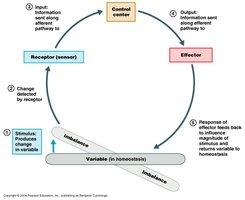
Example: The pancreas acts as a control center by secreting hormones to regulate blood glucose levels.
Analogy: Room Temperature Regulation
The regulation of room temperature is a useful analogy for understanding homeostasis. In this system:
Receptor: Thermometer senses temperature changes.
Control Center: Thermostat receives information and decides on action.
Effector: Air conditioner or heater restores temperature to normal.
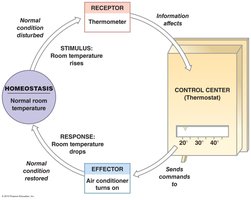
When the room temperature rises above normal, the thermostat activates the air conditioner to lower the temperature, restoring balance.
Complexity in Biological Systems
While the room temperature analogy is helpful, biological homeostatic systems are much more complex, often involving multiple sensors, effectors, and feedback pathways.
Feedback Mechanisms in Homeostasis
Types of Feedback
Feedback mechanisms are essential for maintaining homeostasis. There are two main types:
Negative Feedback: The most common type. The response opposes or reverses the original stimulus, restoring the regulated factor to normal. Used for conditions requiring frequent adjustment.
Positive Feedback: The response amplifies or reinforces the original stimulus. Less common, typically involved in processes that must be rapidly completed.
Negative Feedback: Control of Body Temperature
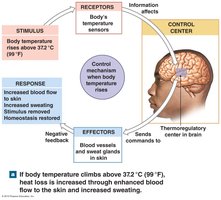
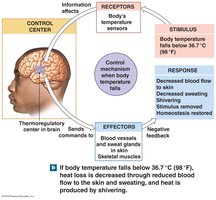
Negative feedback is exemplified by the regulation of body temperature. When body temperature rises above or falls below the set point, sensors detect the change and the brain (control center) activates effectors to restore normal temperature.
High Temperature: Blood vessels dilate and sweat glands activate to cool the body.
Low Temperature: Blood vessels constrict and shivering increases to warm the body.
Positive Feedback: Rapid Amplification
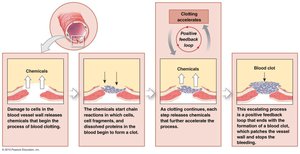
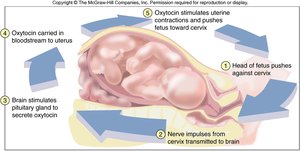
Positive feedback loops are involved in processes that need to be completed quickly, such as blood clotting and childbirth. In these cases, the response intensifies the original stimulus until the process is finished.
Blood Clotting: Chemicals released at the injury site accelerate clot formation, which in turn releases more chemicals, speeding up the process.
Childbirth: Uterine contractions stimulate the release of oxytocin, which causes stronger contractions, further increasing oxytocin release until delivery is complete.
Summary Table: Negative vs. Positive Feedback
Feedback Type | Mechanism | Example |
|---|---|---|
Negative Feedback | Reverses the direction of change | Body temperature regulation, blood pressure control |
Positive Feedback | Amplifies the direction of change | Blood clotting, childbirth contractions |
Concept Check
Question: There is an increase of blood pressure in the body. Feedback is activated so that blood pressure is decreased and returned back to normal. What type of feedback is this?
Answer: Negative feedback (because the original stimulus was reversed).
