 뒤로
뒤로Homeostasis: The Foundation of Physiology
스터디 가이드 - 스마트 노트
 자료에 맞춘 맞춤형 노트, 핵심 정의, 예시, 맥락을 확장해 제공합니다.
Introduction to Anatomy & Physiology
Definition and Scope of Physiology
Physiology is the study of the functions of living things, focusing on the underlying mechanisms of body processes. It is closely related to anatomy, which is the study of the structure of the body. The relationship between structure and function is fundamental, as the form of a body part is closely tied to its function.
Structure and Function: Inseparable concepts; anatomical features enable physiological processes.
Tools Used: Anatomy, chemistry, and physics are essential for understanding physiological mechanisms.
Levels of Organization in the Body
Hierarchical Structure
The human body is organized into several levels, each building upon the previous:
Chemical Level: Atoms and molecules, such as those forming cell membranes.
Cellular Level: Cells are the smallest units capable of all life processes (e.g., stomach lining cells).
Tissue Level: Groups of similar cells performing a common function (e.g., stomach wall tissues).
Organ Level: Structures composed of multiple tissue types (e.g., the stomach).
Body System Level: Groups of organs working together (e.g., the digestive system).
Organism Level: The complete living being.
Concept of Homeostasis
Definition and Importance
Homeostasis is the maintenance of a stable internal environment within narrow limits, essential for cell survival and function. In multicellular organisms, most cells are not in direct contact with the external environment; instead, exchanges occur via the internal environment (the fluid surrounding cells).
Extracellular Fluid (ECF): Fluid outside cells, including plasma and interstitial fluid; acts as a buffer zone.
Intracellular Fluid (ICF): Fluid within cells.
ECF must remain stable to support cellular activities.
Critical Variables Regulated by Homeostasis
Concentration of nutrients
Concentration of O2 and CO2
Concentration of waste products
pH (acidity/alkalinity)
Concentration of water, salts, and other electrolytes
Volume and pressure of body fluids
Temperature
Organization of the Body: Internal vs. External Environment
Compartments and Fluid Types
External Environment: Includes air and the lumen of body cavities.
Internal Environment: Composed of ECF and ICF.
ECF serves as a buffer between the outside world and the ICF.
Homeostasis: Dynamic Steady State
Dynamic Steady State vs. Equilibrium
Homeostasis maintains a dynamic steady state—a condition where variables fluctuate within a normal range, but there is no net movement between compartments. This is distinct from equilibrium, where compartment compositions are identical.
Disequilibrium: Exists between compartments, but homeostasis maintains overall stability.
Body Systems and Homeostasis
Roles of Major Body Systems
Each body system contributes to homeostasis by regulating specific variables:
Digestive System: Obtains nutrients, water, and electrolytes; eliminates undigested residues.
Respiratory System: Exchanges O2 and CO2; helps regulate pH.
Circulatory System: Transports substances throughout the body.
Urinary System: Regulates volume, electrolyte composition, and pH; removes wastes.
Endocrine System: Secretes hormones for long-term regulation (e.g., metabolism, water balance).
Nervous System: Controls rapid responses; responsible for higher functions (e.g., memory, consciousness).
Integumentary System: Provides a protective barrier; regulates temperature.
Muscular and Skeletal Systems: Support, movement, and temperature regulation.
Immune System: Defends against pathogens and cancer cells.
Reproductive System: Not essential for individual homeostasis, but necessary for species survival.
Homeostatic Control Systems
Components and Function
A homeostatic control system is an interconnected network that maintains internal variables at optimal levels. It must:
Detect deviations from normal (sensor)
Integrate information (integrating center)
Make adjustments (effector)
Types of Control
Intrinsic Controls: Local regulation within an organ (e.g., muscle adjusting O2 use during exercise).
Extrinsic Controls: Systemic regulation via nervous and/or endocrine systems.
Feedback Mechanisms
Negative and Positive Feedback
Feedback mechanisms are essential for maintaining homeostasis:
Negative Feedback: The response counteracts the initial change, stabilizing the variable (e.g., body temperature, blood glucose).
Positive Feedback: The response amplifies the initial change, moving the variable further from the set point (e.g., childbirth, blood clotting).
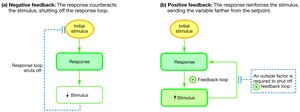
Components of a Feedback Mechanism
Stimulus: Deviation from the set point.
Sensor: Monitors the variable.
Integrating Center: Compares the variable to the set point and determines the response.
Effector: Produces the response to restore balance.
Response: Moves the system toward the set point.
Feedforward Mechanisms
Feedforward responses are made in anticipation of a change, preparing the body before a variable is altered (e.g., salivation before eating).
Examples of Feedback Mechanisms
Negative Feedback Example
Blood Glucose Regulation: When blood glucose rises, insulin is released to lower it; when it falls, glucagon is released to raise it.
Body Temperature: Sweating or shivering to maintain core temperature.
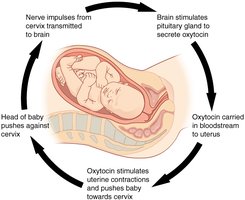
Positive Feedback Example: Childbirth
During childbirth, the head of the baby pushes against the cervix, stimulating nerve impulses to the brain. The brain signals the pituitary gland to release oxytocin, which increases uterine contractions, pushing the baby further against the cervix. This cycle continues until delivery.
Disruptions in Homeostasis
Pathophysiology
When homeostatic mechanisms fail, it can lead to pathophysiology—abnormal functioning associated with disease. Severe disruptions may result in illness or death.
Summary Table: Comparison of Negative and Positive Feedback
Feedback Type | Effect on Variable | Examples |
|---|---|---|
Negative Feedback | Counteracts change, stabilizes variable | Body temperature, blood glucose, blood pressure |
Positive Feedback | Amplifies change, moves variable away from set point | Childbirth, blood clotting, heat stroke |
Key Equations
Cellular Respiration:
Additional info: The above notes expand on the provided content with definitions, examples, and academic context to ensure a comprehensive, self-contained study guide for Anatomy & Physiology students.
