뒤로
뒤로Introduction to Anatomy & Physiology: Core Concepts and Organization
스터디 가이드 - 스마트 노트
 자료에 맞춘 맞춤형 노트, 핵심 정의, 예시, 맥락을 확장해 제공합니다.
Introduction to Anatomy and Physiology
Definition and Scope
Anatomy and Physiology (A&P) are foundational sciences for understanding the structure and function of the human body. Anatomy is the study of the structure and physical relationships of body parts, while Physiology focuses on the functions and processes of those parts. Together, they provide a comprehensive understanding of how the body operates and maintains life.
Characteristics of Living Things
Cellular Composition: All living organisms are composed of one or more cells.
Metabolism: The sum of all chemical reactions that occur within the body.
Growth: Increase in size and number of cells.
Excretion: Removal of waste products from the body.
Responsiveness: Ability to sense and react to changes in the environment.
Movement: Motion of the whole body, individual organs, cells, or organelles.
Reproduction: Formation of new cells or organisms.

Levels of Structural Organization
Hierarchy of Organization
The human body is organized into a series of hierarchical levels, each building upon the previous, similar to Russian nesting dolls. This organization allows for increasing complexity and specialization.
Chemical Level: Atoms and molecules essential for life.
Cellular Level: Cells, the basic units of life.
Tissue Level: Groups of similar cells performing a common function.
Organ Level: Structures composed of two or more tissue types.
Organ System Level: Groups of organs working together for a common purpose.
Organism Level: The complete living being.

Specialized Subfields in Anatomy & Physiology
Classification of Subfields
Subfields in anatomy are typically classified by the size and visibility of the structures studied:
Gross Anatomy: Study of structures visible to the naked eye.
Microscopic Anatomy: Study of structures requiring a microscope, including:
Histology: Study of tissues.
Cytology: Study of cells.
Physiology subfields are classified by organ system (e.g., neurophysiology for the nervous system).
Language of Anatomy & Anatomical Position
Standard Terminology and Position
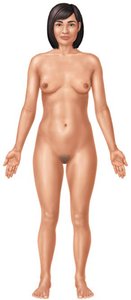
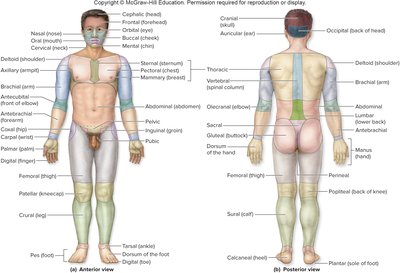
Anatomical terminology is often derived from Latin or Greek and provides a universal language for describing body parts and regions. The anatomic position is the standard reference position for the body, promoting clear communication among scientists and healthcare professionals.
Directional Terms
Term | Definition | Example |
|---|---|---|
Anterior (ventral) | Toward the front | The palms are on the anterior side of the body. |
Posterior (dorsal) | Toward the back | The spinal cord is posterior to the esophagus. |
Superior (cranial) | Toward the head | The nose is superior to the mouth. |
Inferior (caudal) | Toward the tail | The umbilicus is inferior to the chest. |
Proximal | Closer to the point of origin | The knee is proximal to the ankle. |
Distal | Farther from the point of origin | The foot is distal to the hip. |
Medial | Closer to the midline | The ear is medial to the shoulder. |
Lateral | Farther from the midline | The shoulder is lateral to the chest. |
Superficial | Closer to the surface | The skin is superficial to the muscle. |
Deep | Farther below the surface | Bone is deep to the skin. |
Regional Anatomy
Axial Region: Head, neck, and trunk.
Appendicular Region: Limbs and girdles.
Planes of Section
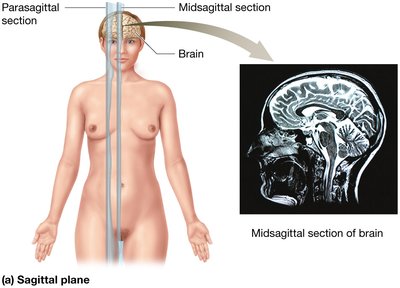
Body sections are made along specific planes to study internal structures:
Sagittal Plane: Divides the body into right and left parts.
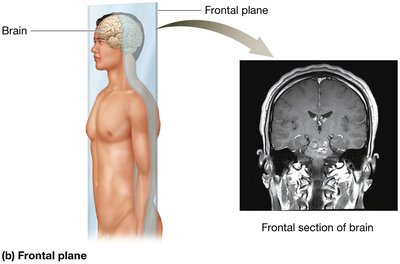
Frontal (Coronal) Plane: Divides the body into anterior and posterior parts.
Transverse (Horizontal) Plane: Divides the body into superior and inferior parts.
Body Cavities and Membranes
Major Body Cavities
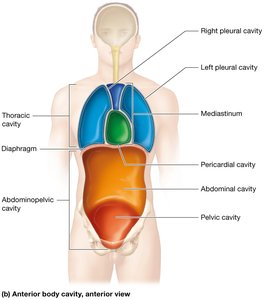
Body cavities are fluid-filled spaces that protect organs and allow for changes in organ shape and size. The axial region is divided into two main cavities:
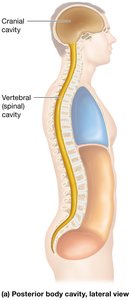
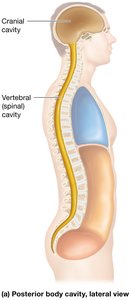
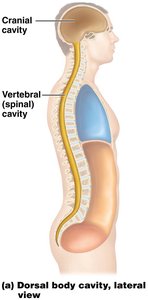
Dorsal (Posterior) Cavity: Contains the cranial and vertebral cavities, protecting the brain and spinal cord.
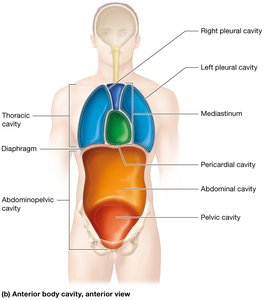
Ventral (Anterior) Cavity: Contains the thoracic and abdominopelvic cavities, separated by the diaphragm.
Subdivisions of Body Cavities
Posterior Body Cavity:
Cranial Cavity: Houses and protects the brain.
Vertebral (Spinal) Cavity: Houses and protects the spinal cord.
Both are filled with cerebrospinal fluid for protection.
Anterior Body Cavity:
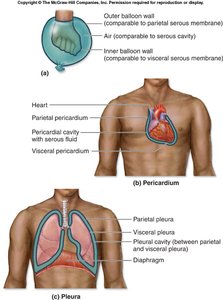
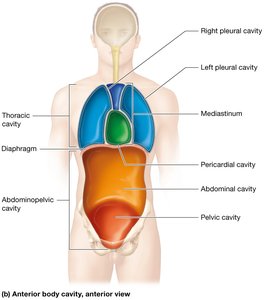
Thoracic Cavity: Superior to the diaphragm; contains pleural cavities (lungs), mediastinum (heart, great vessels, trachea, esophagus), and pericardial cavity (heart).
Abdominopelvic Cavity: Inferior to the diaphragm; contains abdominal cavity (digestive organs) and pelvic cavity (reproductive and urinary organs).
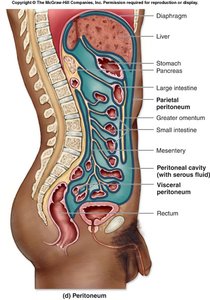
Peritoneal Cavity: Subcavity within the abdominal cavity, lined by the peritoneum and containing some abdominal organs.
Abdominopelvic Segmentation
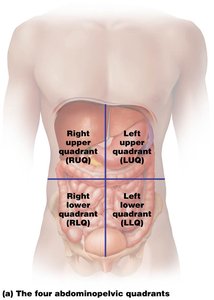
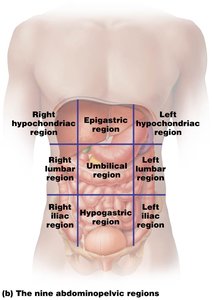
The abdominopelvic cavity can be divided for clinical and anatomical reference:
Quadrant System: Four quadrants using two perpendicular lines at the umbilicus.
Nine-Region System: Nine regions using two parasagittal and two transverse lines.
Serous Membranes
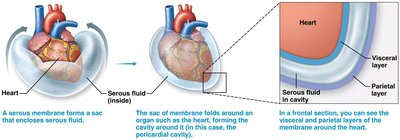
Serous membranes line body cavities and cover organs, reducing friction. The visceral layer is closest to the organ, while the parietal layer is farther away. The space between is filled with serous fluid.
Core Principles in Anatomy & Physiology
Homeostasis
Homeostasis is the maintenance of a stable internal environment. Disruption of homeostasis can lead to disease or death if not corrected.
Feedback Loops
Feedback loops are mechanisms that maintain homeostasis by detecting and responding to changes in the body:
Negative Feedback Loops: Oppose the initial change and reduce output, bringing the variable back to its set point.
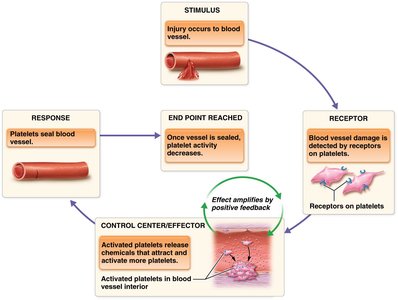
Positive Feedback Loops: Reinforce the initial change and increase output, often to expedite a process (e.g., blood clotting, labor contractions, lactation).
Principle 2: Form and Function
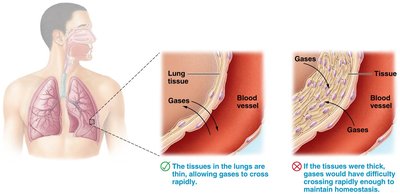
Structure and function are closely related in anatomy and physiology. The shape and composition of a structure enable its specific function. This is summarized by the phrase "form follows function." For example, the thin walls of lung tissue facilitate rapid gas exchange.
Principle 3: Gradients
Gradients are differences in concentration, pressure, or temperature between two regions. Many physiological processes, such as diffusion and osmosis, rely on gradients to drive movement of substances.
Principle 4: Cell Communication
Cells communicate through electrical and chemical signals to coordinate functions and maintain homeostasis. For example, nerve cells release neurotransmitters to stimulate muscle contraction.