 뒤로
뒤로Introduction to Anatomy and Physiology: Core Concepts and Structural Organization
스터디 가이드 - 스마트 노트
 자료에 맞춘 맞춤형 노트, 핵심 정의, 예시, 맥락을 확장해 제공합니다.
Introduction to Anatomy and Physiology
Overview
Anatomy and Physiology is the study of the structure and function of the human body. This foundational chapter introduces the characteristics of life, levels of structural organization, types of anatomy and physiology, organ systems, anatomical terminology, body cavities, and core physiological principles.
Characteristics of Living Organisms
Defining Life
Cellular Composition: All living things are composed of cells, the smallest units capable of performing life functions.
Metabolism: The sum of all chemical reactions in the body, including anabolic (building up) and catabolic (breaking down) processes.
Growth: Increase in cell size or number, resulting in organismal growth.
Excretion: Removal of metabolic waste products to maintain internal balance.
Responsiveness (Irritability): Ability to sense and react to environmental changes (stimuli).
Movement: Includes movement of the organism, cells, or substances within the body.
Reproduction: Production of new cells for growth and repair, and production of offspring.
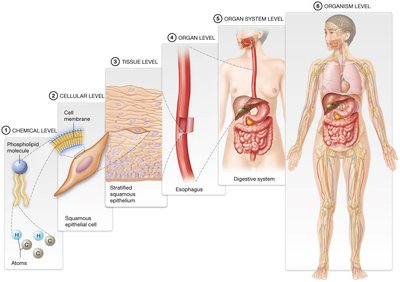
Levels of Structural Organization in the Human Body
Hierarchy of Complexity
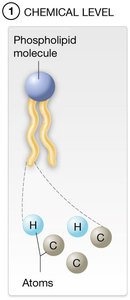
Chemical Level: Atoms combine to form molecules, such as phospholipids, which are the foundation of cellular structures.
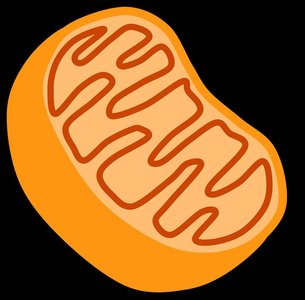
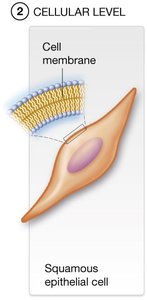
Cellular Level: Molecules combine to form cells, the basic units of life.
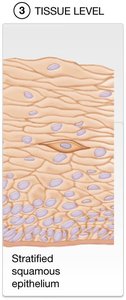
Tissue Level: Groups of similar cells and their extracellular matrix perform common functions.
Organ Level: Two or more tissue types form organs with specific shapes and functions.
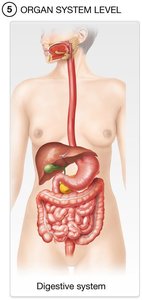
Organ System Level: Organs work together to perform broad functions.
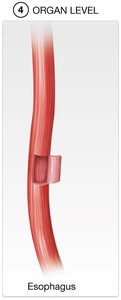
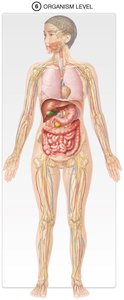
Organism Level: All organ systems function together to maintain the life of the organism.
Organ Systems of the Human Body
Major Systems and Their Functions
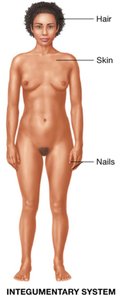
Integumentary System: Protection, vitamin D synthesis, water retention, temperature regulation.
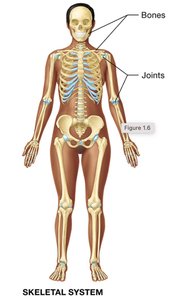
Skeletal System: Support, protection, leverage, blood cell production, calcium storage.
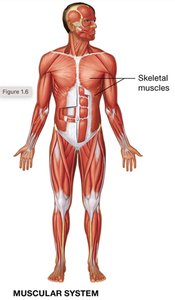
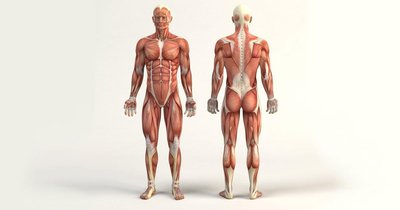
Muscular System: Movement, control of body openings, heat generation.
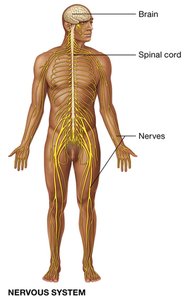
Nervous System: Regulation, nerve impulses, sensation, movement, higher mental functions.
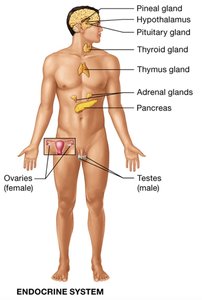
Endocrine System: Regulation via hormone secretion, controls muscles, glands, and other tissues.
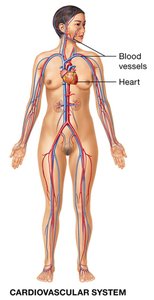
Cardiovascular System: Transports cells, nutrients, wastes; double pump for blood circulation.
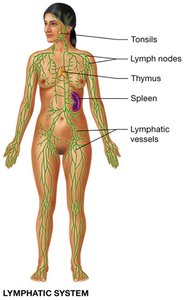
Lymphatic System: Returns fluid to cardiovascular system, provides immunity.
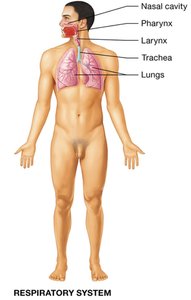
Respiratory System: Oxygen delivery, carbon dioxide removal, acid-base balance.
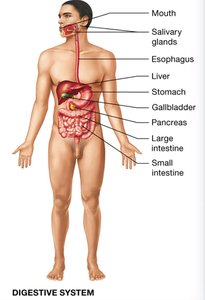
Digestive System: Digests food, absorbs nutrients, removes waste, maintains fluid/electrolyte/acid-base balance.
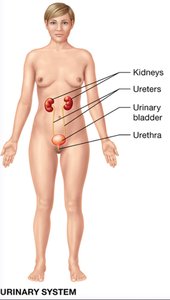
Urinary System: Removes metabolic waste, maintains fluid/electrolyte/acid-base balance, stimulates blood cell production.
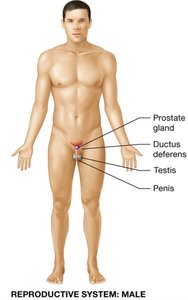
Male Reproductive System: Produces/transports sperm, hormone secretion, sexual function.
Female Reproductive System: Produces/transports oocytes, site of fetal development, hormone secretion, sexual function.
The Language of Anatomy and Physiology
Anatomical Position and Directional Terms
Anatomical Position: Body standing upright, feet shoulder-width apart, arms at sides, head and palms facing forward. This is the reference for all anatomical descriptions.
Directional Terms:
Anterior (ventral): Front of the body
Posterior (dorsal): Back of the body
Superior (cranial): Toward the head
Inferior (caudal): Toward the tail
Proximal: Closer to the point of origin
Distal: Further from the point of origin
Medial: Closer to the midline
Lateral: Further from the midline
Superficial: Closer to the surface
Deep: Further from the surface
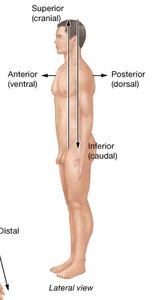
Organization of the Human Body
Body Cavities and Membranes
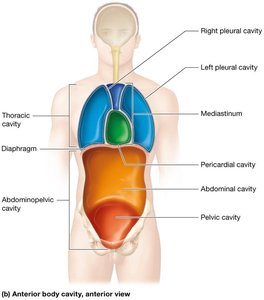
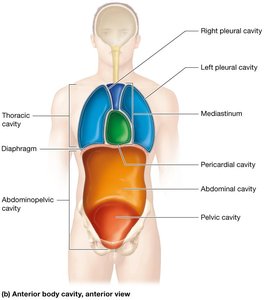
Body Cavities: Fluid-filled spaces that protect organs and allow movement.
Posterior Body Cavity: Cranial cavity (brain) and vertebral cavity (spinal cord), filled with cerebrospinal fluid.
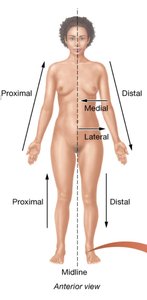
Anterior Body Cavity: Divided by the diaphragm into thoracic and abdominopelvic cavities.
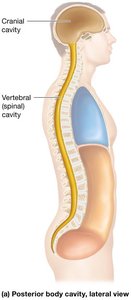
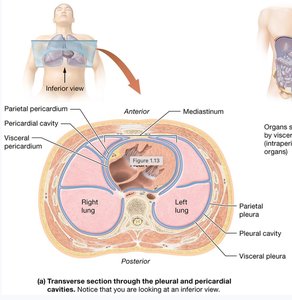
Thoracic Cavity: Contains pleural cavities (lungs), mediastinum (heart, trachea, esophagus), and pericardial cavity (heart).
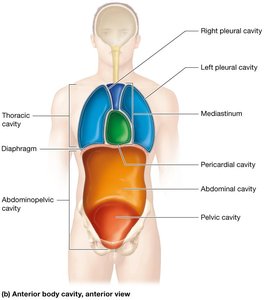
Abdominopelvic Cavity: Subdivided into abdominal and pelvic cavities; contains digestive, urinary, reproductive organs.
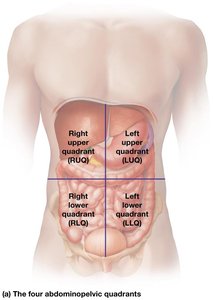
Abdominopelvic Divisions:
Quadrants: Right upper (RUQ), right lower (RLQ), left upper (LUQ), left lower (LLQ).
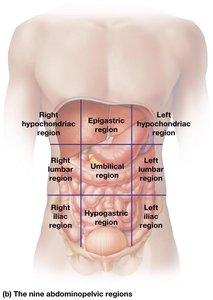
Regions: Nine regions for more precise localization (e.g., hypochondriac, epigastric, lumbar, umbilical, iliac, hypogastric).
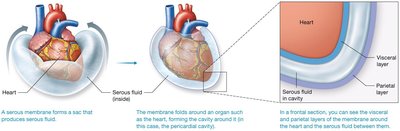
Serous Membranes: Thin, double-layered membranes that produce serous fluid to reduce friction.
Visceral Layer: In contact with the organ
Parietal Layer: Attached to surrounding structures
Serous Fluid: Lubricates and prevents friction between moving organs
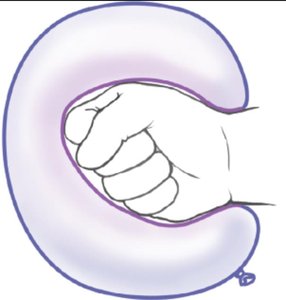
Pleural Membranes: Surround the lungs
Pericardial Membranes: Surround the heart
Peritoneal Membranes: Surround some abdominal organs; retroperitoneal organs lie behind the peritoneum
Core Principles in Anatomy and Physiology
Homeostasis and Regulation
Homeostasis: Maintenance of a stable internal environment. Imbalances can lead to disease or death.
Feedback Loops:
Negative Feedback: Opposes initial change, returning variable to normal range. Example: Body temperature regulation.
Positive Feedback: Reinforces initial stimulus; shuts off when normal range is restored. Example: Blood clotting.
Principle of Complementarity: Structure is suited to function at all levels of organization.
Gradients: Differences in temperature, concentration, or pressure drive physiological processes. Types: Temperature, concentration, and pressure gradients.
Cell-to-Cell Communication: Coordination of body functions via chemical messengers or electrical signals.
Summary Table: Major Body Cavities and Their Contents
Cavity | Location | Main Organs |
|---|---|---|
Cranial | Within skull | Brain |
Vertebral | Within vertebral column | Spinal cord |
Thoracic | Chest, above diaphragm | Lungs, heart |
Abdominal | Below diaphragm, above pelvis | Digestive organs, kidneys |
Pelvic | Within bony pelvis | Bladder, reproductive organs |
Additional info: The principles outlined here form the foundation for all subsequent study in anatomy and physiology, emphasizing the integration of structure and function, and the importance of homeostatic regulation for health.
