 뒤로
뒤로Introduction to Anatomy & Physiology: Foundational Concepts and Organization
스터디 가이드 - 스마트 노트
 자료에 맞춘 맞춤형 노트, 핵심 정의, 예시, 맥락을 확장해 제공합니다.
Introduction to Anatomy & Physiology
Overview of Anatomy and Physiology
Anatomy and physiology are two closely related branches of biology that focus on the structure and function of the human body. Anatomy is the study of the structures and relationships between body parts, while physiology examines the functions, processes, and mechanisms that occur within the body.
Anatomy: Includes both microscopic (cytology, histology) and macroscopic (gross anatomy) perspectives.
Physiology: Focuses on how organs and systems work together to maintain life.
Microscopic vs. Macroscopic Anatomy
Anatomy can be studied at different scales, from the cellular level to the whole organism. Microscopic anatomy requires magnification to observe structures such as cells and tissues, while macroscopic (gross) anatomy involves structures visible to the naked eye.
Cytology: Study of cells.
Histology: Study of tissues.
Surface anatomy: Superficial anatomical markings.
Regional anatomy: Study of specific regions of the body.
Systemic anatomy: Study of organ systems.
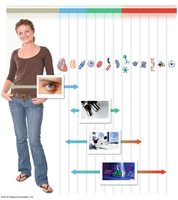
Other Perspectives on Anatomy
Additional approaches to anatomy include developmental, embryological, comparative, and clinical anatomy.
Developmental anatomy: Structural changes over time.
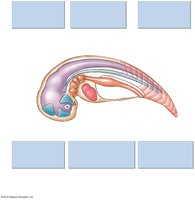
Embryology: Early developmental stages.
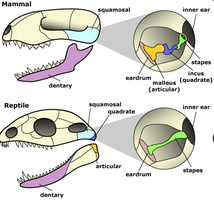
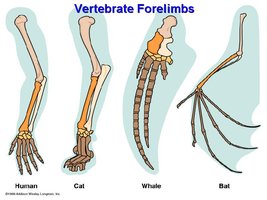
Comparative anatomy: Comparison of anatomical structures across species.
Clinical anatomy: Pathological changes during illness.
Levels of Organization in the Human Body
Hierarchical Structure
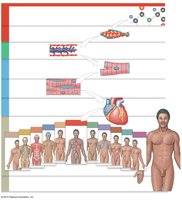
The human body is organized into several levels, each building upon the previous. Understanding these levels is essential for comprehending both anatomy and physiology.
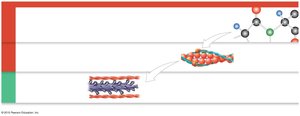
Chemical/Molecular Level: Atoms and molecules form the basis of all structures.
Cellular Level: Cells are the basic units of life.
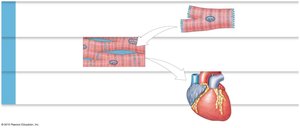
Tissue Level: Groups of similar cells performing a common function.
Organ Level: Structures composed of multiple tissue types.
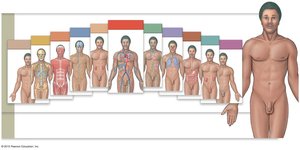
Organ System Level: Groups of organs working together.
Organism Level: The complete living individual.
Characteristics of Living Things
Defining Life
Living organisms share several fundamental characteristics that distinguish them from non-living matter.
Response to stimuli
Growth and differentiation
Reproduction
Excretion of waste
Metabolism
Movement
Homeostasis
Evolution
Cellular organization
Order/organization

Organ Systems of the Human Body
Overview of Major Organ Systems
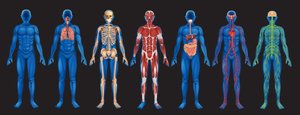
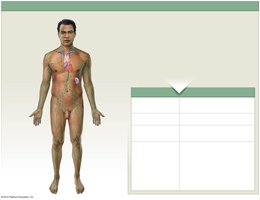
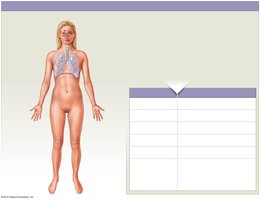
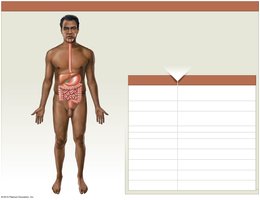
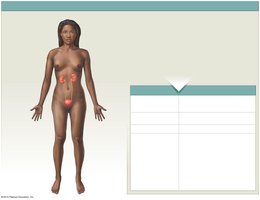
The human body consists of eleven major organ systems, each with specific functions essential for survival and health.
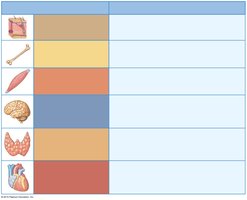
Integumentary System: Protection, temperature regulation.
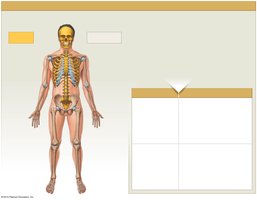
Skeletal System: Support, protection, mineral storage, blood formation.
Muscular System: Movement, support, heat production.
Nervous System: Immediate responses, coordination.
Endocrine System: Long-term regulation, hormone production.
Cardiovascular System: Transport of cells and materials.
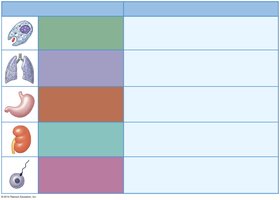
Lymphatic System: Defense, fluid return.
Respiratory System: Gas exchange, sound production.
Digestive System: Food processing, nutrient absorption.
Urinary System: Waste elimination, pH and ion regulation.
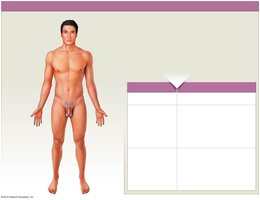
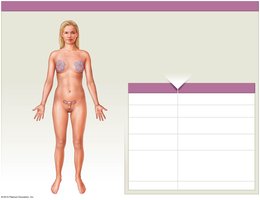
Reproductive System: Production of sex cells, support of development.
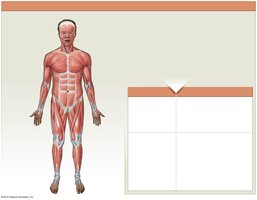
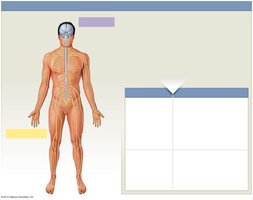
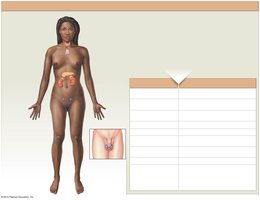
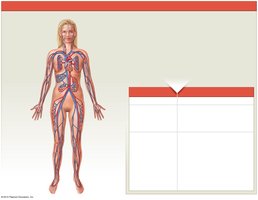
Anatomical Terminology and Landmarks
Precise Vocabulary in Anatomy
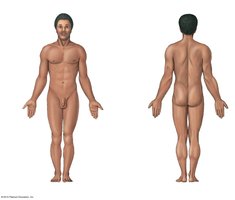
Accurate terminology is essential for clear communication in anatomy. Anatomical position, landmarks, and directional terms are standardized for consistency.
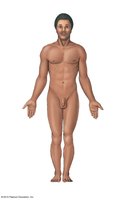
Anatomical Position: Standing upright, facing forward, arms at sides, palms forward.
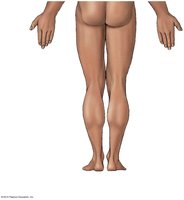
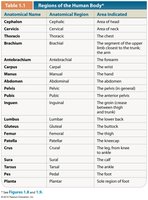
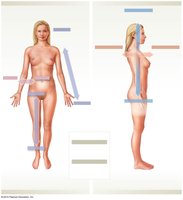
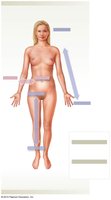
Landmarks: Specific regions of the body identified by unique names.
Directional Terms: Used to describe locations and relationships (e.g., superior, inferior, anterior, posterior, medial, lateral, proximal, distal, superficial, deep).
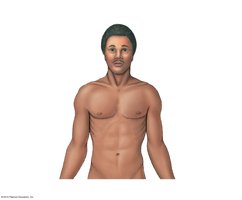
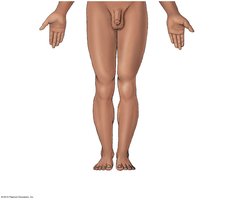
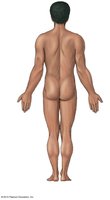
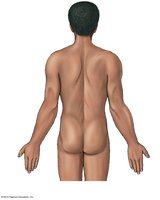
Abdominopelvic Quadrants and Regions
Clinical and Anatomical Divisions
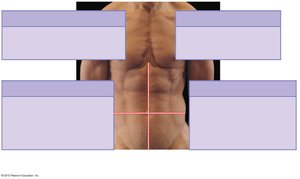
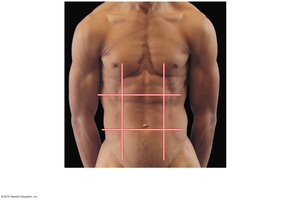
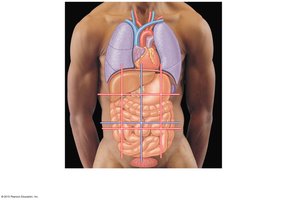
The abdominopelvic area is divided into quadrants and regions for clinical and anatomical reference. These divisions help localize pain, injury, or disease.
Quadrants: Right Upper (RUQ), Right Lower (RLQ), Left Upper (LUQ), Left Lower (LLQ).
Regions: More precise divisions such as hypochondriac, lumbar, inguinal, epigastric, umbilical, hypogastric.
Planes and Sections of the Body
Understanding Anatomical Cuts
Body planes and sections are used to describe cuts or views of the body. These include:
Frontal (Coronal) Plane: Divides anterior and posterior portions.
Sagittal Plane: Divides right and left portions; midsagittal divides equally, parasagittal unequally.
Transverse (Horizontal) Plane: Divides superior and inferior portions.
Oblique Plane: Diagonal cuts.
Body Cavities and Membranes
Major Cavities and Their Functions
The body contains cavities lined with serous membranes that protect organs and allow movement. The ventral body cavity is divided into the thoracic and abdominopelvic cavities by the diaphragm.
Thoracic Cavity: Contains pleural cavities (lungs), pericardial cavity (heart), and mediastinum (trachea, esophagus, major vessels).
Abdominopelvic Cavity: Contains abdominal (digestive organs) and pelvic (urinary bladder, reproductive organs) cavities.
Serous Membranes: Parietal lines cavity walls; visceral covers organs.
Table: Anatomical Regions and Directional Terms
Purpose: Classification and Reference
The following table summarizes anatomical regions and directional terms for reference:
Anatomical Name | Anatomical Region | Area Indicated |
|---|---|---|
Cephalon | Cephalic | Area of head |
Cervicis | Cervical | Area of neck |
Thoracis | Thoracic | The chest |
Brachium | Brachial | The arm |
Antebrachium | Antebrachial | The forearm |
Carpus | Carpal | The wrist |
Manus | Manual | The hand |
Abdomen | Abdominal | The abdomen |
Pelvis | Pelvic | The pelvis |
Femur | Femoral | The thigh |
Crus | Crural | The leg |
Tarsus | Tarsal | The ankle |
Pesa | Pedal | The foot |
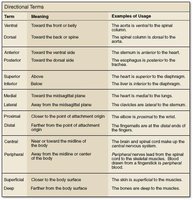
Table: Directional Terms
Purpose: Usage and Meaning
Term | Meaning | Examples of Usage |
|---|---|---|
Ventral | Toward the front or belly | The aorta is ventral to the spinal column. |
Dorsal | Toward the back or spine | The spinal column is dorsal to the aorta. |
Anterior | Toward the ventral side | The sternum is anterior to the heart. |
Posterior | Toward the dorsal side | The esophagus is posterior to the trachea. |
Superior | Above | The heart is superior to the diaphragm. |
Inferior | Below | The liver is inferior to the lungs. |
Lateral | Away from the midline | The eyes are lateral to the nose. |
Medial | Toward the midline | The heart is medial to the lungs. |
Proximal | Closer to the point of attachment origin | The shoulder is proximal to the wrist. |
Distal | Farther from the point of attachment origin | The fingers are distal to the wrist. |
Central | Near the middle of the body | The brain is central in the head. |
Peripheral | Away from the middle or center of the body | The nerves are peripheral to the spinal cord. |
Superficial | Closer to the body surface | The skin is superficial to the muscles. |
Deep | Farther from the body surface | The bones are deep to the muscles. |
Summary
This guide provides a foundational overview of anatomy and physiology, including the levels of organization, characteristics of life, organ systems, anatomical terminology, and body planes and cavities. Mastery of these concepts is essential for further study in human biology and health sciences.
