 뒤로
뒤로Introduction to Anatomy and Physiology: Foundations, Organization, and Terminology
스터디 가이드 - 스마트 노트
 자료에 맞춘 맞춤형 노트, 핵심 정의, 예시, 맥락을 확장해 제공합니다.
Introduction to Anatomy & Physiology
Studying the Human Body
Anatomy and physiology are foundational sciences in understanding the structure and function of the human body. Anatomy focuses on the physical structures, while physiology explores how these structures operate and interact.
Classification of Living Things: Humans are vertebrates, characterized by a segmented vertebral column, indicating evolutionary relationships with other animals.
Homeostasis: The central goal of physiological regulation is to maintain a stable internal environment despite external changes.
Anatomy and Physiology: Definitions and Relationships
What is Anatomy?
Gross (Macroscopic) Anatomy: Study of large, visible structures (e.g., organs, muscles).
Surface Anatomy: Study of external features.
Regional Anatomy: Study of specific body areas.
Systemic Anatomy: Study of organ systems.
Clinical Anatomy: Application to medical specialties.
Developmental Anatomy: Study from conception to death.
Microscopic Anatomy: Study of cells (cytology) and tissues (histology).
What is Physiology?
Cell Physiology: Processes within and between cells.
Organ Physiology: Functions of specific organs.
Systemic Physiology: Functions of organ systems.
Pathological Physiology: Effects of diseases on function.
Levels of Organization in the Human Body
Hierarchical Structure
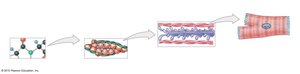
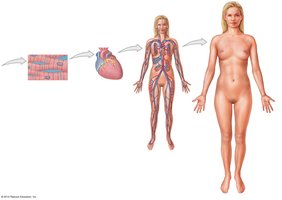
The human body is organized into increasing levels of complexity, from atoms to the entire organism.
Chemical (Molecular) Level: Atoms combine to form molecules.
Cellular Level: Molecules form organelles within cells.
Tissue Level: Groups of similar cells form tissues.
Organ Level: Different tissues combine to form organs.
Organ System Level: Organs work together in systems.
Organism Level: All systems function together in a living human.
The Organ Systems of the Human Body
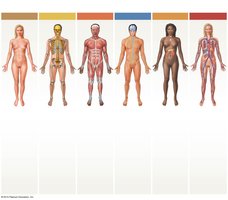
Overview of the 11 Major Organ Systems
Each organ system has specific organs and functions essential for maintaining homeostasis and overall health.
Integumentary System: Skin, hair, sweat glands, nails. Protects against environmental hazards, regulates temperature, provides sensory information.
Skeletal System: Bones, cartilage, ligaments, bone marrow. Provides support, stores minerals, forms blood cells.
Muscular System: Skeletal muscles, tendons. Enables movement, generates heat.
Nervous System: Brain, spinal cord, nerves, sense organs. Directs responses, processes information.
Endocrine System: Glands (pituitary, thyroid, etc.), pancreas, gonads. Regulates long-term changes, metabolism, development.
Cardiovascular System: Heart, blood, blood vessels. Distributes blood, nutrients, gases, and heat.
Lymphatic System: Spleen, thymus, lymph nodes, vessels. Defends against infection, returns fluids to blood.
Respiratory System: Nasal cavities, lungs, trachea, bronchi. Delivers air, enables gas exchange, produces sound.
Digestive System: Mouth, stomach, intestines, liver, pancreas. Processes food, absorbs nutrients, eliminates waste.
Urinary System: Kidneys, bladder, ureters, urethra. Eliminates waste, regulates water and ion balance.
Reproductive Systems: Male (testes, penis, etc.) and Female (ovaries, uterus, etc.). Produces sex cells and hormones, supports reproduction.
Homeostasis and Regulation
Concept of Homeostasis
Homeostasis is the maintenance of a stable internal environment. All body systems contribute to this balance, responding to internal and external changes to keep conditions within a normal range (e.g., temperature, fluid balance).
Mechanisms of Regulation
Autoregulation (Intrinsic): Automatic local response to environmental change.
Extrinsic Regulation: Controlled by nervous and endocrine systems.
Key components of a regulatory mechanism:
Receptor: Detects stimulus.
Control Center: Processes information and sends instructions.
Effector: Carries out instructions to restore balance.
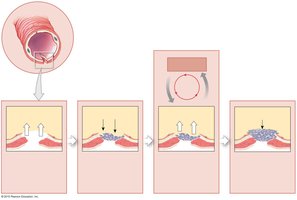
Negative and Positive Feedback
Negative Feedback: Effector response negates the stimulus, restoring homeostasis (e.g., body temperature regulation).
Positive Feedback: Effector response amplifies the stimulus, moving the body away from homeostasis, used to speed up processes (e.g., blood clotting).
Systems Integration
Organ systems work together to maintain homeostasis. Failure of homeostatic regulation can result in disease or death.
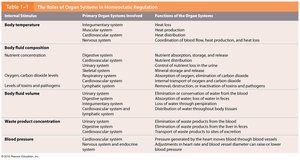
Table: Roles of Organ Systems in Homeostatic Regulation
Internal Stimulus | Primary Organ Systems Involved | Functions of the Organ Systems |
|---|---|---|
Body temperature | Integumentary, muscular, cardiovascular, nervous | Heat loss, heat production, heat distribution, coordination |
Body fluid composition | Digestive, cardiovascular, urinary, skeletal, respiratory | Nutrient absorption, storage, release, distribution, elimination, mineral storage, gas exchange |
Body fluid volume | Urinary, digestive, integumentary, cardiovascular, lymphatic | Elimination, absorption, loss, distribution, volume maintenance |
Waste product concentration | Urinary, cardiovascular, digestive | Elimination, transport, removal |
Blood pressure | Cardiovascular, nervous, endocrine | Heart rate, blood vessel diameter, hormone control |
Anatomical Terminology
Superficial Anatomy and Landmarks
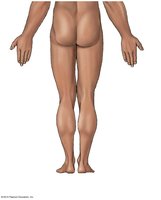
Understanding anatomical position and landmarks is essential for describing locations and relationships of body parts.
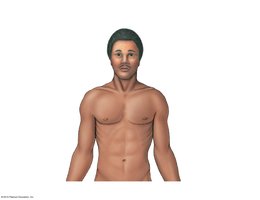
Anatomical Position: Standing, hands at sides, palms forward.
Supine: Lying face up.
Prone: Lying face down.
Abdominopelvic Quadrants and Regions
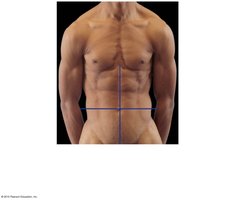
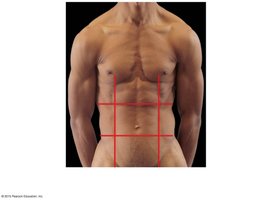
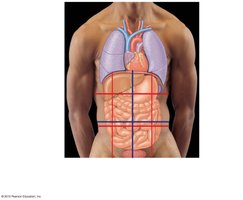
Quadrants: Right Upper (RUQ), Right Lower (RLQ), Left Upper (LUQ), Left Lower (LLQ).
Regions: More precise nine-region system (e.g., epigastric, umbilical, hypogastric).
Directional Terms
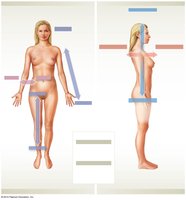
Superior/Inferior: Above/below.
Anterior (Ventral)/Posterior (Dorsal): Front/back.
Medial/Lateral: Toward/away from midline.
Proximal/Distal: Toward/away from attached base.
Superficial/Deep: Near/far from body surface.
Cranial/Caudal: Toward head/tail.
Sectional Anatomy: Planes and Sections
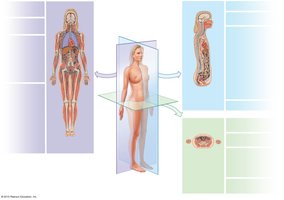
Frontal (Coronal) Plane: Divides body into anterior and posterior parts.
Sagittal Plane: Divides body into right and left parts (midsagittal = equal halves).
Transverse (Horizontal) Plane: Divides body into superior and inferior parts.
Body Cavities
Functions and Divisions
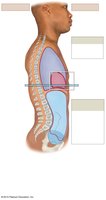
Body cavities protect organs and allow for changes in organ size and shape. The main cavities are divided by the diaphragm:
Thoracic Cavity: Contains pleural cavities (lungs) and pericardial cavity (heart).
Abdominopelvic Cavity: Contains abdominal (digestive organs) and pelvic (reproductive, rectum, bladder) cavities.
Serous Membranes
Parietal Layer: Lines cavity walls.
Visceral Layer: Covers organs.
Specialized Spaces
Peritoneal Cavity: Chamber within abdominopelvic cavity.
Retroperitoneal Space: Area behind peritoneum (contains kidneys, pancreas, etc.).
Independent Learning Checklist
Regional terms for body parts
The 9 sections and 4 quadrants of the abdominopelvic cavity
Directional terms
Planes of the body
