 뒤로
뒤로Introduction to Anatomy and Physiology: Foundations and Homeostasis
스터디 가이드 - 스마트 노트
 자료에 맞춘 맞춤형 노트, 핵심 정의, 예시, 맥락을 확장해 제공합니다.
Introduction to Anatomy and Physiology
Definition and Scope
Anatomy is the branch of biological science concerned with the study of the structure of organisms and their parts. It is one of the oldest medical sciences, dating back to 1600 B.C. Physiology is the study of the functions and mechanisms occurring in living organisms. Together, anatomy and physiology provide a comprehensive understanding of the human body, its structure, and its function.
Anatomy: Describes body structures, their composition, location, and associated structures.
Physiology: Explains the functions of anatomical structures, both individually and cooperatively.
Relationships between Anatomy and Physiology
Branches of Anatomy
Gross (Macroscopic) Anatomy: Study of large, visible structures.
Surface Anatomy: Study of external features.
Regional Anatomy: Study of specific body areas.
Systemic Anatomy: Study of organ systems.
Developmental Anatomy: Study of structural changes from conception to death.
Clinical Anatomy: Application of anatomy to medical specialties.
Microscopic Anatomy: Study of cells (cytology) and tissues (histology).
Branches of Physiology
Cell Physiology: Processes within and between cells at the cellular and molecular level.
Organ Physiology: Functions of specific organs.
Systemic Physiology: Functions of organ systems.
Pathological Physiology: Effects of diseases on organ or system function.
Levels of Organization in the Human Body
Hierarchical Structure
The human body is organized into a hierarchy of structural levels, each building upon the previous:
Chemical (Molecular) Level: Atoms combine to form molecules, which are the building blocks of cells.
Cellular Level: Molecules combine to form organelles and cells, the basic units of life.
Tissue Level: Groups of similar cells form tissues, which perform specific functions.
Organ Level: Different tissues combine to form organs, each with specialized functions.
Organ System Level: Organs work together in organ systems to perform complex functions.
Organism Level: All organ systems function together to maintain the life of the organism.
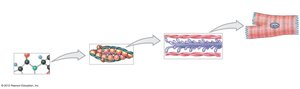
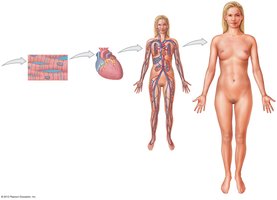
The Organ Systems of the Human Body
Overview of the 11 Major Organ Systems
Each organ system has specific major organs and functions essential for maintaining homeostasis and overall health.
Organ System | Major Organs | Main Functions |
|---|---|---|
Integumentary | Skin, hair, sweat glands, nails | Protection, temperature regulation, sensory information |
Skeletal | Bones, cartilages, ligaments, bone marrow | Support, protection, mineral storage, blood cell formation |
Muscular | Skeletal muscles, tendons | Movement, support, heat production |
Nervous | Brain, spinal cord, nerves, sense organs | Immediate response, coordination, sensory interpretation |
Endocrine | Pituitary, thyroid, adrenal glands, pancreas, gonads | Long-term regulation, metabolism, development |
Cardiovascular | Heart, blood, blood vessels | Transport of cells and dissolved materials, heat distribution |
Lymphatic | Spleen, thymus, lymph nodes, tonsils | Defense, fluid return to bloodstream |
Respiratory | Nasal cavities, sinuses, larynx, trachea, bronchi, lungs, alveoli | Gas exchange, sound production |
Digestive | Teeth, tongue, pharynx, esophagus, stomach, intestines, liver, gallbladder, pancreas | Food processing, nutrient absorption, water conservation |
Urinary | Kidneys, ureters, bladder, urethra | Waste excretion, water and ion balance, pH regulation |
Reproductive (Male) | Testes, epididymides, ductus deferentia, seminal vesicles, prostate, penis, scrotum | Sperm and hormone production |
Reproductive (Female) | Ovaries, uterine tubes, uterus, vagina, labia, clitoris, mammary glands | Oocyte and hormone production, support of embryo, milk production |
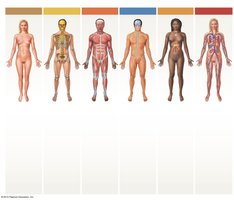
Homeostasis
Definition and Importance
Homeostasis is the maintenance of a stable internal environment within the body. All organ systems work together to keep internal conditions within a normal range, despite external and internal changes (e.g., temperature, fluid balance).
Mechanisms of Regulation
Autoregulation (Intrinsic): Automatic local response in a cell, tissue, or organ to environmental change.
Extrinsic Regulation: Responses controlled by the nervous and endocrine systems.
Components of Homeostatic Regulation
Receptor: Detects changes (stimulus) in the environment.
Control Center: Processes information and sends instructions.
Effector: Carries out instructions to restore balance.
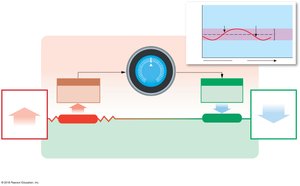
Feedback Mechanisms
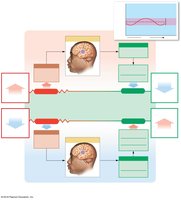
Negative Feedback
Negative feedback is the primary mechanism of homeostatic regulation. The response of the effector negates the original stimulus, restoring the system to its normal range. This process maintains stability and keeps physiological variables within set limits.
Example: Regulation of body temperature. If body temperature rises above the set point, mechanisms such as sweating and vasodilation are activated to cool the body. If temperature falls, shivering and vasoconstriction help raise it.
Positive Feedback
Positive feedback amplifies or enhances the original change rather than opposing it. This mechanism moves the body away from homeostasis and is used to speed up processes. It is less common but essential in certain situations.
Example: Blood clotting. When a vessel is damaged, chemicals are released that accelerate the clotting process, which in turn releases more chemicals, rapidly forming a clot to stop bleeding.
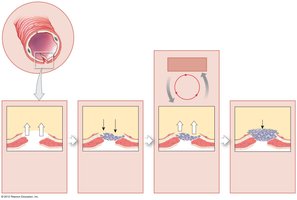
Additional info: Positive feedback is also involved in processes such as childbirth (uterine contractions) and the generation of nerve impulses.
