 뒤로
뒤로Introduction to Anatomy & Physiology: Foundations, Terminology, and Organ Systems
스터디 가이드 - 스마트 노트
 자료에 맞춘 맞춤형 노트, 핵심 정의, 예시, 맥락을 확장해 제공합니다.
Course Overview and Learning Objectives
Introduction to Anatomy & Physiology
Anatomy & Physiology (A&P) is the foundational course for understanding the structure and function of the human body. The course covers the unity of form and function, cell theory, evolution, hierarchy of complexity, homeostasis, gradients and flow, and the 11 organ systems. Medical terminology and scientific literacy are emphasized throughout.
Anatomy: Study of structure
Physiology: Study of function
Learning Outcomes: Identify basic anatomy, explain organ system function, understand current theories, and recognize common diseases
Basic Themes in Anatomy & Physiology
Unity of Form and Function
The principle that structure and function are interdependent is central to A&P. For example, the shape of bones and muscles determines movement capabilities.
Cell Theory
All living organisms are composed of cells, which are the basic units of life.
Hierarchy of Complexity
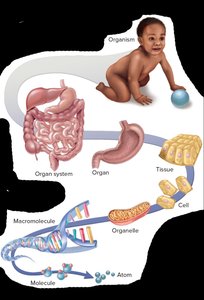
The human body is organized in a hierarchical manner, from atoms to the whole organism. Understanding this hierarchy is essential for studying both anatomy and physiology.
Atoms
Molecules
Organelles
Cells
Tissues
Organs
Organ systems
Organism
Reductionism vs. Holism
Reductionism is the approach of understanding complex systems by studying their components. Holism recognizes emergent properties that arise from the interaction of parts, meaning humans are more than the sum of their parts.
Anatomical and Physiological Variation
No two humans are exactly alike. Variations exist in anatomical structures (e.g., palmaris longus, rib number) and physiological values (e.g., reference man and woman).
Characteristics of Life
Defining Life
Living things are distinguished from nonliving things by several key characteristics:
Organization
Cellularity
Metabolism
Responsiveness
Movement
Homeostasis
Development (growth and differentiation)
Reproduction
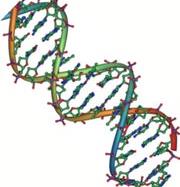
Evolution (change in DNA structure)
Homeostasis and Feedback Mechanisms
Negative Feedback
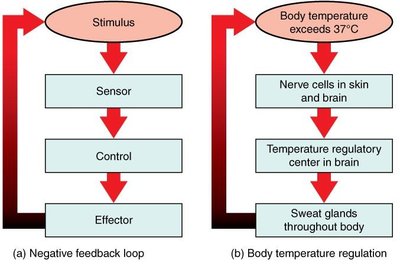
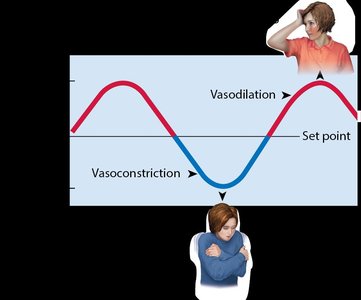
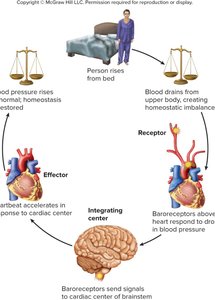
Homeostasis is the body's ability to maintain stable internal conditions. Negative feedback mechanisms detect changes and activate responses to reverse those changes, maintaining a set point.
Example: Thermoregulation (vasodilation and vasoconstriction)
Components: Receptor, Integrating Center, Effector
Positive Feedback
Positive feedback amplifies changes, leading to rapid responses. It is normal in processes like childbirth, blood clotting, and nerve signal generation, but can be dangerous if uncontrolled.
Gradients and Flow
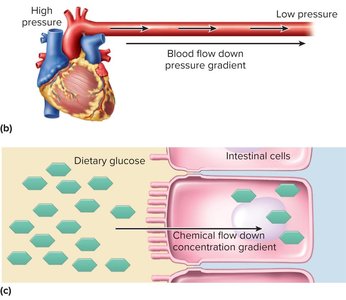
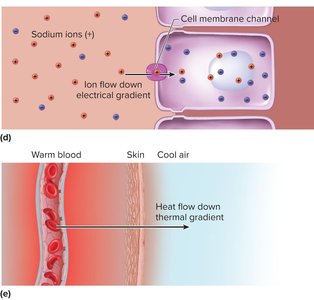
Matter and energy flow down gradients (pressure, concentration, electrical, thermal). Movement up a gradient requires metabolic energy.
Pressure gradient: Blood flow from high to low pressure
Concentration gradient: Chemical movement (e.g., glucose absorption)
Electrical gradient: Ion movement across membranes
Thermal gradient: Heat flow from warm blood to cool skin
Medical Terminology
Structure of Scientific Terms
Anatomical terms are based on Greek and Latin. Terms are constructed from roots, combining vowels, prefixes, and suffixes. Eponyms and acronyms are also used.
Root: Core meaning
Prefix/Suffix: Modify meaning
Combining vowels: Join roots
Eponym: Named after a person
Acronym: Pronounceable abbreviation
Plurals, Adjectives, and Possessive Forms
Plural forms and adjectives in anatomical terminology often differ from English conventions. Adjectives usually follow the noun they modify.
Example: Biceps brachii (of the arm)
Example: Brachium (noun), brachii (adjective)
Medical Imaging Techniques
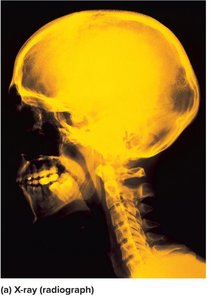
Radiography (X-rays)
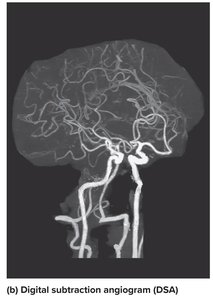
X-rays penetrate tissues to create images; dense tissues appear white. Radiopaque substances and digital subtraction angiography (DSA) enhance visualization of hollow structures and blood flow.
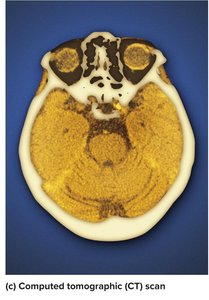
Computed Tomography (CT)
CT scans use low-intensity X-rays and computer analysis to produce slice-type images, ideal for dense tissues like bone.
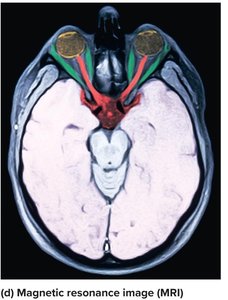
Magnetic Resonance Imaging (MRI)
MRI provides superior quality images of soft tissues without X-ray exposure. Functional MRI (fMRI) shows real-time changes in the brain.
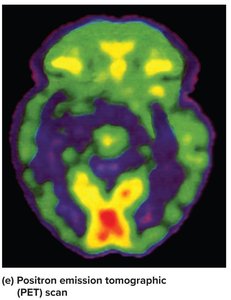
Positron Emission Tomography (PET)
PET scans assess metabolic activity by injecting radioactively labeled glucose. Active tissues appear bright; damaged tissues appear dark.
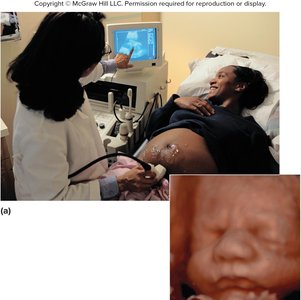
Sonography
Sonography uses high-frequency sound waves to image internal organs, avoiding X-rays. It is commonly used in obstetrics.
Directional Terms, Body Regions, and Cavities
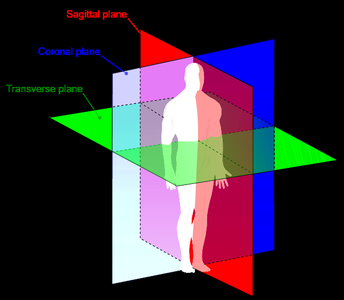
Directional Terms
Directional terms describe the location of structures relative to each other. Common terms include ventral, dorsal, anterior, posterior, cephalic, caudal, superior, inferior, medial, lateral, proximal, distal, superficial, and deep.
Abdominopelvic Quadrants and Regions
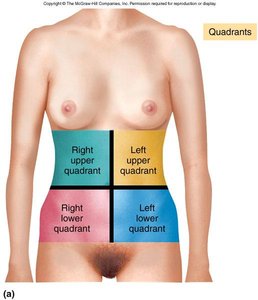
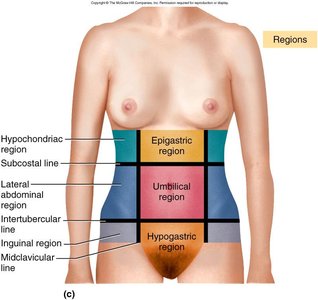
The abdominopelvic area is divided into quadrants and regions for clinical reference.
Quadrants: Right upper, left upper, right lower, left lower
Regions: Hypochondriac, epigastric, umbilical, hypogastric, etc.
Body Cavities and Membranes
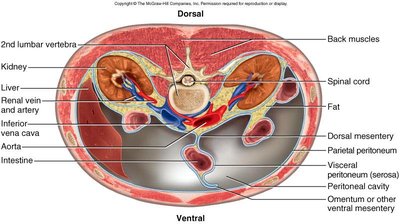
The body contains dorsal and ventral cavities, each lined by specific membranes. These cavities house vital organs and provide protection.
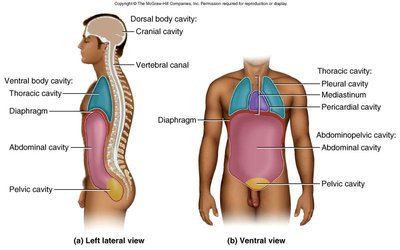
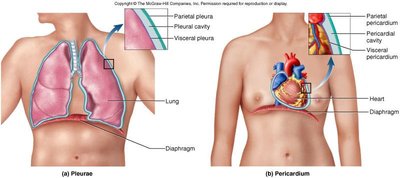
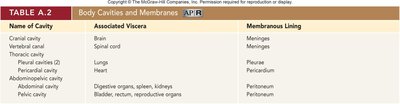
Table: Body Cavities and Membranes
Name of Cavity | Associated Viscera | Membranous Lining |
|---|---|---|
Cranial cavity | Brain | Meninges |
Vertebral canal | Spinal cord | Meninges |
Thoracic cavity | Lungs, heart | Pleura, pericardium |
Abdominopelvic cavity | Digestive organs, spleen, kidneys, bladder, rectum, reproductive organs | Peritoneum |
The 11 Major Organ Systems
Overview of Organ Systems
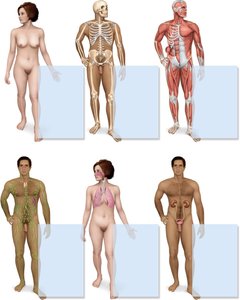
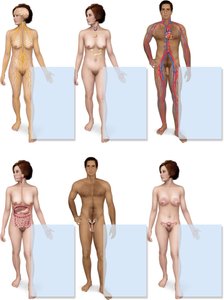
The human body is composed of 11 major organ systems, each with specific principal organs and functions.
Integumentary: Skin, hair, nails; protection, water retention, thermoregulation
Skeletal: Bones, cartilages, ligaments; support, movement, blood formation
Muscular: Skeletal muscles; movement, stability, heat production
Lymphatic: Lymph nodes, vessels, thymus, spleen, tonsils; immune defense
Respiratory: Nose, pharynx, larynx, trachea, bronchi, lungs; oxygen absorption, CO2 discharge
Urinary: Kidneys, ureters, bladder, urethra; waste elimination, blood regulation
Nervous: Brain, spinal cord, nerves; communication, coordination
Endocrine: Glands; hormone production, internal communication
Circulatory: Heart, blood vessels; distribution of nutrients, wastes, hormones
Digestive: Teeth, tongue, glands, stomach, intestines, liver, pancreas; nutrient breakdown and absorption
Reproductive: Testes, ovaries, ducts, glands; production and delivery of gametes, fetal development
Key Terms and Homework
Terminology to Know
Dissection
Palpation
Percussion
Auscultation
Histology/histopathology
Cytology
Homeostasis
Negative feedback
Positive feedback
Meninges
Pleurae
Pericardium
Peritoneum
Holism vs. reductionism
Visceral vs. parietal
Gradients
Computed Tomography (CT)
Magnetic Resonance Imaging (MRI)
Distal vs. proximal
Supine vs. Prone
Reading Assignment
Chapter 1, p1-26
Atlas A, p27-39
Prepare for Chapter 2, p40-73
Additional info: The notes have been expanded to provide academic context and completeness for exam preparation, including definitions, examples, and relevant images.
