 뒤로
뒤로Introduction to Anatomy and Physiology: Foundations, Organization, and Body Systems
스터디 가이드 - 스마트 노트
 자료에 맞춘 맞춤형 노트, 핵심 정의, 예시, 맥락을 확장해 제공합니다.
Introduction to Anatomy and Physiology
Defining Anatomy and Physiology
Anatomy is the study of the structure of body parts, while physiology focuses on their function. The principle that structure determines function is central to understanding the human body. Biology, the study of life, encompasses both anatomy and physiology. Illustrations and diagrams are essential tools for learning these subjects effectively.
Tips for Success in Anatomy & Physiology
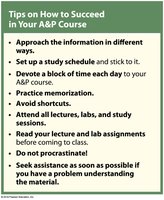
Approach the material in multiple ways (visual, reading, practice).
Establish a study schedule and stick to it.
Devote regular time to study and practice memorization.
Attend all lectures, labs, and study sessions.
Read assignments before class and avoid procrastination.
Seek help early if you encounter difficulties.
Characteristics and Processes of Life
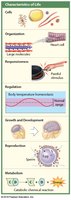
Characteristics of Living Things
All living organisms share several fundamental characteristics:
Cellular composition: All living things are made of cells.
Organization: Complex structural arrangement from molecules to organ systems.
Responsiveness: Ability to detect and respond to stimuli.
Regulation: Maintenance of a stable internal environment (homeostasis).
Growth and development: Increase in size and progression through life stages.
Reproduction: Production of offspring.
Metabolism: All chemical processes in cells, including anabolic (building up) and catabolic (breaking down) reactions.
Processes of Life
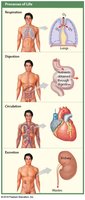
Respiration: Obtaining oxygen and removing carbon dioxide.
Digestion: Breaking down food into absorbable substances.
Circulation: Internal movement and distribution of substances.
Excretion: Elimination of metabolic wastes.
Levels of Organization in the Human Body
Hierarchical Structure
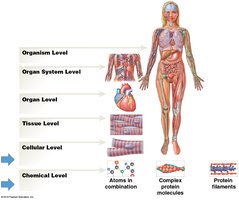
The human body is organized into several levels, each increasing in complexity:
Chemical level: Atoms combine to form molecules.
Cellular level: Cells are the smallest living units, with specialized organelles.
Tissue level: Groups of similar cells performing specific functions.
Organ level: Structures composed of two or more tissue types.
Organ system level: Groups of organs working together for a common function.
Organism level: The complete living being.
Cell Theory and Tissues
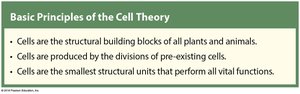
Basic Principles of Cell Theory
Cells are the structural building blocks of all plants and animals.
Cells arise from the division of pre-existing cells.
Cells are the smallest units that perform all vital functions.
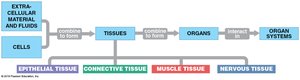
Primary Tissue Types
There are four primary tissue types in the human body:
Epithelial tissue: Covers surfaces, lines cavities, and forms glands.
Connective tissue: Provides support, fills spaces, stores energy, and transports materials.
Muscle tissue: Contracts to produce movement.
Nervous tissue: Conducts electrical impulses and carries information.
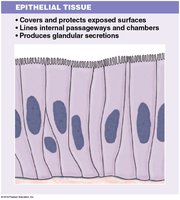
Epithelial Tissue
Forms protective barriers on body surfaces and internal passages.
Produces glandular secretions.
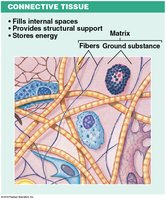
Connective Tissue
Contains cells in an extracellular matrix of protein fibers and ground substance.
Varies in consistency (e.g., blood is watery, bone is solid).
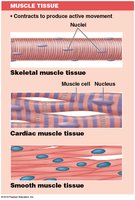
Muscle Tissue
Specialized for contraction and movement.
Three types: skeletal (moves skeleton), cardiac (heart), and smooth (walls of organs).
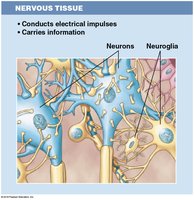
Nervous Tissue
Composed of neurons (transmit impulses) and neuroglia (support cells).
Found in the brain, spinal cord, and nerves.
Organs and Organ Systems
Definition and Organization
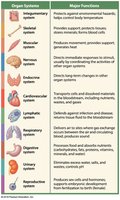
An organ is a functional unit composed of multiple tissue types. Organ systems are groups of organs that interact to perform specific functions. The human body contains eleven major organ systems, all interdependent.
Overview of Major Organ Systems
Organ System | Major Functions |
|---|---|
Integumentary | Protection, temperature regulation |
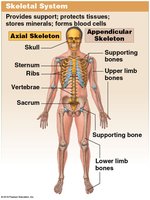
Skeletal | Support, protection, mineral storage, blood formation |
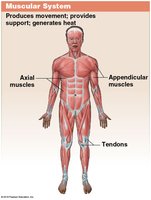
Muscular | Movement, support, heat generation |
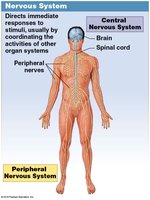
Nervous | Immediate response, coordination |
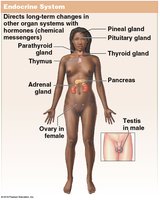
Endocrine | Long-term regulation via hormones |
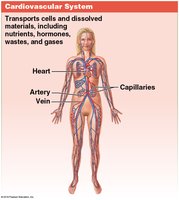
Cardiovascular | Transport of cells and dissolved materials |
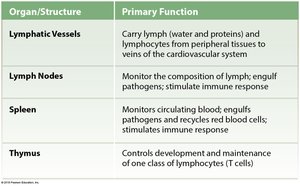
Lymphatic | Defense, fluid return |
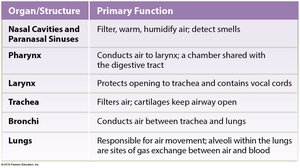
Respiratory | Gas exchange, sound production |
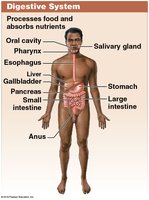
Digestive | Food processing, nutrient absorption |
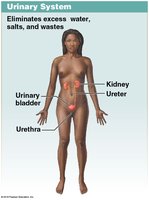
Urinary | Waste elimination, water balance |
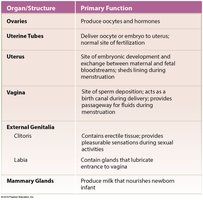
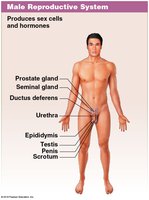
Reproductive | Sex cell and hormone production, support of embryonic development |
Homeostasis and Feedback Mechanisms
Homeostasis
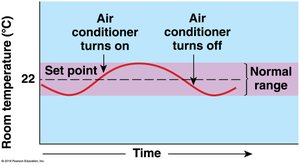
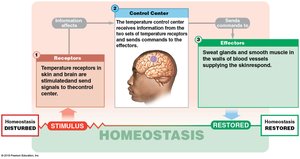
Homeostasis is the maintenance of a stable internal environment. It is essential for health, and failure to maintain homeostasis leads to illness or death. Homeostatic regulation involves physiological adjustments to preserve stability in changing environments.
Components of Homeostatic Regulation
Receptor: Detects changes in the environment.
Control center: Processes information and determines response.
Effector: Produces the response to restore balance.
Negative and Positive Feedback
Negative feedback: The effector opposes the original stimulus, minimizing change and maintaining a normal range (e.g., body temperature regulation).
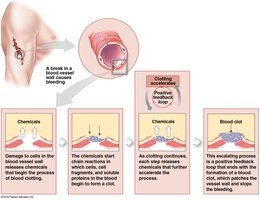
Positive feedback: The response enhances the original stimulus, producing an escalating cycle (e.g., blood clotting).
Anatomical Terminology and Body Orientation
Anatomical Position and Regional Terms
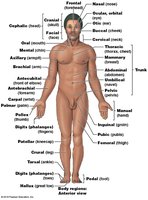
The anatomical position is the standard reference for describing body parts and regions: standing upright, hands at sides, palms forward, feet together and facing forward, eyes forward. Supine position refers to lying face up, and prone to lying face down.
Directional Terms and Sectional Planes
Anterior (ventral): Front of the body
Posterior (dorsal): Back of the body
Superficial: Near the surface
Deep: Toward the interior
Frontal (coronal) plane: Divides anterior from posterior
Sagittal plane: Divides right from left (midsagittal = midline, parasagittal = off midline)
Transverse (horizontal) plane: Divides superior from inferior
Abdominopelvic Quadrants and Regions
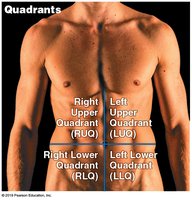
The abdomen is divided into four quadrants (RUQ, LUQ, RLQ, LLQ) to help clinicians localize pain or injury and identify organ locations.
Body Cavities
Major Body Cavities
The body is divided into internal chambers called body cavities, which protect organs and allow them to change shape. Cavities are lined by serous membranes and contain viscera (internal organs).
Thoracic cavity: Contains pleural cavities (lungs) and mediastinum (heart in pericardial cavity).
Abdominopelvic cavity: Contains abdominal (digestive organs) and pelvic (urinary bladder, reproductive organs) portions.
These cavities are separated by the diaphragm.
Summary Table: Major Organ Systems and Functions
System | Main Organs | Primary Functions |
|---|---|---|
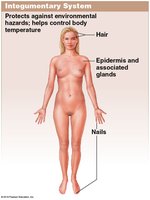
Integumentary | Skin, hair, nails | Protection, temperature regulation |
Skeletal | Bones, cartilage, ligaments | Support, protection, blood formation |
Muscular | Muscles, tendons | Movement, heat production |
Nervous | Brain, spinal cord, nerves | Coordination, response to stimuli |
Endocrine | Glands (pituitary, thyroid, etc.) | Hormonal regulation |
Cardiovascular | Heart, blood vessels | Transport of substances |
Lymphatic | Lymph nodes, spleen, thymus | Immunity, fluid balance |
Respiratory | Lungs, trachea | Gas exchange |
Digestive | Stomach, intestines, liver | Food processing, absorption |
Urinary | Kidneys, bladder | Waste elimination, water balance |
Reproductive | Ovaries/testes, uterus/prostate | Sex cell production, support of development |
Additional info: This summary integrates foundational concepts from the introductory chapter of Anatomy & Physiology, providing a comprehensive overview for exam preparation and further study.
