 뒤로
뒤로Introduction to Anatomy & Physiology: Homeostasis, Cell Communication, and Critical Concepts
스터디 가이드 - 스마트 노트
 자료에 맞춘 맞춤형 노트, 핵심 정의, 예시, 맥락을 확장해 제공합니다.
Introduction to Anatomy & Physiology
Critical Concepts in Physiology
Understanding the foundational principles of anatomy and physiology is essential for grasping how the human body maintains stability and responds to changes. These notes cover key concepts such as energy transfer, homeostasis, and cell communication.
Energy & Cell Processes
ATP and Cellular Energy
Cells require energy to perform work, which is primarily supplied by adenosine triphosphate (ATP). ATP is generated through cellular respiration, where glucose and oxygen are converted into ATP, carbon dioxide (CO2) (which is a waste byproduct), and water.
ATP Formation: ATP is produced in the mitochondria via cellular respiration.
ATP Utilization: ATP is used for muscle contraction, active transport, and biosynthesis.
Equation: The overall reaction for aerobic respiration is:
CO2 Transport: CO2 is a byproduct of metabolism and must be transported in the blood, primarily as bicarbonate ions.
Example: During exercise, muscle cells increase ATP production to meet energy demands.
Introduction to Homeostasis
Definition and Importance
Homeostasis is the process by which the body maintains a stable internal environment despite external changes. It is essential for survival and proper physiological function.
Key Variables: Temperature, pH, blood glucose, and osmolarity.
Dynamic Equilibrium: Homeostasis involves continuous monitoring and adjustment of physiological variables.
Homeostatic Control Systems
Homeostatic mechanisms involve sensors, integrating centers, and effectors. These systems detect changes and initiate responses to restore balance.
Negative Feedback: Most homeostatic responses operate via negative feedback, where a change in a variable triggers a response that opposes the change.
Positive Feedback: Less common; amplifies changes (e.g., blood clotting, childbirth).
Example: Regulation of body temperature through sweating or shivering.
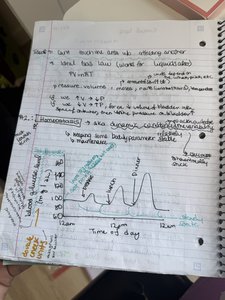
Mechanisms of Homeostatic Regulation
Components of a Control System
Sensor (Receptor): Detects changes in the environment.
Integrating Center: Processes information and determines response (often the brain or endocrine glands).
Effector: Carries out the response to restore homeostasis.
Example: Blood glucose regulation by insulin and glucagon.
Types of Feedback
Negative Feedback: Maintains stability by reversing deviations from a set point.
Positive Feedback: Drives processes to completion (e.g., labor contractions).
Homeostatic Imbalance and Adaptation
Disturbances and Responses
Disturbances (D) are deviations from the set point. The body responds through feedback mechanisms to restore balance.
Anticipatory (Feedforward) Responses: Prepare the body for a predicted change, reducing the magnitude of disturbance.
Example: Salivating before eating or increasing heart rate before exercise.
Adaptation and Acclimatization
Adaptation: Long-term genetic changes that improve survival in a particular environment.
Acclimatization: Short-term, reversible changes in response to environmental variation (e.g., increased red blood cell production at high altitude).
Cell Communication
Intercellular Communication
Cells communicate to coordinate function and maintain homeostasis. Communication can be direct (physical contact) or indirect (chemical signals).
Gap Junctions: Allow direct cytoplasmic exchange between adjacent cells.
Tunneling Nanotubes: Longer, wider channels for exchange of larger molecules.
Juxtacrines: Require direct membrane contact but do not involve cytoplasmic continuity.
Example: Cardiac muscle cells use gap junctions for synchronized contraction.
Summary Table: Types of Cell Communication
Type | Mechanism | Example |
|---|---|---|
Gap Junctions | Direct cytoplasmic connection | Cardiac muscle |
Tunneling Nanotubes | Long, narrow cytoplasmic bridges | Immune cells |
Juxtacrines | Direct membrane contact, no cytoplasmic continuity | Immune cell recognition |
Additional info:
Homeostatic control is essential for survival and underlies all physiological processes.
Feedforward mechanisms are important for minimizing energy expenditure and improving efficiency.
Disruptions in homeostasis can lead to disease or dysfunction.
