 뒤로
뒤로Introduction to Human Anatomy and Physiology: Levels of Organization, Directional Terms, and Organ Systems
스터디 가이드 - 스마트 노트
 자료에 맞춘 맞춤형 노트, 핵심 정의, 예시, 맥락을 확장해 제공합니다.
Introduction to Human Anatomy and Physiology
Definitions and Scope
Human anatomy is the scientific study of the body’s structures, while human physiology focuses on the chemistry and physics of these structures and their functions. Together, these disciplines explain how the body supports life.
Anatomy: Study of body structure, from microscopic cells to macroscopic organs.
Physiology: Study of how body structures function and interact.
Application: Understanding anatomy and physiology is essential for health sciences, medicine, and allied fields.
Levels of Organization in the Human Body
Hierarchical Structure
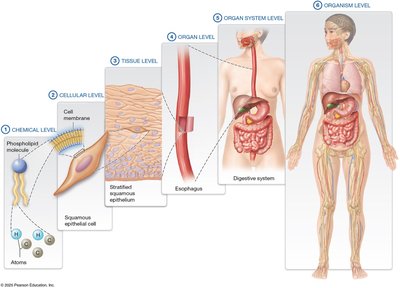
The human body is organized into a hierarchy of levels, each building upon the previous. This organization is fundamental to understanding both anatomy and physiology.
Chemical Level: Atoms and molecules form the basis of all living matter.
Cellular Level: Cells are the basic structural and functional units of life.
Tissue Level: Groups of similar cells performing a common function (e.g., epithelial tissue).
Organ Level: Organs are structures composed of two or more tissue types working together (e.g., esophagus).
Organ System Level: Organ systems consist of related organs that coordinate to perform major functions (e.g., digestive system).
Organism Level: The human body as a whole, integrating all systems.
Example: The digestive system includes organs such as the esophagus, stomach, and intestines, which together process food and absorb nutrients.
Directional Terms in Anatomy
Describing Locations and Relationships
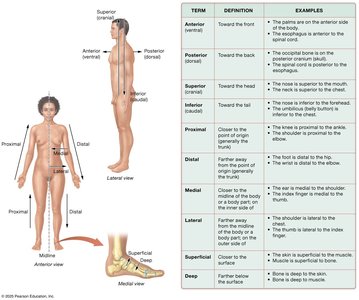
Directional terms are used to describe the locations of structures relative to other structures or locations in the body. These terms are essential for clear communication in anatomy.
Anterior (ventral): Toward the front of the body.
Posterior (dorsal): Toward the back of the body.
Superior: Toward the head.
Inferior: Toward the feet.
Proximal: Closer to the point of attachment (used for limbs).
Distal: Farther from the point of attachment (used for limbs).
Medial: Closer to the midline of the body.
Lateral: Farther from the midline.
Superficial: Closer to the surface.
Deep: Farther from the surface.
Term | Definition | Example |
|---|---|---|
Anterior | Toward the front | The palms are on the anterior side of the body. |
Posterior | Toward the back | The occipital bone is posterior to the frontal bone. |
Superior | Toward the head | The nose is superior to the mouth. |
Inferior | Toward the feet | The mouth is inferior to the nose. |
Proximal | Closer to the point of attachment | The knee is proximal to the ankle. |
Distal | Farther from the point of attachment | The foot is distal to the hip. |
Medial | Closer to the midline | The shoulder is medial to the arm. |
Lateral | Farther from the midline | The shoulder is lateral to the chest. |
Superficial | Closer to the surface | The skin is superficial to the bones. |
Deep | Farther from the surface | Bone is deep to the skin. |
Comparing Bones Using Directional Terms
Application to the Skull
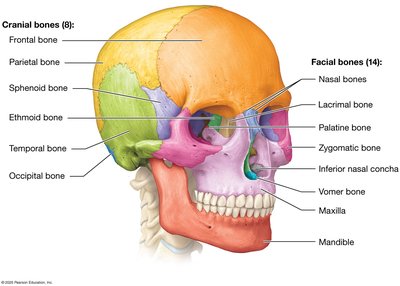
Directional terms are used to compare the locations of bones and other structures. For example, the left zygomatic bone and the ethmoid bone are compared using these terms.
Zygomatic bone: Lateral to the ethmoid bone.
Ethmoid bone: Medial and deep relative to the zygomatic bone.
The Eleven Organ Systems of the Human Body
Overview and Major Functions
The human body is composed of eleven organ systems, each with distinct anatomical structures and physiological functions. Understanding these systems is foundational to anatomy and physiology.
Integumentary System
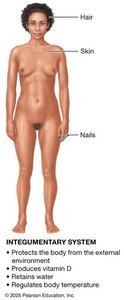
The integumentary system acts as a barrier, protecting the body from the external environment, retaining fluids, and regulating temperature.
Components: Skin, hair, nails.
Functions: Protection, vitamin D production, water retention, temperature regulation.
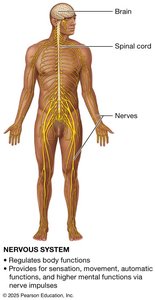
Nervous System
The nervous system controls and coordinates body functions and communication among its parts.
Components: Brain, spinal cord, nerves.
Functions: Regulation, sensation, movement, higher mental functions.
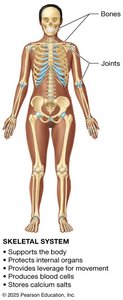
Skeletal System
The skeletal system provides support, protection, movement, blood cell production, and calcium storage.
Components: Bones, joints.
Functions: Support, protection, movement, blood cell production, calcium storage.
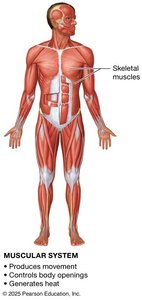
Muscular System
The muscular system enables movement, controls body openings, and generates heat.
Components: Skeletal muscles.
Functions: Movement, control, heat generation.
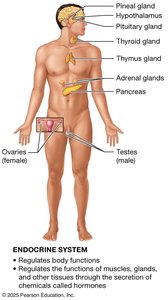
Endocrine System
The endocrine system consists of glands that produce hormones regulating metabolism, growth, development, and other functions.
Components: Pineal gland, hypothalamus, pituitary gland, thyroid gland, thymus gland, adrenal glands, pancreas, ovaries, testes.
Functions: Hormone production, regulation of body functions.
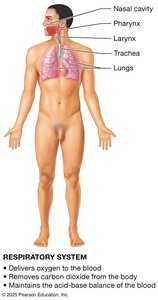
Respiratory System
The respiratory system is responsible for gas exchange, delivering oxygen and removing carbon dioxide.
Components: Nasal cavity, pharynx, larynx, trachea, lungs.
Functions: Oxygen delivery, carbon dioxide removal, acid-base balance.
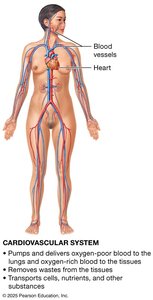
Cardiovascular System
The cardiovascular system transports nutrients, oxygen, hormones, and wastes throughout the body.
Components: Heart, blood vessels.
Functions: Transport, waste removal, nutrient delivery.
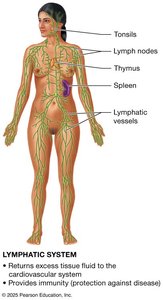
Lymphatic System
The lymphatic system removes excess fluid, absorbs fats, and provides immunity.
Components: Tonsils, lymph nodes, thymus, spleen, lymphatic vessels.
Functions: Fluid removal, fat absorption, immune response.
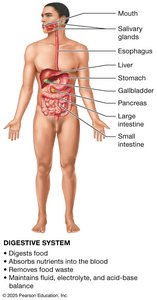
Digestive System
The digestive system breaks down food, absorbs nutrients, and eliminates waste.
Components: Mouth, salivary glands, esophagus, liver, stomach, gallbladder, pancreas, large intestine, small intestine.
Functions: Digestion, absorption, waste removal, fluid and electrolyte balance.
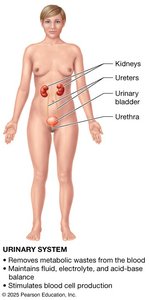
Urinary System
The urinary system removes metabolic wastes, maintains fluid and electrolyte balance, and stimulates blood cell production.
Components: Kidneys, ureters, urinary bladder, urethra.
Functions: Waste removal, balance maintenance, erythropoietin production.
Reproductive System
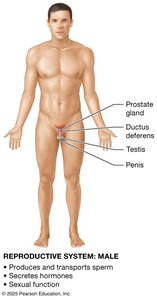
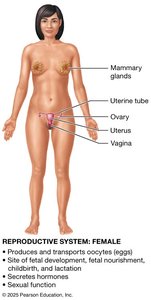
The reproductive system produces gametes and hormones, and in females, supports fetal development and childbirth.
Male Components: Prostate gland, ductus deferens, testis, penis.
Female Components: Mammary glands, uterine tube, ovary, uterus, vagina.
Functions: Gamete production, hormone secretion, sexual function, fetal development (female).
Characteristics of Life and Homeostasis
Association with Organ Systems
Characteristics of life include organization, metabolism, responsiveness, movement, growth, reproduction, and homeostasis. Each organ system contributes to these processes.
Homeostasis: The maintenance of a stable internal environment, essential for survival.
Example: The cardiovascular and respiratory systems work together to regulate oxygen and carbon dioxide levels.
Summary and Study Recommendations
Preparation and Review
Students should read Chapter 1 for an introduction to anatomy and physiology, review directional terms, and study the functions and components of each organ system. Completing quizzes and reading recommended sections will reinforce understanding.
Recommended readings: Introduction to Human Anatomy and Physiology, Chemistry, Cells, Tissues and Organs.
Review quizzes: Chapters 1-4.
Additional info:
Some content was expanded for clarity and completeness, including definitions and examples of directional terms, and detailed organ system functions.
Tables and images were recreated and included only when directly relevant to the adjacent content.
