 뒤로
뒤로Introduction to Human Anatomy: Body Orientation, Regions, Planes, Cavities, and the Cell
스터디 가이드 - 스마트 노트
 자료에 맞춘 맞춤형 노트, 핵심 정의, 예시, 맥락을 확장해 제공합니다.
The Human Body: An Orientation
Body Regions
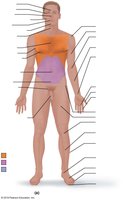
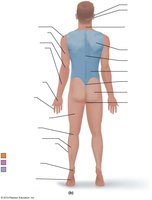
The human body is divided into specific regions to facilitate anatomical study and clinical reference. These regions are identified on both the anterior (front) and posterior (back) aspects of the body.
Anterior Body Regions: Include the cephalic (head), cervical (neck), thoracic (chest), abdominal, pelvic, upper limb, manus (hand), lower limb, and pedal (foot) regions.
Posterior Body Regions: Include the occipital (back of head), dorsal (back), lumbar (lower back), gluteal (buttock), and others.
These regions are used to describe the location of injuries, pain, or anatomical structures.
Directional Terms
Directional terms are used to describe the positions of structures relative to other structures or locations in the body.
Superior (cranial): Toward the head or upper part of a structure.
Inferior (caudal): Away from the head or toward the lower part of a structure.
Anterior (ventral): Toward the front of the body.
Posterior (dorsal): Toward the back of the body.
Medial: Toward the midline of the body.
Lateral: Away from the midline of the body.
Proximal: Closer to the origin of the body part or point of attachment.
Distal: Farther from the origin of a body part or point of attachment.
Superficial: Toward or at the body surface.
Deep: Away from the body surface; more internal.
Example: The forehead is superior to the nose. The heart is posterior to the sternum. The arms are lateral to the chest.
Body Planes and Sections
Body planes are imaginary lines used to divide the body into sections for anatomical study and medical imaging.
Frontal (coronal) plane: Divides the body into anterior and posterior parts.
Sagittal plane: Divides the body into right and left parts. A midsagittal (median) plane divides the body into equal right and left halves; a parasagittal plane divides it into unequal parts.
Transverse (horizontal) plane: Divides the body into superior and inferior parts.

Body Cavities and Membranes
Major Body Cavities
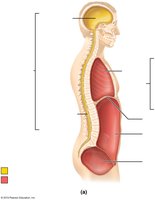
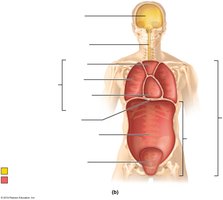
The body contains internal cavities that protect organs and allow for changes in organ shape and size.
Dorsal Body Cavity: Contains the cranial cavity (encasing the brain) and vertebral cavity (encasing the spinal cord).
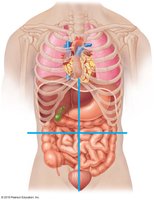
Ventral Body Cavity: Contains the thoracic cavity (heart and lungs) and abdominopelvic cavity (digestive organs, urinary bladder, reproductive organs).
Abdominopelvic Quadrants
The abdominopelvic cavity is divided into four quadrants for clinical reference:
Right Upper Quadrant (RUQ)
Left Upper Quadrant (LUQ)
Right Lower Quadrant (RLQ)
Left Lower Quadrant (LLQ)
These quadrants help localize pain, masses, or other clinical findings.
Cells: The Living Units
Generalized Cell Structure
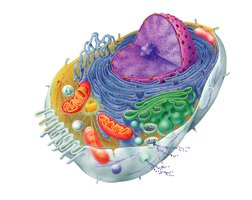
Cells are the basic structural and functional units of life. A typical animal cell contains several key organelles, each with specialized functions:
Nucleus: Contains genetic material (DNA) and controls cellular activities.
Nucleolus: Site of ribosome synthesis.
Ribosomes: Sites of protein synthesis.
Endoplasmic Reticulum (ER): Rough ER is studded with ribosomes and synthesizes proteins; smooth ER synthesizes lipids and detoxifies chemicals.
Golgi Apparatus: Modifies, sorts, and packages proteins and lipids for secretion or delivery to other organelles.
Mitochondria: Produce ATP, the cell’s energy currency, through cellular respiration.
Lysosomes: Contain digestive enzymes to break down waste.
Peroxisomes: Break down fatty acids and detoxify harmful substances.
Cytoskeleton: Provides structural support and facilitates cell movement (includes microtubules, microfilaments, and intermediate filaments).
Plasma Membrane: Regulates entry and exit of substances.
Centrioles and Centrosome: Involved in cell division.
Vesicles: Transport materials within the cell.
Additional info: The structure and function of each organelle are essential for maintaining cellular homeostasis and supporting the life processes of multicellular organisms.
