뒤로
뒤로Introduction to Human Anatomy: Terminology, Body Planes, and Cavities
스터디 가이드 - 스마트 노트
 자료에 맞춘 맞춤형 노트, 핵심 정의, 예시, 맥락을 확장해 제공합니다.
Introduction to Anatomy & Physiology
Overview of Human Anatomy
Anatomy is the study of the structure of the human body, while physiology focuses on the function of these structures. Understanding anatomical terminology, body planes, and cavities is essential for accurately describing locations and relationships of body parts.
Surface Anatomy and Regional Terms
Major Body Regions and Landmarks
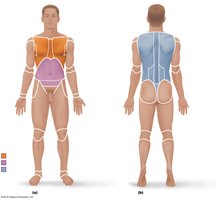
Surface anatomy uses specific terms to describe visible landmarks and regions of the body. These terms help healthcare professionals communicate precisely about locations on the body.
Cephalic: Refers to the head region.
Cervical: Pertains to the neck.
Thoracic: Chest area.
Abdominal: Area between the chest and pelvis.
Pelvic: Lower trunk, between the abdomen and thighs.
Upper limb: Includes acromial (shoulder), brachial (arm), antecubital (front of elbow), antebrachial (forearm), carpal (wrist), palmar (palm), pollex (thumb), and digital (fingers).
Lower limb: Includes coxal (hip), femoral (thigh), patellar (kneecap), crural (leg), fibular/peroneal (side of leg), tarsal (ankle), digital (toes), hallux (big toe).
Back (dorsum): Includes scapular (shoulder blade), vertebral (spinal column), lumbar (lower back), sacral, gluteal (buttock), and perineal (between anus and genitals).
Anatomical Terminology: Body Orientation and Direction
Describing Body Positions
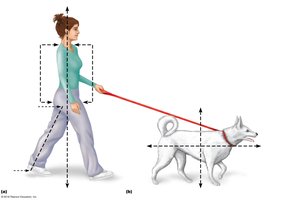
Directional terms are used to explain where one body part is in relation to another. These terms are based on the standard anatomical position (standing upright, facing forward, arms at sides, palms forward).
Superior (cranial/cephalad): Toward the head or upper part of a structure.
Inferior (caudal): Away from the head or toward the lower part of a structure.
Anterior (ventral): Toward the front of the body.
Posterior (dorsal): Toward the back of the body.
Medial: Toward the midline of the body.
Lateral: Away from the midline of the body.
Proximal: Closer to the origin of the body part or point of attachment.
Distal: Farther from the origin of the body part or point of attachment.
Body Planes and Sections
Major Anatomical Planes
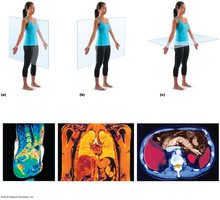
Body planes are imaginary lines used to divide the body into sections for anatomical study and medical imaging.
Median (midsagittal) plane: Divides the body into equal right and left halves.
Frontal (coronal) plane: Divides the body into anterior (front) and posterior (back) parts.
Transverse (horizontal) plane: Divides the body into superior (upper) and inferior (lower) parts.
These planes are essential for interpreting medical images such as MRI and CT scans.
Sections and Views
Understanding Anatomical Sections
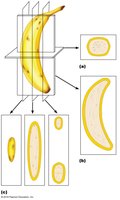
Sections are actual cuts or slices along a plane. The appearance of structures can vary greatly depending on the plane of section.
Cross section (transverse): A horizontal cut, often used in imaging.
Median section: A vertical cut along the midline.
Frontal section: A vertical cut dividing the body into anterior and posterior parts.
Body Cavities and Membranes
Major Body Cavities
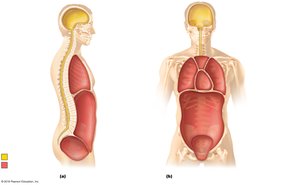
The human body contains several major cavities that house and protect vital organs.
Dorsal body cavity: Includes the cranial cavity (brain) and vertebral cavity (spinal cord).
Ventral body cavity: Includes the thoracic cavity (heart and lungs) and abdominopelvic cavity (digestive organs, urinary bladder, reproductive organs, and rectum).
Serous Membranes
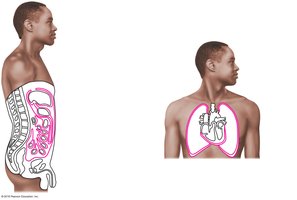
Serous membranes line the ventral body cavities and cover the organs within them. They secrete a lubricating fluid to reduce friction.
Parietal serosa: Lines the cavity walls.
Visceral serosa: Covers the organs.
Examples include the pleura (lungs), pericardium (heart), and peritoneum (abdominal organs).
Abdominopelvic Regions and Quadrants
Quadrants
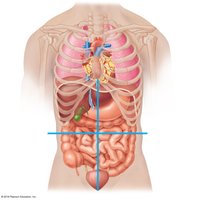
The abdominopelvic cavity is divided into four quadrants for clinical reference:
Right Upper Quadrant (RUQ)
Left Upper Quadrant (LUQ)
Right Lower Quadrant (RLQ)
Left Lower Quadrant (LLQ)
Regions
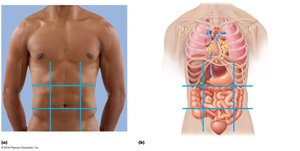
For more precise anatomical study, the abdominopelvic cavity is also divided into nine regions:
Right/Left Hypochondriac
Epigastric
Right/Left Lumbar
Umbilical
Right/Left Iliac (Inguinal)
Hypogastric (Pubic)
Other Body Cavities
Additional Cavities
Besides the major cavities, the body contains several smaller cavities, including:
Oral cavity (mouth)
Nasal cavity
Orbital cavities (eyes)
Middle ear cavities
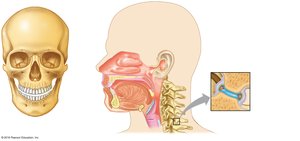
Synovial cavities (joints)