 뒤로
뒤로Introduction to Human Physiology: Core Concepts and Homeostasis
스터디 가이드 - 스마트 노트
 자료에 맞춘 맞춤형 노트, 핵심 정의, 예시, 맥락을 확장해 제공합니다.
Introduction to Physiology
What is Physiology?
Physiology is the study of the normal functioning of living organisms and their component parts, including all chemical and physical processes. It is closely related to anatomy, which focuses on the structure of organisms. Understanding physiology requires knowledge of how different systems interact to maintain life.
Emergent properties: These are characteristics of a system that arise from the interactions of its parts, which individual components do not possess alone.
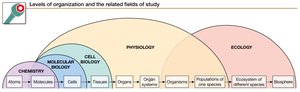
Levels of organization: Atoms → Molecules → Cells → Tissues → Organs → Organ systems → Organism.
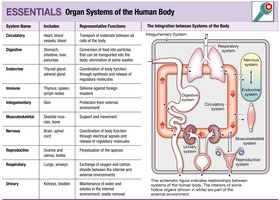
Organ Systems of the Human Body
The human body is composed of multiple organ systems that work together to maintain homeostasis and overall function. Each system has specialized organs and functions, but they are highly integrated.
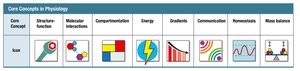
Core Concepts in Physiology
Major Themes
Structure and Function: The relationship between anatomical structures and their physiological roles.
Molecular Interactions: Chemical interactions underpinning physiological processes.
Compartmentation: Division of the body into separate compartments for specialized functions.
Energy: All living organisms require energy for cellular processes.
Gradients and Flow: Movement of substances is driven by gradients (e.g., concentration, pressure).
Communication: Coordination of body functions via signaling (nervous and endocrine systems).
Homeostasis: Maintenance of a stable internal environment.
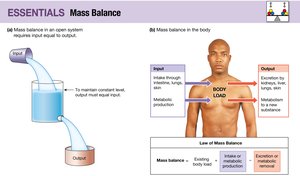
Mass Balance: Regulation of substance levels through input and output.
Function and Mechanism
Teleological vs. Mechanistic Approaches
Teleological (Why): Explains the purpose of a process (e.g., Why do red blood cells transport oxygen? Because cells need oxygen).
Mechanistic (How): Describes the process or mechanism (e.g., How do red blood cells transport oxygen? Oxygen binds to hemoglobin in red blood cells).
Homeostasis
Definition and Importance
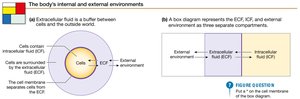
Homeostasis is the maintenance of a relatively stable internal environment, essential for the survival of cells and the organism. It involves the regulation of critical variables such as temperature, pH, and ion concentrations within a narrow range.
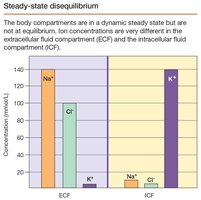
Extracellular fluid (ECF): The watery environment surrounding cells, acting as a buffer zone.
Intracellular fluid (ICF): Fluid within cells.
Pathophysiology: The study of body functions in a disease state, often resulting from homeostatic failure (e.g., diabetes mellitus).
Law of Mass Balance
The law of mass balance states that the amount of a substance in the body remains constant if any gain is offset by an equal loss. This principle is crucial for maintaining homeostasis.
Gain: Intake from outside or metabolic production.
Loss: Excretion to outside or metabolic removal.
Mass flow: The rate of transport of a substance through the body.
Clearance: The volume of blood cleared of a substance per unit time.
Steady State vs. Equilibrium
Homeostasis maintains a dynamic steady state, not equilibrium. In steady state, materials move between compartments, but there is no net movement. Equilibrium implies identical composition in compartments, which is not typical in physiology.
Control Systems and Homeostasis
Types of Control Systems
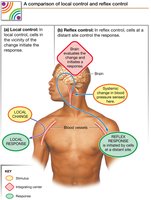
Local control: Restricted to a tissue or cell.
Reflex control: Uses long-distance signaling (nervous and/or endocrine systems).
Reflex Pathways and Feedback Loops
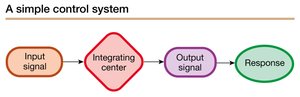
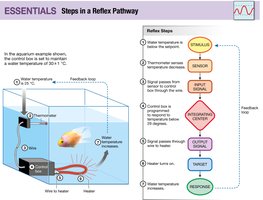
Response loop: Sequence: stimulus → sensor → input signal → integrating center → output signal → target → response.
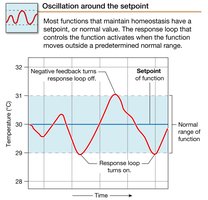
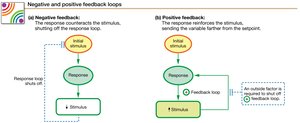
Feedback loops: Modulate the response loop.
Negative feedback: Homeostatic; stabilizes variable by counteracting the stimulus.
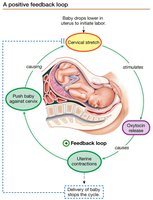
Positive feedback: Not homeostatic; reinforces the stimulus (e.g., childbirth).
Feedforward control: Anticipates change before it occurs.
Biological Rhythms
Circadian Rhythms
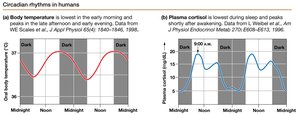
Many physiological variables exhibit regular cycles, known as biorhythms. The most prominent is the circadian rhythm, which follows a roughly 24-hour cycle and adapts to environmental changes.
Acclimatization: Natural adaptation to environmental conditions.
Acclimation: Adaptation in a laboratory setting.
The Science of Physiology
Scientific Method and Experimental Design
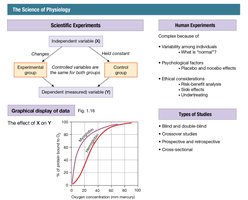
Hypothesis: A testable explanation for an observation.
Variables:
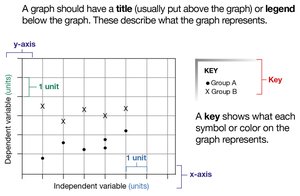
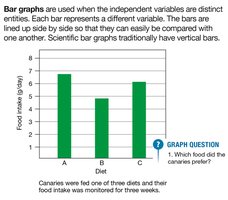
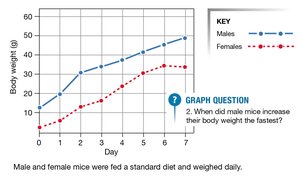
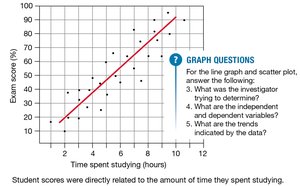
Independent variable: Manipulated by the experimenter (X-axis).
Dependent variable: Measured outcome (Y-axis).
Controls: Groups or conditions used for comparison.
Replication: Repeating experiments to confirm results.
Model vs. Theory: A model is a representation; a theory is a well-supported explanation.
Human Experiments and Study Types
Variability: Genetic and environmental differences among individuals.
Placebo and Nocebo Effects: Psychological influences on outcomes.
Study Designs:
Blind, double-blind, and crossover studies
Longitudinal, prospective, cross-sectional, retrospective, and meta-analysis
Ethical considerations: Essential in human research.
Summary Table: Core Concepts in Physiology
Core Concept | Description |
|---|---|
Structure-Function | Relationship between anatomical structure and physiological function |
Molecular Interactions | Chemical interactions underlying physiological processes |
Compartmentation | Division of the body into separate compartments |
Energy | Requirement for cellular and organismal processes |
Gradients | Movement of substances driven by gradients |
Communication | Coordination of body functions via signaling |
Homeostasis | Maintenance of a stable internal environment |
Mass Balance | Regulation of substance levels through input and output |
Key Equations
Law of Mass Balance:
Mass Flow:
Example: Homeostatic Regulation of Blood Glucose
When blood glucose rises after a meal, the pancreas releases insulin, which facilitates glucose uptake by cells, lowering blood glucose to normal levels. If blood glucose falls, glucagon is released to increase glucose levels. This is an example of a negative feedback loop maintaining homeostasis.
Additional info: This example illustrates the integration of endocrine and metabolic processes in homeostatic regulation.
