 뒤로
뒤로Introduction to the Human Body: Foundations of Anatomy & Physiology
스터디 가이드 - 스마트 노트
 자료에 맞춘 맞춤형 노트, 핵심 정의, 예시, 맥락을 확장해 제공합니다.
Ch. 1 The Human Body: An Orientation
Introduction to Anatomy and Physiology
Anatomy and physiology are foundational sciences in understanding the human body. Anatomy is the study of the structures of body parts and their relationships to one another, while physiology focuses on the normal functioning of these parts and how they sustain life. These disciplines are closely linked by the principle of complementarity of structure and function, which states that what a structure can do depends on its specific form.
Anatomy: Examines the physical structures (e.g., bones, muscles, organs).
Physiology: Explores how those structures work (e.g., muscle contraction, nerve signaling).
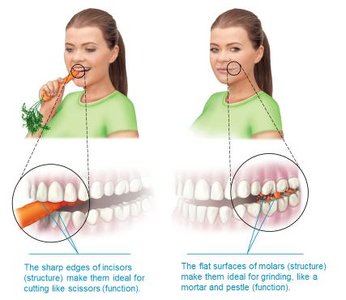
Principle of Complementarity: Structure determines function; for example, the sharp edges of incisors are ideal for cutting food, while the flat surfaces of molars are suited for grinding.
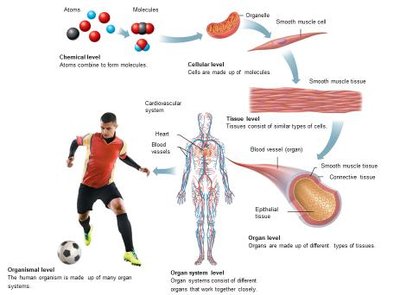
Levels of Structural Organization in the Human Body
The human body is organized into a hierarchy of structural levels, each building on the previous one. Understanding these levels is essential for grasping how the body functions as a whole.
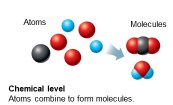
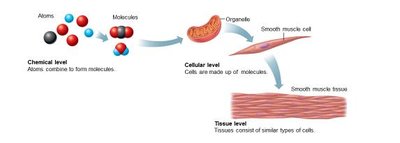
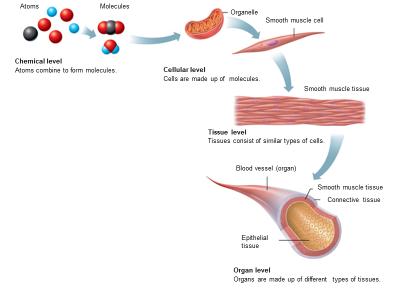
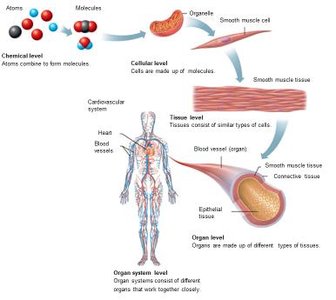
Chemical Level: Atoms combine to form molecules, which are the building blocks of all matter.
Cellular Level: Molecules form organelles, which make up cells—the smallest living units.
Tissue Level: Groups of similar cells form tissues, each with a specific function. The four basic tissue types are epithelial, muscle, connective, and nervous tissue.
Organ Level: Organs are composed of at least two types of tissues working together for a specific function.
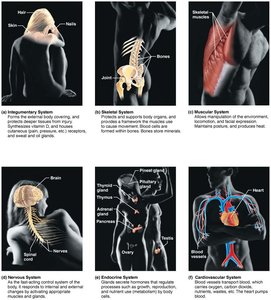
Organ System Level: Organ systems consist of different organs that work closely together to accomplish a common purpose. There are 11 organ systems in the human body.
Organismal Level: The human organism is made up of many organ systems working together to maintain life.
Chemical Level
The chemical level is the simplest level of organization. It includes atoms (such as carbon, hydrogen, oxygen, nitrogen, phosphorus, calcium, and sulfur) and molecules (such as water and macromolecules like carbohydrates, lipids, proteins, and nucleic acids).
Cellular Level
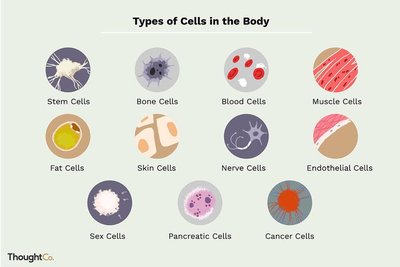
Cells are the basic structural and functional units of life. Each cell contains organelles that perform specific functions necessary for survival. There are many different types of cells in the body, each specialized for particular roles.
Tissue Level
Tissues are groups of similar cells that perform a common function. The four basic tissue types are:
Epithelial tissue (covers surfaces)
Muscle tissue (produces movement)
Connective tissue (supports and binds)
Nervous tissue (transmits signals)
Organ Level
An organ is a discrete structure composed of at least two tissue types that performs a specific function. Each organ is a specialized functional center responsible for a necessary activity that no other organ can perform.
Organ System Level
Organ systems are groups of organs that work together to perform complex functions. There are 11 major organ systems in the human body, including the integumentary, skeletal, muscular, nervous, endocrine, cardiovascular, lymphatic, respiratory, digestive, urinary, and reproductive systems.
Organismal Level
The organismal level is the highest level of organization, representing the living human being. It is the sum of all structural levels working together to maintain life.
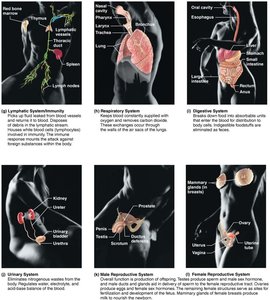
Necessary Life Functions
To maintain life, humans must perform several essential functions:
Maintaining boundaries: Separation between internal and external environments (e.g., plasma membranes, skin).
Movement: Muscular system allows movement of body parts and substances.
Responsiveness: Ability to sense and respond to stimuli (e.g., withdrawal reflex, breathing rate control).
Digestion: Breakdown and absorption of food.
Metabolism: All chemical reactions in body cells, including catabolism (breakdown) and anabolism (synthesis).
Excretion: Removal of wastes (e.g., urea, carbon dioxide, feces).
Reproduction: Cellular division for growth/repair and production of offspring.
Growth: Increase in size of a body part or organism.
Survival Needs
Humans require several factors for survival, each in appropriate amounts:
Nutrients: Chemicals for energy and cell building (carbohydrates, proteins, fats, vitamins, minerals).
Oxygen: Essential for energy release from food; survival without oxygen is limited to a few minutes.
Water: Most abundant chemical in the body; necessary for chemical reactions and as a fluid base.
Normal body temperature: Required for proper rates of chemical reactions (around 37°C).
Appropriate atmospheric pressure: Needed for adequate breathing and gas exchange in the lungs.




Homeostasis
Homeostasis is the maintenance of relatively stable internal conditions despite continuous changes in the environment. It is a dynamic state of equilibrium, maintained by all organ systems working together. Homeostatic control involves constant monitoring and regulation of variables such as blood sugar, body temperature, and blood volume.
Components of Homeostatic Control
Receptor: Detects changes in the environment (stimuli) and sends information to the control center.
Control Center: Determines the set point for a variable, analyzes input, and determines the appropriate response.
Effector: Carries out the control center’s response, influencing the effect of the stimulus.
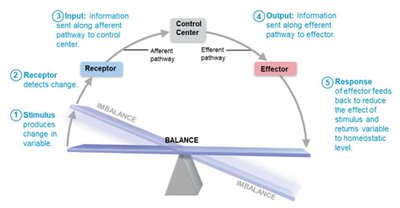
Negative Feedback
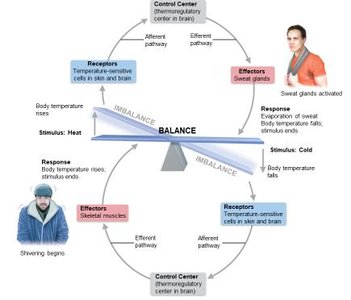
Most homeostatic control mechanisms are negative feedback systems. In these, the output reduces or shuts off the original effect of the stimulus, returning the variable to its ideal value. For example, body temperature regulation is controlled by negative feedback.

Positive Feedback
In positive feedback mechanisms, the initial response enhances the original stimulus, causing the variable to deviate further from its original value. These mechanisms usually control infrequent events that do not require continuous adjustment, such as enhancement of labor contractions by oxytocin or platelet plug formation in blood clotting.
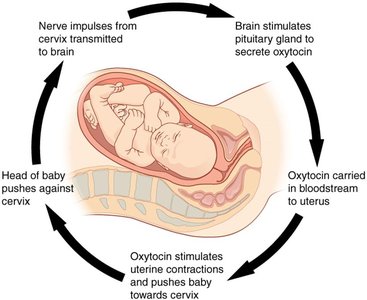
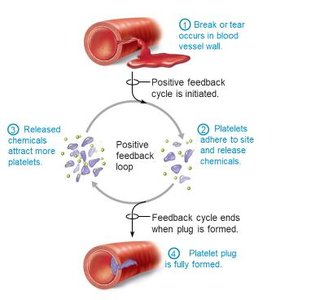
Negative vs. Positive Feedback
Negative feedback opposes the initial change, restoring balance, while positive feedback amplifies the change until an event is completed. Body temperature is controlled by negative feedback.
Homeostatic Imbalance
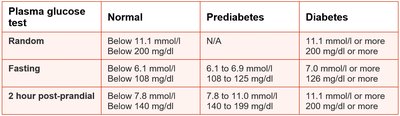
When homeostasis fails, it results in a disease state or pathological condition. The study of body functions in a disease state is called pathophysiology. For example, diabetes mellitus is a result of homeostatic imbalance in blood glucose regulation.
Plasma glucose test | Normal | Prediabetes | Diabetes |
|---|---|---|---|
Random | Below 11.1 mmol/l Below 200 mg/dl | N/A | 11.1 mmol/l or more 200 mg/dl or more |
Fasting | Below 6.1 mmol/l Below 108 mg/dl | 6.1 to 6.9 mmol/l 108 to 125 mg/dl | 7.0 mmol/l or more 126 mg/dl or more |
2 hour post-prandial | Below 7.8 mmol/l Below 140 mg/dl | 7.8 to 11.0 mmol/l 140 to 199 mg/dl | 11.1 mmol/l or more 200 mg/dl or more |
Clinical Relevance
Understanding anatomy and physiology is essential for clinical practice. Recognizing normal structure and function allows clinicians to detect dysfunction early and respond appropriately. Homeostasis and feedback mechanisms are the foundation of clinical care, influencing interventions such as insulin administration (negative feedback) and monitoring labor progression (positive feedback).
Review Questions
If the structure of a body part changes, how might that affect its function?
What is the principle of complementarity, and why is it important? Give an example.
Name the six levels of structural organization from smallest to largest.
What are the three main components of a homeostatic control system, and what does each one do?
How do negative and positive feedback differ? Which controls body temperature?
Draw a diagram that shows how homeostasis works, including a variable, stimulus, receptor, control center, effector, and feedback.
